News

08 August 2023
When biology and computing collide
Stowers scientists leverage the power of AI to uncover fundamentals of development
Read Article
News
Stowers Investigator Julia Zeitlinger, Ph.D., selected to head this effort
With artificial intelligence (AI) poised to greatly accelerate the pace for novel discoveries in foundational biological research, the Stowers Institute launched the Office of Scientific Leadership AI Initiative, a new program designed to advance capabilities in machine learning and AI for addressing critical biological questions. Investigator Julia Zeitlinger, Ph.D., has been appointed to lead this effort and leverage cutting-edge computational techniques to accelerate scientific discoveries and drive innovation in biological research.


Julia Zeitlinger, Ph.D.
Zeitlinger will work to develop and execute a long-term strategy to build world-class AI-powered computational expertise. She will head the steering committee that, together with the Institute's department of Information Technology and Director of Scientific Data Jay Unruh, Ph.D., prioritizes and implements computational efforts across the organization. She also advises the Stowers Fellows program and the Graduate School to attract, support, and maintain computational talent at the Institute.
“Biology is incredibly complex, and AI is an excellent way to detect the underlying patterns and rules. A great example is the information encoded in our DNA, how it us used to create gene products like proteins, and how those gene products function to support life,” said Zeitlinger. “I am passionate about leading the Institute’s new initiative to promote AI in our scientific research. It is both an exciting challenge and a huge opportunity.”
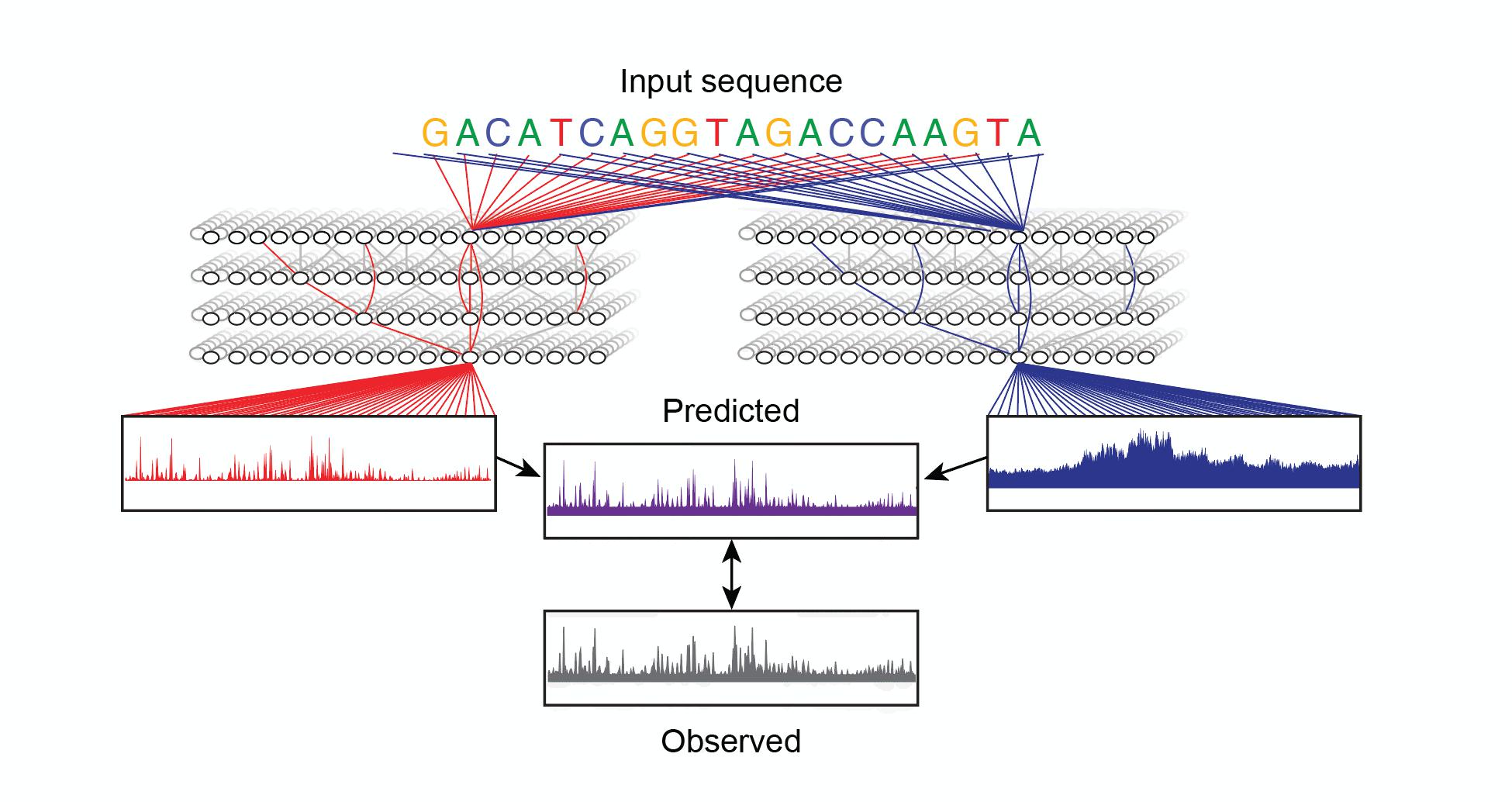
A fundamental biological quest is to understand how variations within our genetic code and the molecules arising from it not only make us unique but can also underlie disease or disease susceptibility. AI’s predictive capabilities can guide targeted experimental approaches to identify how these variations impact gene regulation and protein function, key factors governing development, health, and disease.
“Many of our investigators including Zeitlinger and our Technology Center scientists are engaged in the pursuit of understanding how sequences within our DNA genetic blueprint control gene activity and how the shape of proteins affects their function,” said Stowers Scientific Director Kausik Si, Ph.D.
“Leveraging the power of AI will enable researchers Institute-wide to answer questions that remain some of the biggest biological mysteries for the benefit of all,” said Stowers President and Chief Scientific Officer Alejandro Sánchez Alvarado, Ph.D.
News
08 August 2023
Stowers scientists leverage the power of AI to uncover fundamentals of development
Read Article
News


15 September 2026
Augusto Ortega Granillo, Ph.D., reflects on his journey from the Stowers Graduate School to his postdoctoral research at the Max Planck Institute
Read Article
News


28 August 2026
An annual tradition marks the start of scientific discovery for the 2025 entering class of Stowers Graduate School students.
Read Article


