Ph.D. Program Academics
Foundational research is the essence of our program
Designed to provide exceptionally talented researchers with the mentoring and hands-on experience required to prepare them for careers as independent scientists
Pursuing innovative and creative research in the biological sciences
Graduate Students are an integral part of our vibrant scientific community, conducting research in state-of-the-art facilities at the Stowers Institute alongside scientists who are leaders in their fields.
Within one year of starting the program, students begin full-time research in thesis laboratories where they develop and execute research projects that address significant biological questions.
Prior to completing the program, students demonstrate proficiency in the Core Competencies, a set of standards which ensure graduates are prepared for their next steps in pursuit of innovative and creative investigations in the biological sciences.
Stowers Graduate School at a Glance
95.7%
Retention
91.5%
Persistence
84.6%
Completion
90.9%
Job Placement
Curriculum
Module courses introduce students to the core disciplines represented at the Stowers Institute while exposing them to our technological capabilities. Subsequently, rotation courses and thesis labs provide high-quality, hands-on research experiences. Together, these experiences position students for success in the program and beyond.
Module Courses

Module Courses
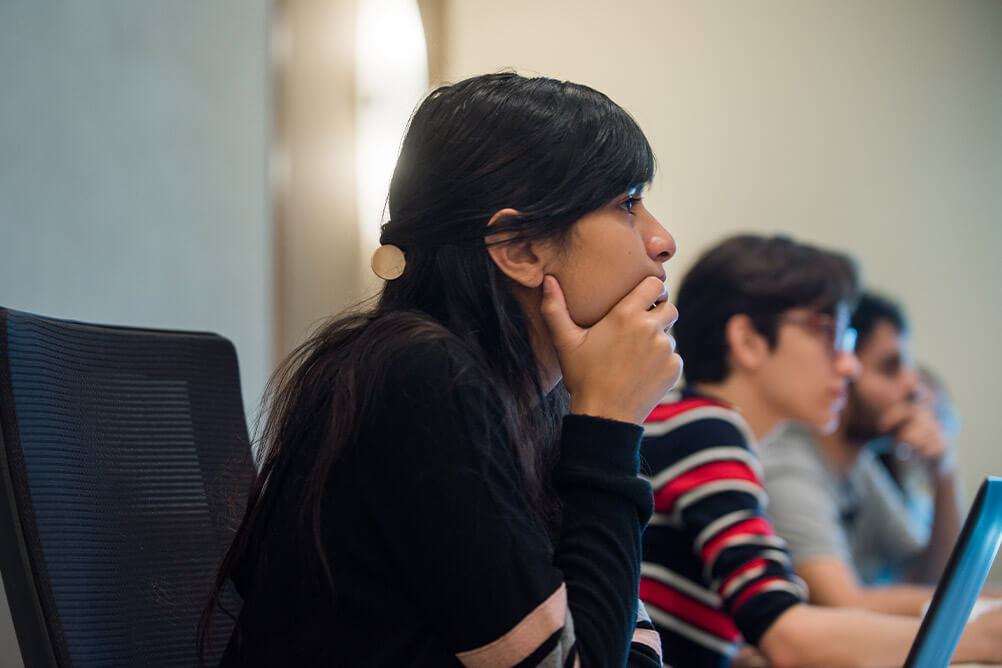
Module courses are designed to introduce students to a wide range of conceptual and practical topics relevant to research at the Stowers Institute and the wider scientific community.
Stowers’ Principal Investigators are active participants and lead the modules, allowing the students to learn directly from leaders in the field and to make connections with potential thesis advisors.
For the first four months (August-December of the first year), students complete their course requirements with a series of intensive all-day modular seminars. Each two-week modular seminar course covers a topic: Genetics, Gene Expression, Genetics, Genomics, Computational Approaches, Prokaryotic Biology, Cell Biology, Cell Dynamics, Evolution, and Developmental Biology, and Neuroscience. Interactive and dynamic, these seminar courses include significant lab work, lectures, critical reading, and discussion of relevant papers.
Students complete an additional 15-week course in their first year that provides an intensive experience in critical reading and thinking, research proposal writing, and presenting scientific topics to various audiences.
Attendance is required for each of the module courses. No credit is given for hours earned at other institutions. No module may be taken for credit more than once.
Rotations
Rotations
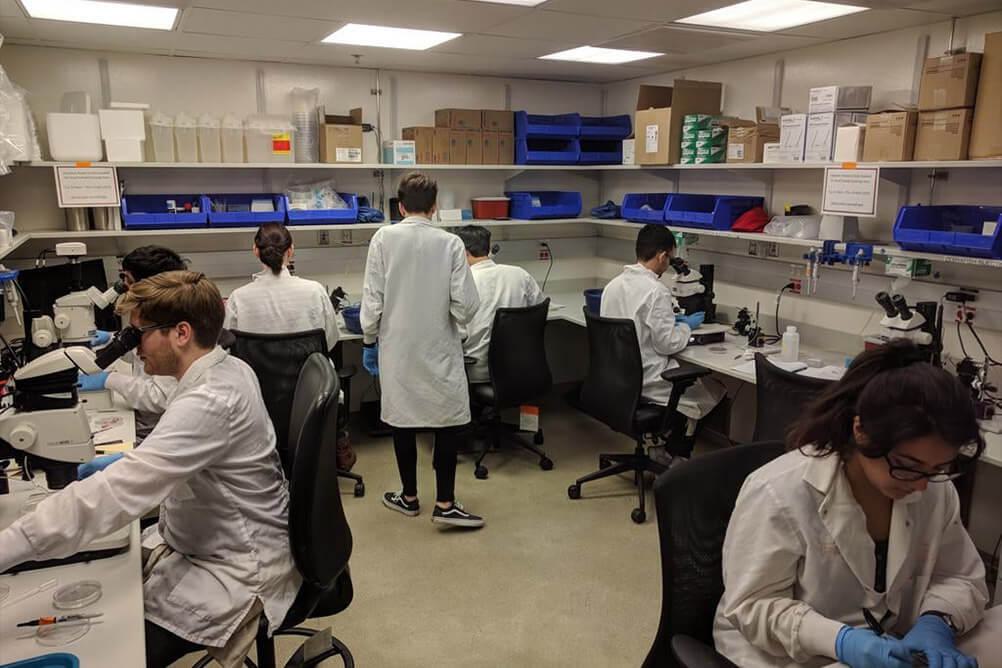
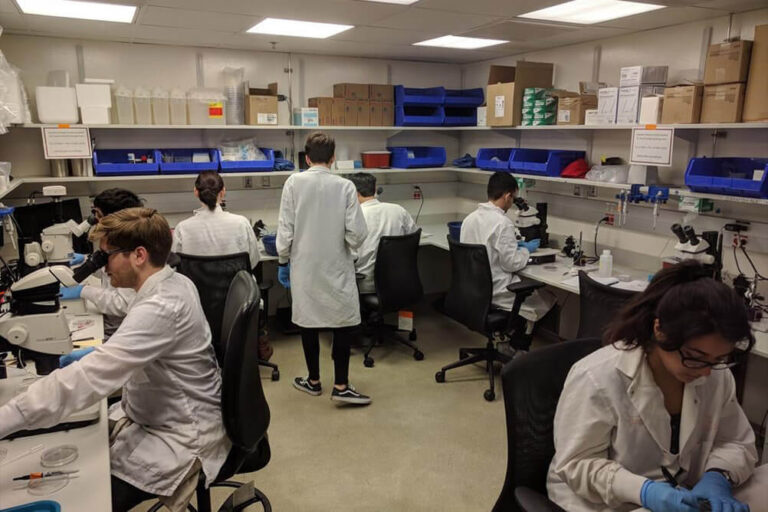
Expectations for each of the three rotations are extremely high for students, who focus almost exclusively on a short-term research project.
During the spring semester of the first year, students complete three consecutive two-month rotations in labs of their choice. Each rotation immerses students in the research program of a single laboratory where they address a specific research question under the direction of an advisor and senior laboratory staff. Students are expected to fully commit to the rotation lab and to successfully complete a short-term research project requiring substantial experimental effort.
While the primary focus during laboratory rotations is on research work, students are also expected to attend lab meetings, seminars, and journal clubs.
Rotations last six months, from January to June of the first year. By the end of this period, students will have spent less than one year in the program and are ready to enter their thesis laboratory.
After completing three laboratory rotations, students select a thesis laboratory and can begin their thesis project with consent of the Principal Investigator.
Thesis Research

Thesis Research
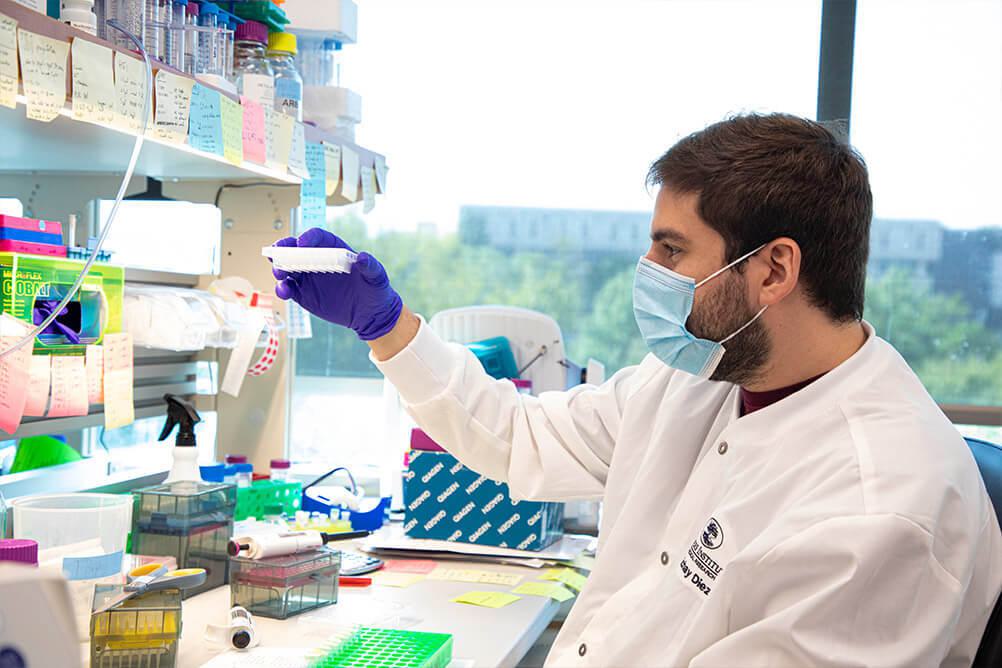
Upon entering their thesis laboratory to engage in full-time research, students develop a project that addresses a significant biological question to satisfy the requirements of a Ph.D. degree.
Graduate Students begin thesis research immediately following the completion of the laboratory rotations by the end of their first year. With guidance from their mentor and Supervisory Committee, they are expected to develop and execute a research project or projects. Following successful completion of the Qualifying Assessment, students devote the remainder of their time in the program to laboratory research. They are also expected to participate in lab meetings, seminars, and journal clubs.
Successful completion of our Ph.D. program requires the completion of a body of research that addresses a significant biological problem and is likely to result in at least one publication in a peer-reviewed journal. A supervisory committee comprised of Stowers faculty ultimately assesses whether this criteria is met during the thesis defense. To defend the thesis, a student presents an open seminar and subsequently is examined by the supervisory committee. A Ph.D. degree in Biology with a concentration in your field of study is awarded upon satisfactory defense of the thesis and fulfillment of all requirements.
Qualifying Assessment

Qualifying Assessment
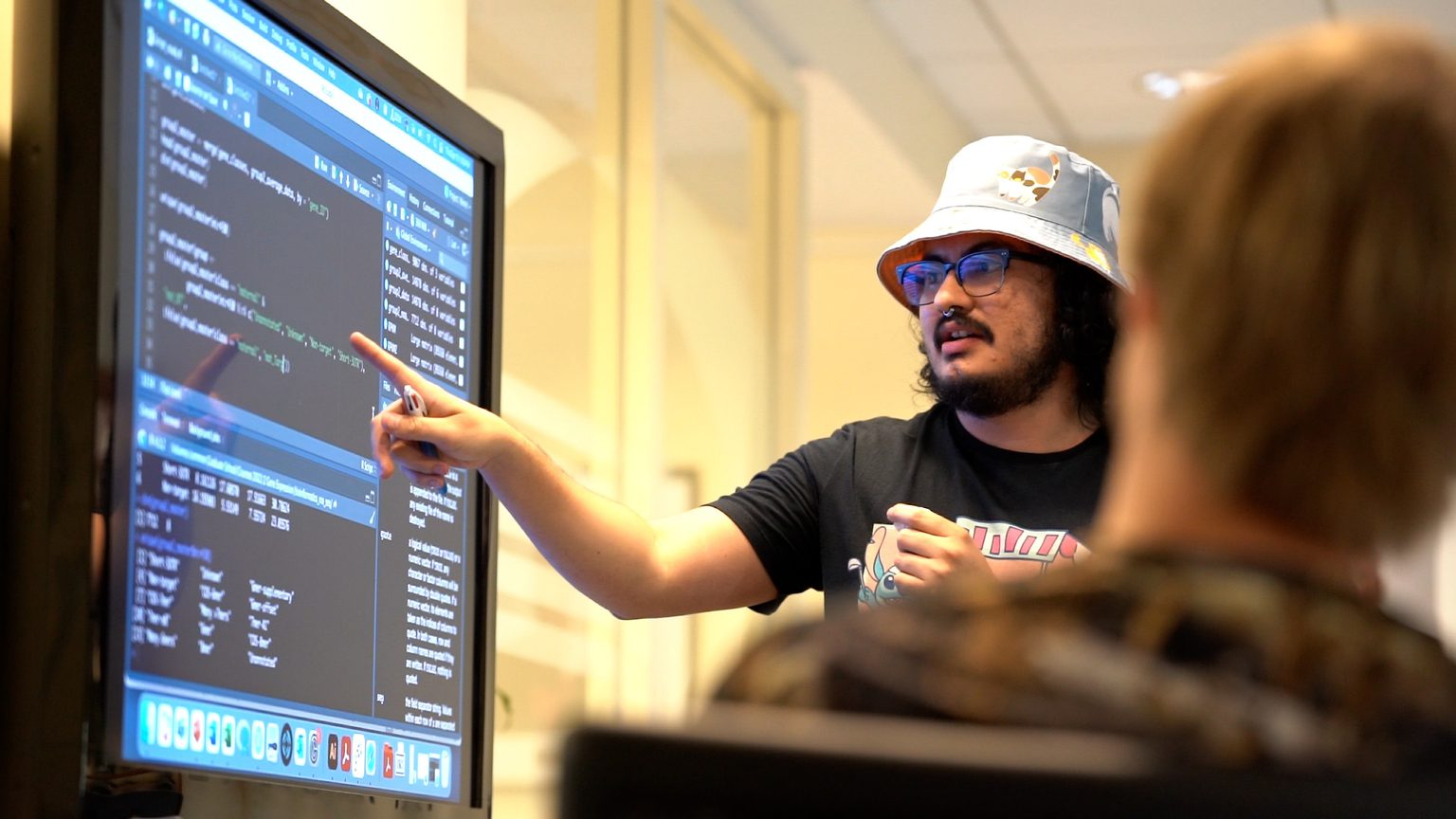
As the thesis project develops, students present their work in a milestone supervisory committee meeting, called the Qualifying Assessment.
This component of the program is key to the advancement of the research and is a guide to focus the students towards completion of their thesis project.
The Qualifying Assessment consists of a written thesis proposal and an oral presentation that occurs within the first two years of thesis research. The Supervisory Committee provides the student with comprehensive and constructive feedback to strengthen their research strategy and thesis proposal.
Core Competencies
Core Competencies
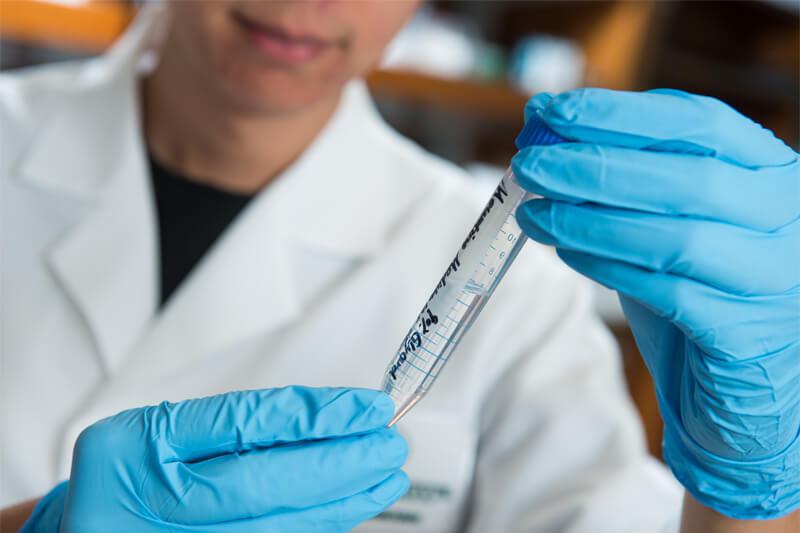
Students will demonstrate competency in each of these areas upon completion of their degree program.
1. Research Leadership
Students will manage a scientific project by identifying significant biological problems, formulating hypotheses, considering a variety of experimental approaches, interpreting data from experiments using knowledge gleaned from literature, and discussing their ideas and results with other scientists.
2. Critical Thinking
Students will demonstrate a strong capacity for critical thinking by reading, analyzing, and critiquing scientific articles and by critically assessing scientific talks. Using this knowledge, students will identify gaps in knowledge and develop questions and experiments to address those gaps.
3. Scientific Knowledge
Students will acquire strong scientific knowledge in their area of research and will use evidence from primary literature and laboratory expertise to demonstrate their knowledge of concepts, methods and models, including how they were derived and used. students will exhibit a broad basis of knowledge about other areas of research.
4. Experimental Skills
Students will independently research appropriate scientific methods suitable for a biological question, devise applicable experiments with controls, execute the experiments in an organized and precise fashion, interpret the experimental results, perform appropriate statistical tests, and trouble-shoot experiments as necessary.
5. Scientific Communication
Students will communicate their research through writing and presenting. They will write hypothesis-driven research proposals and descriptions of scientific discoveries, such as a scientific manuscript and/or a thesis of their own original research contributions, and develop and refine their own writing through editing. Students will create and present scientific talks that include an introduction, results and conclusions, effective graphics and slide content, and will respond to scientific questions.
6. Professional & Ethical Behavior
Students will conduct themselves professionally and ethically as scientists. They will record and manage data with scientific integrity, comply with safety standards in the laboratory, communicate about situations when they observe unethical or unsafe behaviors by others, and be a collegial and reliable lab member and colleague.
Program Completion


Program Completion
The Ph.D. program strives for the completion of a research project in an average time of five to six years from matriculation.
The program culminates with the expectation that each student is able to identify interesting biological problems, devise interdisciplinary approaches to those problems, and execute investigations using the best tools available.
The minimum requirements for successful completion of the Ph.D. program are the passing of all modules, successful completion of a minimum of 126 credit units (although a student completing five years of study and research will have a total of 196 hours), a passing grade on the Qualifying Assessment, a written thesis on original research, and the defense of the written thesis. No credit is given for hours earned at another institution. No course may be taken for credit more than once.
Co-Curricular Programs
The Graduate School has identified specific co-curricular programs as learning activities essential to the curriculum. These programs align with and augment the curricular goals stated in the Core Competencies. These co-curricular programs serve to enhance the academic program, are assessed with learning objectives based on the Core Competencies, and are not credit bearing.
Co-Curricular Requirements
Scientific Conferences and Courses
Students attend scientific conferences and courses around the world. Conferences and courses provide a wider platform to discuss and disseminate scientific findings and emerging techniques. In addition to bolstering the current research of students, conferences and courses provide a networking opportunity for students to meet leaders in their field from the U.S. and around the world. The Graduate School provides funding for one conference or course per year to every student. In addition, attendance to additional conferences and courses are funded by individual laboratory budgets and conference awards.
Science Club
Students are expected to attend a weekly Science Club where Stowers early career scientists present their research. Students are required to present at least one time (and preferably more) during their tenure in the lab.
Stowers Lecture Series
Students are expected to attend the Stowers Lecture Series. The Lecture Series brings renowned scientists from around the world to Stowers to give talks about a variety of scientific topics. The advisor may require a student to attend other seminars throughout the year.
Laboratory Safety, Radiation Safety, and Biosafety Level 2 Trainings
These laboratory safety training sessions occur early in the program and consist of lectures and a tour. Stowers, while maintaining regulatory compliance with several federal, state and local agencies, has the responsibility to provide a safe and healthy working environment for all individuals associated with Stowers and to minimize the environmental impact of performing foundational medical research. These courses are designed to give students the tools necessary to conduct science in a safe manner at Stowers by discussing the regulatory requirements of OSHA, EPA, MDNR, NRC, and other regulatory agencies and applying them to real research scenarios.
Responsible Conduct of Research Course
The course is required for all students. The course lasts for nine weeks and meets weekly. Each course meeting is led by a panel of faculty and uses selected case studies to encourage practicing scientists to think about the principles of responsible conduct in research; to appreciate the devastating effect of scientific misconduct on public trust, institutional reputation, and individual careers, and to understand why the Graduate School and Stowers have zero tolerance for material deviation from commonly accepted standards for proposing, conducting, and reporting research.
Other Co-Curricular Opportunities
Graduate School Course Teaching Assistant
Students can serve as teaching assistants in the module courses. Teaching assistants participate in planning, assessment, and teaching components of the module courses. Teaching is not a requirement of the Ph.D. program.
Crossroads Programs
The Crossroads organization fosters a sense of community among students and postdoctoral researchers at the Stowers Institute. Crossroads activities are organized by a volunteer committee and include a variety of career-related and professional development workshops covering topics such as funding and grantsmanship, effective oral presentations, and scientific writing. The annual Crossroads Research Conference is one of the major scientific and social events that Crossroads organizes. The conference provides students and postdoctoral researchers with the opportunity to present their research to their peers with oral and poster presentations and to socialize with Stowers scientists. Crossroads also organizes career development workshops that provide resources for students and postdoctoral researchers to help them reach the next stage of their careers.
Data Clubs
Students organize weekly or biweekly meetings where they present their data or a recent journal publication to their fellow students. Other researchers at Stowers whose work is relevant to the presenter can be invited to join. The meetings are informal and are designed to help support students' scientific progress and their community.
Supergroup Participation
Groups of Stowers laboratories that have similar interests or are in similar fields often form a “Supergroup.” The formation of these groups is spearheaded by the heads of the laboratories (the Principal Investigators) or other senior scientists. Students in the relevant labs attend the meetings of the supergroups, which generally occur bi-monthly, and present their research and data. This is an opportunity for students to gain further experience presenting to colleagues, listening to and responding to questions and feedback, and communicating with audiences.
Open Mic Science Club
Students organize, attend, and participate in a seminar series that occurs over the summer months. Students and Stowers researchers present their work to their colleagues and get feedback from those in attendance. Like the Friday Science Club, which is suspended during the summers, Open Mic Science Club is an opportunity for students to present to the wider Stowers Institute community.
Technology Centers
The Technology Centers at the Stowers Institute provide short courses and mentoring designed to enhance the skills of Stowers scientists, including students. Students gain the necessary theory, practical skills, and hands-on experience needed to advance their research. The short courses offered vary annually to meet the evolving research needs of the institute and the specific requirements of students' thesis projects. Past short courses have included Python Introductory Data Science, Intro to R, Proteomics Profiling, Image Analysis, Electron Microscopy, and Introduction to Cytometry.

