News


15 September 2026
Pairing biology with physics, from the Stowers Institute and beyond
Augusto Ortega Granillo, Ph.D., reflects on his journey from the Stowers Graduate School to his postdoctoral research at the Max Planck Institute
Read Article
News
Augusto Ortega Granillo, Ph.D., reflects on his journey from the Stowers Graduate School to his postdoctoral research at the Max Planck Institute
Augusto Ortega Granillo, Ph.D. (Photo credit: Carlos Barradas Chacón)
For many developmental biologists, understanding how organs form begins with genes and cells. For Augusto Ortega Granillo, Ph.D., a former Ph.D. student in the Graduate School of the Stowers Institute for Medical Research, the answer also lies in physics.
Today, supported by funding from the Human Frontier Science Program Long-Term Fellowship, Ortega Granillo is a joint postdoctoral researcher at the Max Planck Institute of Molecular Cell Biology and Genetics, and the DFG Cluster of Excellence Physics of Life at the TU Dresden, Germany, where he studies how developing tissues use physical forces to create the hollow spaces—or lumina—that make organs like the stomach and pancreas work properly. By investigating how embryonic tissues move water, generate pressure, and shape themselves, he hopes to better understand the fundamental principles that guide organ development.
"The intersection between biology and physics creates a great opportunity to learn how to do quantitative research," Ortega Granillo said. "The two disciplines are incredibly different, but equally interesting. Bringing them together allows us to ask questions in new ways."
That interdisciplinary perspective took root as he worked to earn his Ph.D. from the Stowers Graduate School, where he says he learned not only how to conduct rigorous science, but also how to think bigger about the possibilities of a scientific career.

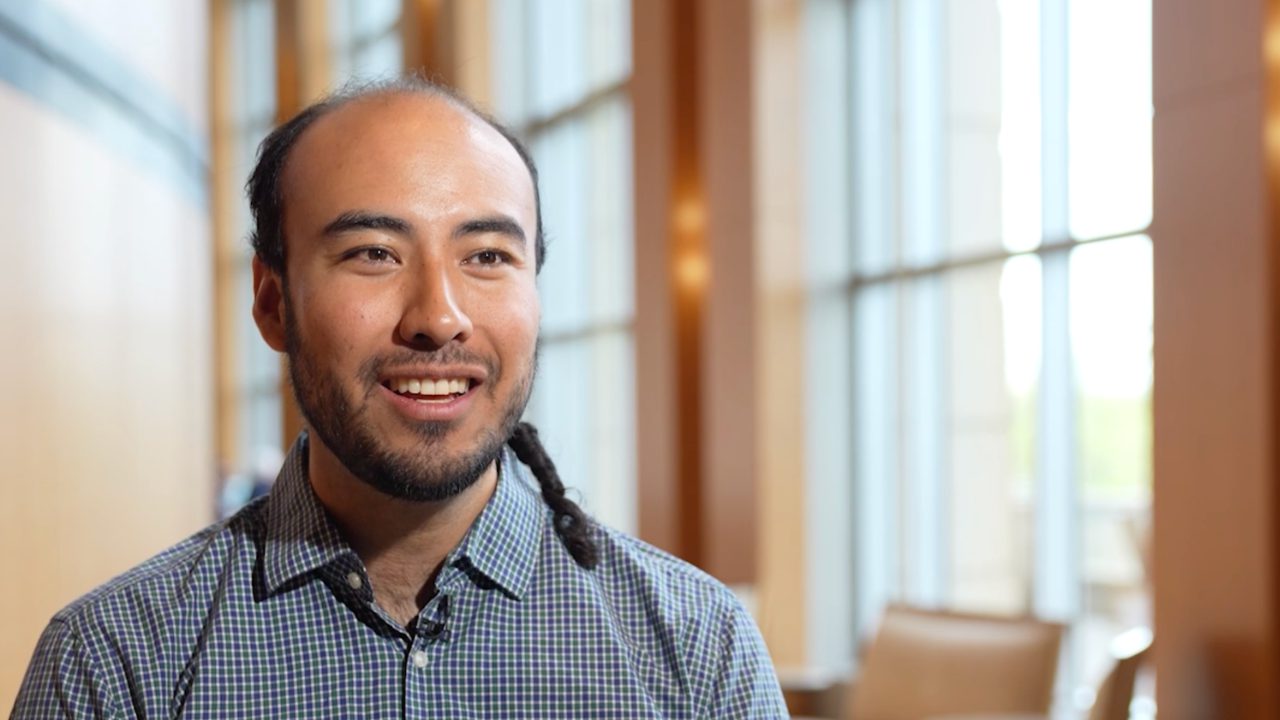
Ortega Granillo discovered the Stowers Institute after a friend of his heard Stowers Institute President and Chief Scientific Officer Alejandro Sánchez Alvarado, Ph.D., speak at a conference in Mexico. It led Ortega Granillo to apply for the Institute's Summer Scholars Program. He didn’t realize it then, but his time at the Institute would extend well beyond one summer.
When he first arrived in Kansas City for the program, his future was suddenly in focus. "Once I saw the place and understood what I could accomplish at Stowers, there was really no other place I wanted to be," he said.
Ortega Granillo joined Sánchez Alvarado’s lab as a predoctoral researcher. He became increasingly interested in questions that traditional biological approaches could not fully answer.
"I was often frustrated because biology is more frequently qualitative rather than quantitative," he said. "Finding numbers enables us to get a sense of scale, which makes biology a little bit easier to predict."
Rather than accepting those limits, he looked for opportunities to combine developmental biology with quantitative methods rooted in physics, a direction that would ultimately shape his postdoctoral work at Max Planck.

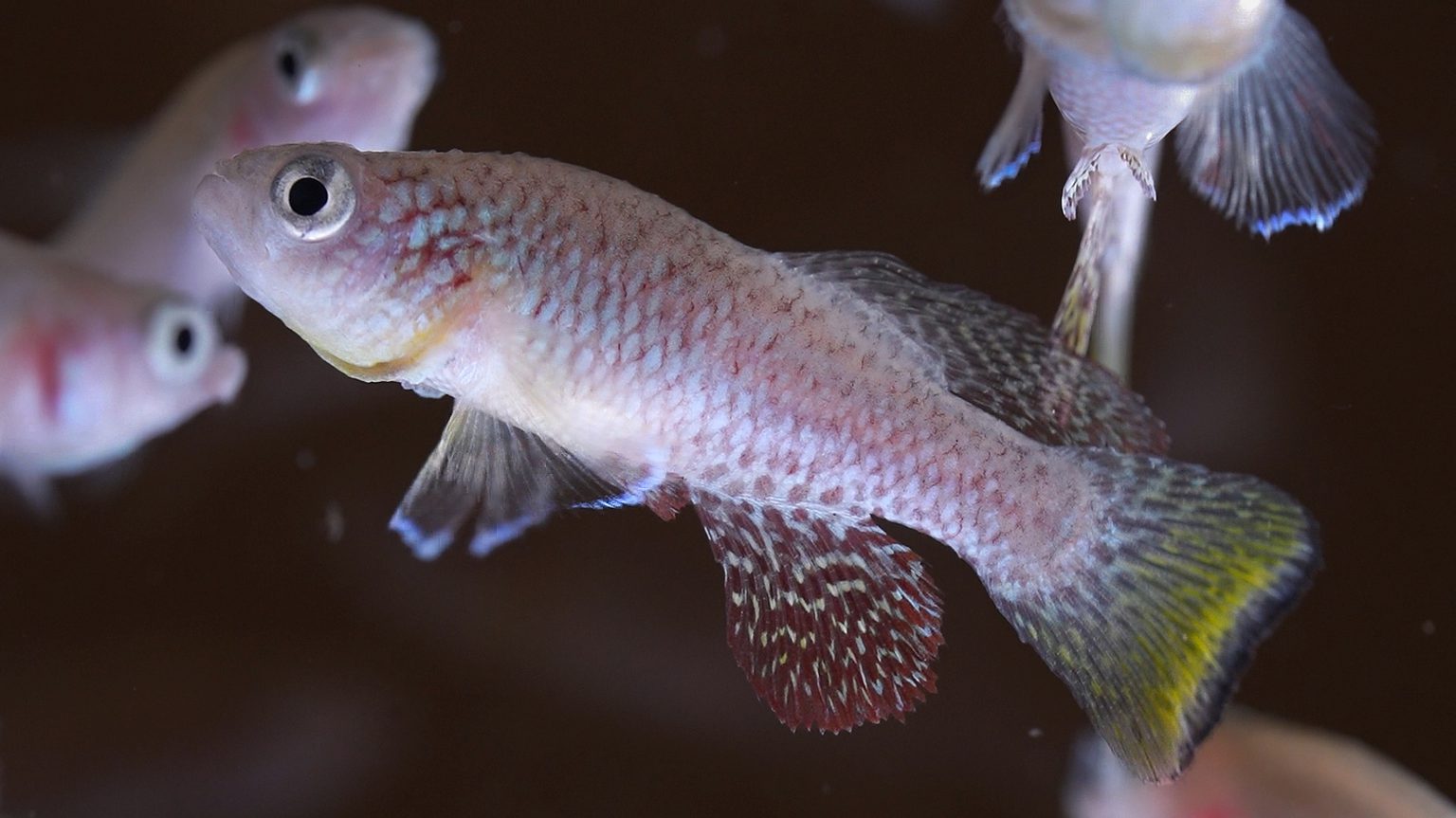
During his time studying the African killifish in the Sánchez Alvarado’s lab, Ortega Granillo grew fascinated with questions about biological regeneration.
Ortega Granillo credits the Stowers Graduate School with giving him both the confidence and the practical opportunities to pursue that path. The school’s support for scientific travel and international collaboration enabled him to attend international conferences and advanced training courses. He was able to build relationships with scientists from a wide range of disciplines and broaden his scientific perspective.
"Stowers allows people to travel the world, learn how other people do science, and share ideas," Ortega Granillo said. "It taught me there are no limits. Whatever I wanted to do, I could do."
He also points to the Institute's longstanding relationship with the Marine Biological Laboratory in Woods Hole, Massachusetts. The Stowers Institute Satellite Lab at the MBL provides Stowers scientists the opportunity to conduct research on the east coast, working with renowned scientists who often convene in Woods Hole. Ortega Granillo participated in advanced courses at the MBL in 2023, where he was introduced not only to new collaborators, but new techniques and ways of thinking.


(Photo credit: Carlos Barradas Chacón)
"These experiences showed me that I could have my own scientific interests and share them with people who were genuinely curious," Ortega Granillo said. "You meet people from all over the world, and those conversations change how you think about science."
In his current role, Ortega Granillo notes striking similarities between the Stowers Institute’s approach to scientific discovery and the Max Planck Institute. He describes his current lab in Dresden as a place with exceptional imaging facilities, collaborative core resources, and scientists pursuing diverse questions.
His advice to young scientists—especially those pursuing careers far from home—is rooted in patience, persistence, and community.
"Talk to people. Find your people," Ortega Granillo said. "Science is hard, and it takes time. The relationships you build and the people you surround yourself with are just as important as the experiments you do."
Applications are now open for our Ph.D. in Biology program. Prospective students interested in joining this immersive, hands-on training environment can learn more and apply today.
News
15 September 2026
Augusto Ortega Granillo, Ph.D., reflects on his journey from the Stowers Graduate School to his postdoctoral research at the Max Planck Institute
Read Article
News


28 August 2026
An annual tradition marks the start of scientific discovery for the 2025 entering class of Stowers Graduate School students.
Read Article
News


25 August 2026
Reflecting on the 2026 Stowers Summer Scholars Program
Read Article
News


14 August 2026
Tehseen Bukhari is studying how proteins control access to genes in the Zeitlinger Lab, building experimental and computational skills through the Stowers Graduate School’s Summer Scholars Program.
Read Article
