News
12 February 2025
#BioBasics: What are Gene Regulatory Networks?
The Sauka-Spengler Lab explores the blueprint and circuitry driving cells
Read Article
News
Learn the biological basics surrounding CRISPR, the revolutionary technique that can modify DNA, and follow along as a Stowers scientist shows how the Institute harnesses it to study gene function.
CRISPR is a powerful way for scientists to edit the genetic instructions that tell living cells how to grow and work, known as DNA. In just over a decade, it has transformed biological research and opened new doors in medicine. At the Stowers Institute, scientists use CRISPR to better understand how genes function in health and disease.
Gene editing isn’t brand new. Scientists have been working to change genes for decades. But earlier methods were slow, expensive, and often unreliable. That changed with the arrival of CRISPR , or Clustered Regularly Interspaced Short Palindromic Repeats.
CRISPR allows scientists to make very precise changes to DNA. “CRISPR is a tool that scientists use to edit DNA,” said Victoria Hassebroek, Ph.D., Head of the Genome Engineering Technology Center at the Stowers Institute. “Think of DNA as a massive instruction book for how living cells grow and function. With CRISPR, we can go in, find a specific sentence—or even a single word—and change it.”
The story of CRISPR began not in a high-tech lab, but in bacteria. In 1987, scientists noticed strange repeating patterns in bacterial DNA. At first, no one knew what they were for. Years later, researchers discovered that the sequences in between these DNA snippets were actually pieces of viral DNA the bacteria had encountered before.

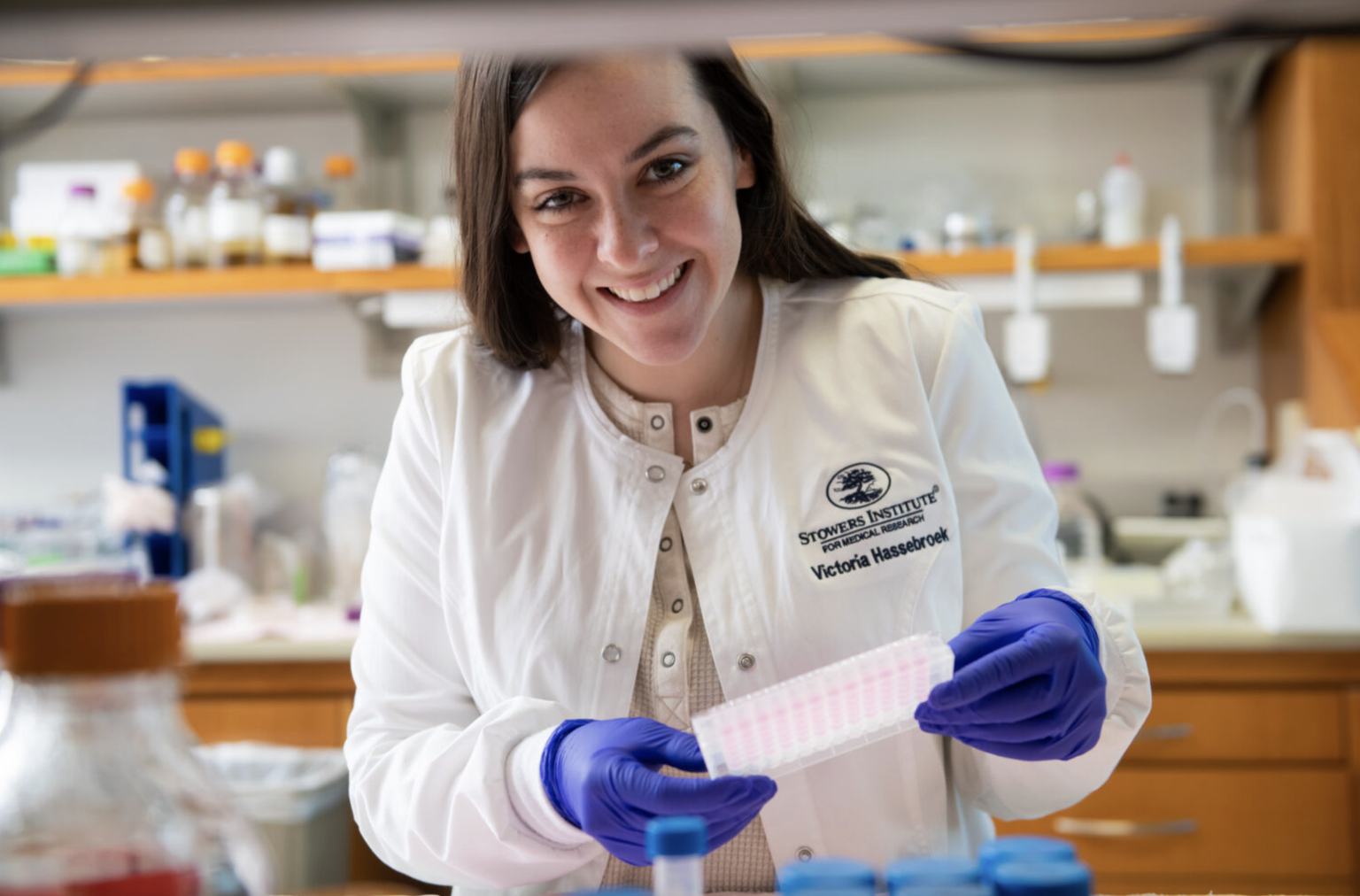
Victoria Hassebroek, Ph.D.
“CRISPR was first discovered in bacteria, where it acts like a defense system against viruses,” Hassebroek explained.
By saving bits of viral DNA, bacteria can “remember” past infections. If the same virus attacks again, the bacterium recognizes it and quickly destroys it—much like how our immune system remembers a virus after we’ve been sick or vaccinated. Once scientists understood this natural defense system, they realized something remarkable: it could be reprogrammed.
“Scientists found a way to repurpose this system to make precise DNA edits in many different kinds of organisms,” said Hassebroek.
What made CRISPR revolutionary was how easy it was to program compared to older tools. As a result, it spread quickly through the scientific community. Within a few years, researchers were using CRISPR in bacteria, plants, mice, and human cells. Its impact was so significant that its developers received the 2020 Nobel Prize in Chemistry.

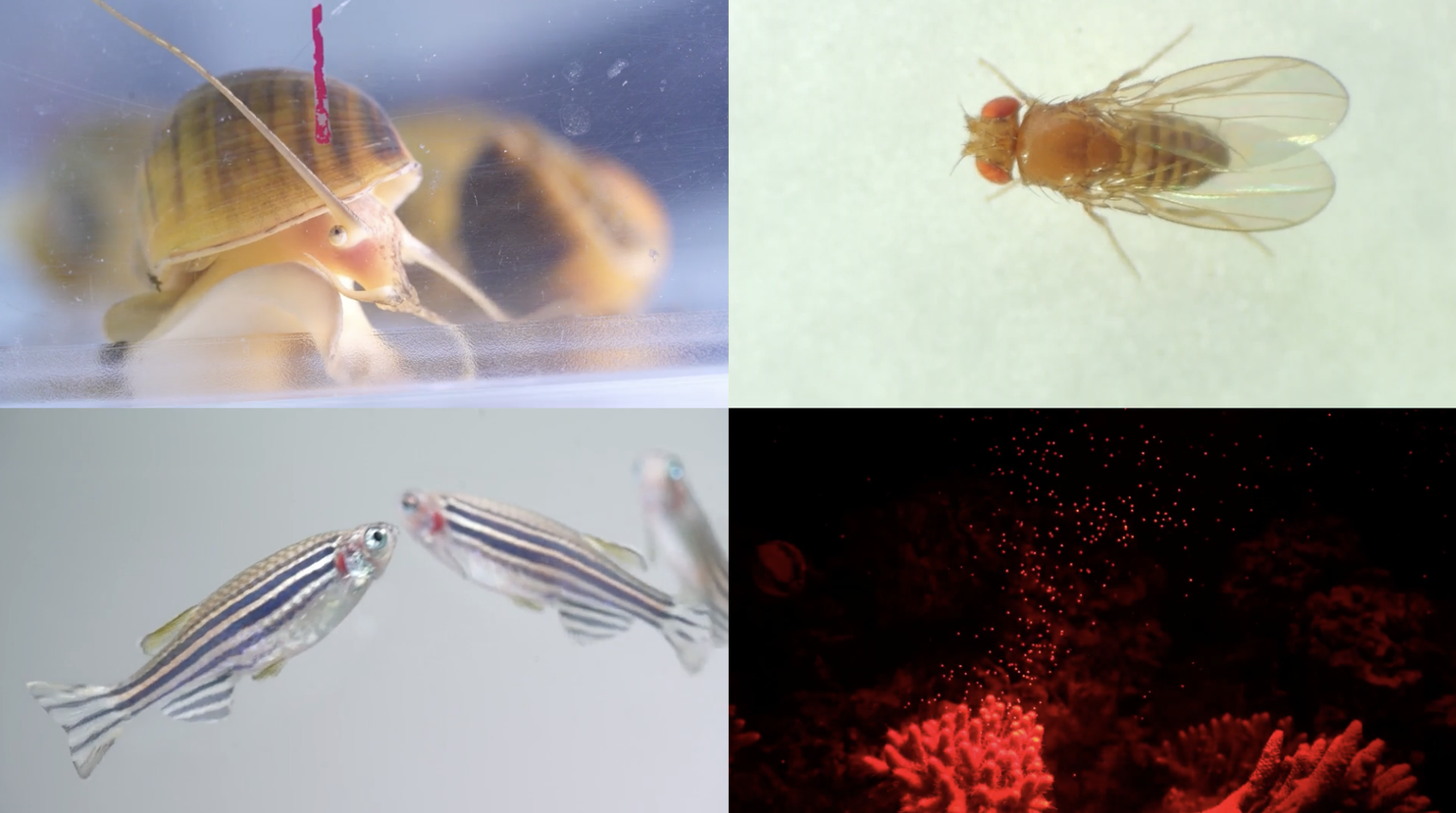
Research organisms at the Stowers Institute including apple snails, fruit fly, zebrafish, and coral.
At the Stowers Institute, scientists use CRISPR to explore fundamental questions about how genes work during development, regeneration, and disease. “We can introduce specific changes into genes to see what happens,” said Hassebroek. “We can even create research organisms with mutations that closely mimic human diseases.”
Today, CRISPR’s impact reaches far beyond the lab. FDA-approved CRISPR-based treatments are already curing patients with sickle cell disease, and many more therapies are being tested for conditions such as cancer and HIV.
“CRISPR holds incredible promise,” Hassebroek said. “It helps us understand the basic biology of life, while also offering powerful new ways to improve human health.”
Explore the Stowers Institute's Learning Resources to learn more #BioBasics.
News
12 February 2025
The Sauka-Spengler Lab explores the blueprint and circuitry driving cells
Read Article
News
16 May 2025
Learn the biological basics of ribosomes—the molecular machines that build life-sustaining proteins—and why Stowers scientists are studying them.
Read Article
News
04 August 2025
Learn the biological basics of proteins, the molecules powering every living cell, and why Stowers scientists are investigating them.
Read Article