In The News

29 September 2026
Rapidly Evolving Aphid Proteins Share a Common Structural Blueprint
From Technology Networks: The Stern Lab reveals a shared structural blueprint among thousands of rapidly evolving aphid proteins.
Read Article
Podcast
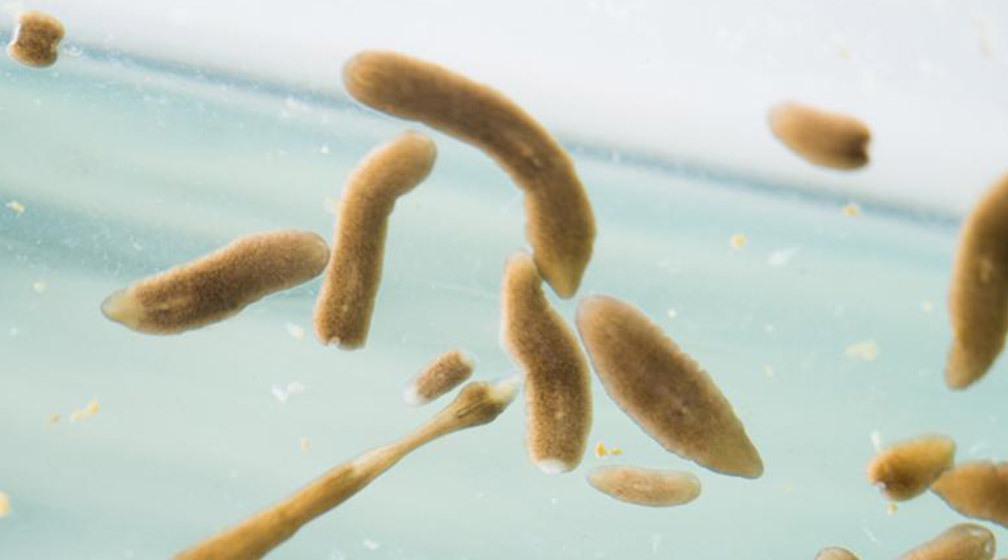
Stowers Executive Director and Chief Scientific Officer, Alejandro Sánchez Alvarado, PhD, recently appeared on the Tiny Matters podcast to discuss his work exploring regeneration.

Stowers Executive Director and Chief Scientific Officer, Alejandro Sánchez Alvarado, PhD, recently appeared on the Tiny Matters podcast to discuss his work exploring regeneration. He also provided insight on the history of the subject and what the future could look like.
Regeneration is a hot topic in the sciences, and for good reason. We humans are not known for being great at regenerating, but if we could understand how other organisms do it so easily we might be able to heal a spinal cord injury or damaged organs and limbs. Or we could even slow the aging process and not suffer from diseases like Alzheimer’s.
You can also listen using the following platforms:
Libsyn
Spotify
Apple
In The News

29 September 2026
From Technology Networks: The Stern Lab reveals a shared structural blueprint among thousands of rapidly evolving aphid proteins.
Read Article
In The News

24 September 2026
From Phys.org: The Stern Lab reveals how evolution helped AI predict the structures of thousands of rapidly evolving aphid proteins.
Read Article
Press Release
22 September 2026
In an evolutionary arms race with plants, aphids deploy thousands of rapidly evolving proteins. A team led by Stowers Institute and HHMI Investigator David Stern, Ph.D., discovered a shared architecture beneath them and revealed how evolution can help AI predict similar protein structures across biology.
Read Article
News

15 September 2026
New single-cell atlas of the acorn worm shows that most tissues undergo a genome-wide transcriptional overhaul as larva becomes adult, providing new insights into how some organisms remake their bodies in ways humans can’t.
Read Article