Stowers Investigator Jennifer Gerton wins KU Cancer Center Director’s Award
Investigator Jennifer Gerton, PhD, has been awarded The University of Kansas Cancer Center’s 2022 Director's Award for Basic Science.
07 November 2022
The Stowers Institute is proud to announce that Investigator Jennifer Gerton, PhD, has been awarded The University of Kansas Cancer Center’s 2022 Director's Award for Basic Science.
The annual Director's Awards program recognizes individuals who have made significant contributions to KUCC’s mission of reducing the burden of cancer in the Kansas City region.
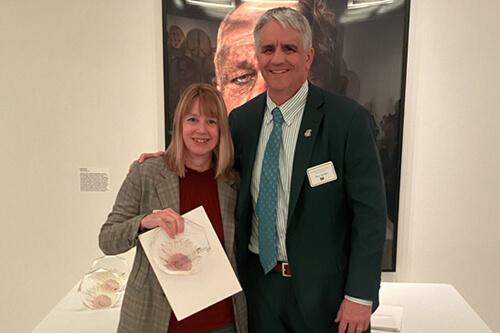
Jennifer Gerton, PhD with Dr. Roy Jensen from the University of Kansas Medical Center.
Gerton participates in a research advocacy initiative at the Cancer
Center called PIVOT, Patient and Investigator Voices Organizing
Together, to help patients understand how genetics play a role in their
disease.
Through PIVOT, Gerton was teamed up with a breast cancer patient. The
goal is to give the patient a better understanding of genetics and give
the scientist a concrete example of how their foundational research can
impact human health.
To learn more about Gerton’s work with the Cancer Center click here.
Recipients were announced at The University of Kansas Cancer Center’s
annual Research Week, which celebrates research led by cancer center
members.