Three athletic feats that other creatures can do — but soccer players can't
Kansas City is one of the host cities for the 2026 FIFA World Cup. We're highlighting a few research organisms whose natural abilities would amaze even the most elite athletes.
25 June 2026
As the world's best soccer athletes play in Kansas City this summer to compete in the World Cup, they bring incredible athletic skills to the pitch that cause most of us to gawk in awe. At the Stowers Institute, scientists study many organisms that possess those same abilities, but in some cases to even more extraordinary extremes.
From bacteria that make collective decisions as a team, to flatworms that can regrow half their bodies, these remarkable creatures remind us that nature has been fine-tuning athletic feats for millions of years.
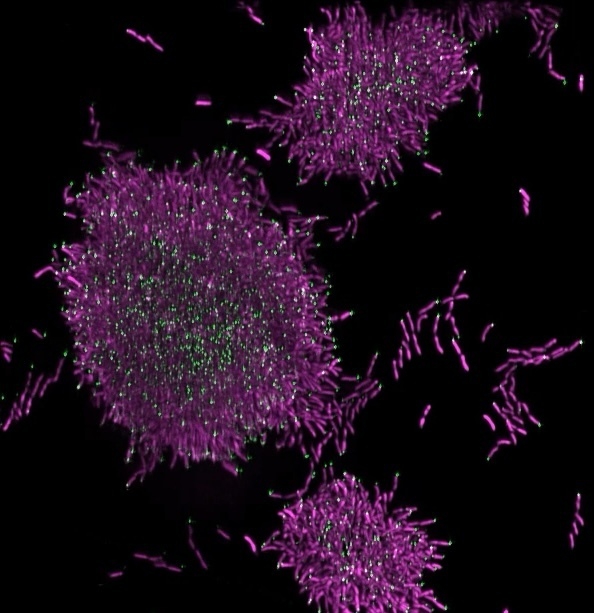
Image of bacteria from the Mashruwala Lab
Communication and collective decision-making
Great soccer teams seem to communicate without speaking. Teammates anticipate one another's movements, react instantly, and work together toward a common goal.
Bacteria take teamwork to another level.
Though they are among the simplest organisms on Earth, bacteria constantly exchange signals that help them identify allies, detect threats, and make group decisions. Together they can determine whether to attack, retreat, or hunker down until conditions improve. In extreme situations, some bacterial communities will even trigger a form of regulated cell death—sacrificing individual cells to help the larger group survive.
That's teamwork few soccer clubs could match.
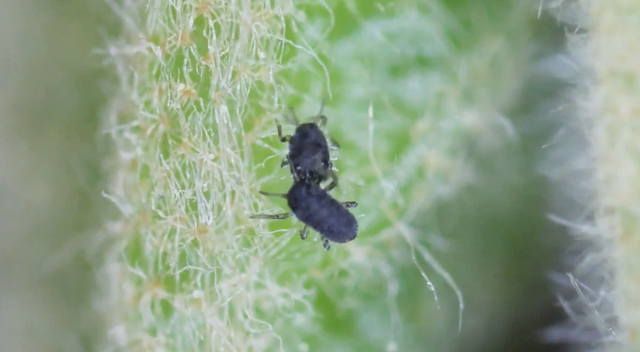
Image of fighting aphids from the Stern Lab
Agility and commitment
When a defender squares up against an attacker, both players are engaged in a split-second battle. One quick move can change the course of a match.
Aphids fight hard to gain advantage, possibly harder than soccer players.
Aphids are not seeking to score goals; they are trying to form galls. Aphids inject saliva into the genome of a leaf or plant that triggers the plant to grow a specialized structure called a gall. Once formed, the gall becomes a protective home where the aphid can raise its offspring. But first they must fight to gain control of the leaves they want. Often, several of these half millimeter-long insects will choose the same leaf, but only one of them will be the victor. There’s a skirmish on the field. They clamor for advantage and battle for dominance on this small piece of green, and can even fight to the point of death. That’s how badly the aphid wants to score a gall.
Image of planarians from the Sánchez Alvarado Lab
Recovering from injury and not faking it
Soccer players have earned a reputation for dramatic reactions to contact. Sometimes the injury is real. Sometimes the crowd isn't convinced.
Planarians would be particularly hard to impress.
These small freshwater flatworms possess one of the most amazing healing abilities in the animal kingdom. If injured, they can rapidly regenerate lost tissue. If cut in half, each fragment can rebuild the body parts it is missing to eventually form two complete worms — each with the organs, tissues, and nervous system needed to function.
A professional soccer player might miss weeks or months recovering from a serious injury. A planarian simply grows a new body and gets on with its day.
Suddenly walking off a twisted ankle doesn't seem quite so impressive.
Credit: Kansas City Sports Commission
Scientists at the Stowers Institute study bacteria, aphids, planaria, and many other organisms to understand the mechanisms and mysteries of biological life. To learn more visit Stowers.org/organisms