From Germany to Harvard, from Seattle to Kansas City: One scientist's journey on the highway of discovery
24 March 2026
By Friederike Benning, Ph.D.
How did I arrive at the Stowers Institute? The simplest answer is by bike.
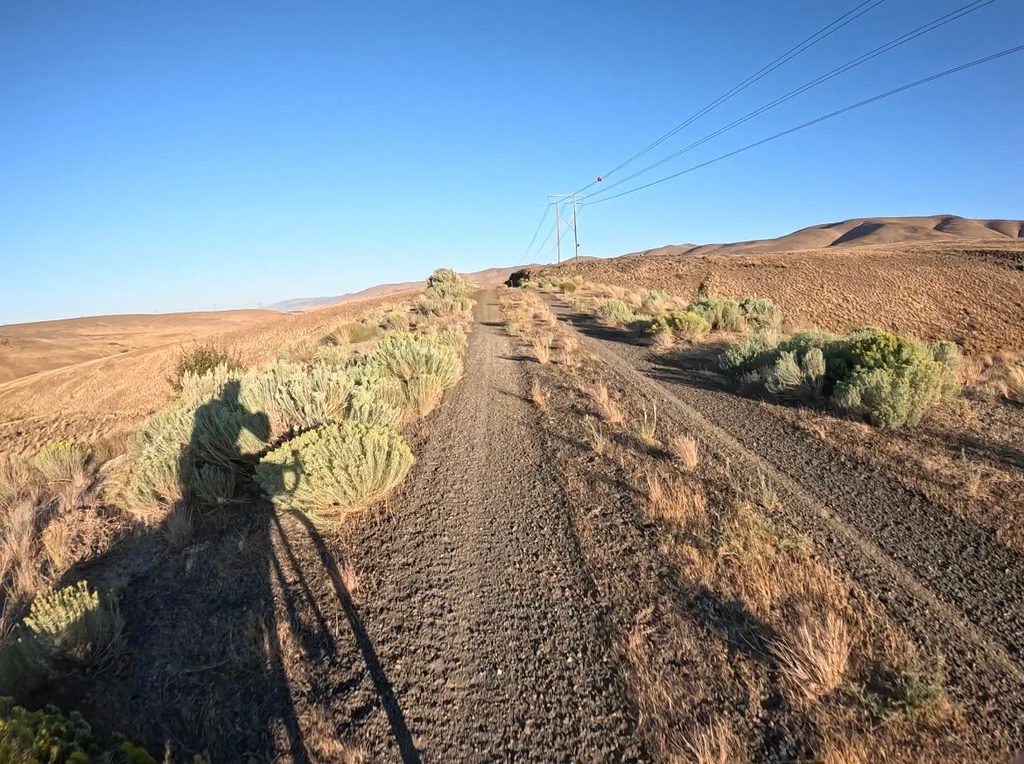
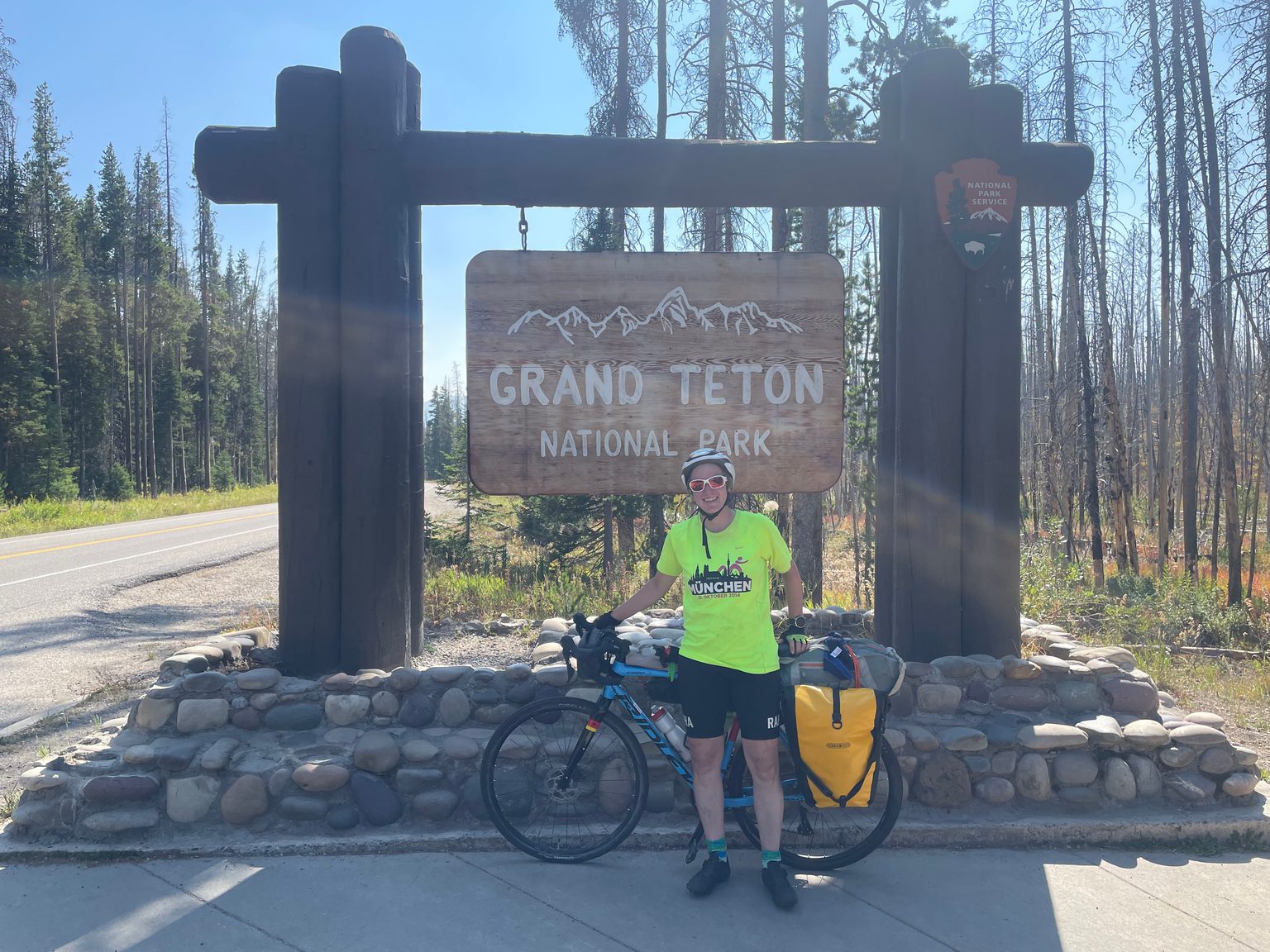
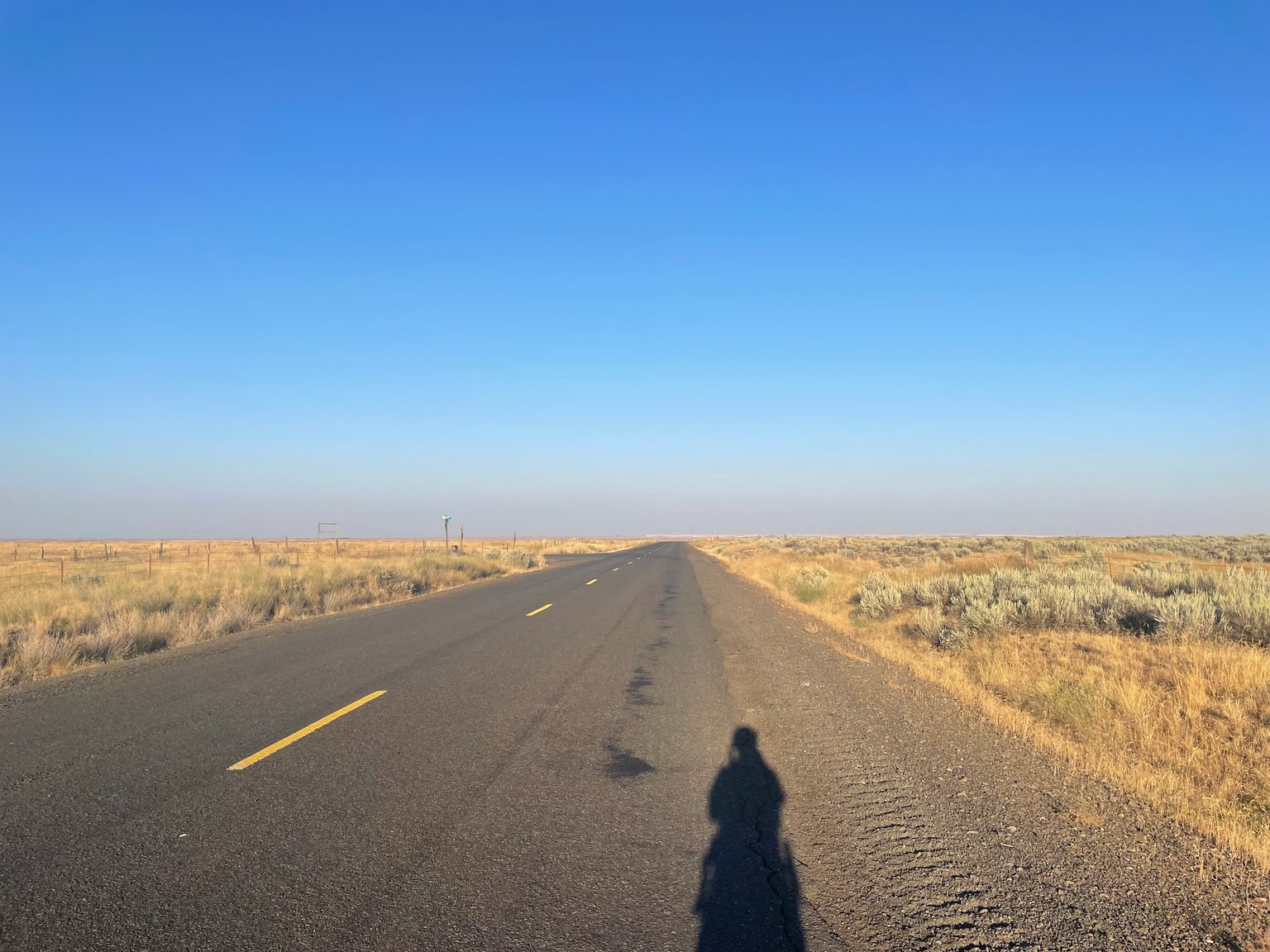
In August 2025 I packed up my gravel bicycle with enough gear, water, sustenance, and optimism for the 2,201-mile journey from Seattle, Washington to Kansas City, Missouri. I was on my way to begin the next season of my scientific career as a Jim and Virginia Stowers Fellow at the Stowers Institute.
Crossing through mountain ranges, deserts, small towns, and fields, I got to peek beyond what I already knew about these places and the people who live there. The journey expanded my horizon in a similar way to exploring unknown questions in science. Experiments at the bench alone can only take you so far.
It was an expedition filled with changing terrain and sights I’d never seen before. In that way, it also mirrored what draws me most to science: a fascination with the hidden architecture of life.
I like to think of cells as tiny, bustling cities. They have railroad-like structures for cargo transport, a molecular post office that delivers packages to the correct address, and factories that produce energy and building materials. Many of these processes happen inside membrane-enclosed chambers that offer protection, selective communication, and efficiency.
I am fascinated by how the cell builds, maintains, and sculpts these structures. Membranes are not passive barriers. They are shapeshifters, constantly adapting to the changing needs of the cell. Adaptation is also something you learn quickly on a bike. Flat tires, broken gear, headwinds, and storms can slowly gnaw at a cyclist’s spirit, but they reminded me that every interesting question in science, every exciting quest in life, comes with roadblocks that require creative solutions. Often, these solutions come with unexpected discoveries on their own. This is why I love science. The freedom to forge a unique path and, perhaps, discover a new route to explore.
But where did my scientific journey first begin?
I grew up in Münster, Germany, dreaming of unexplored worlds and undiscovered life forms. From an early age, I was captivated by the idea that reality held secrets waiting to be found — not only in distant galaxies, but in the microscopic machinery humming inside every living thing.
After high school, I pursued an undergraduate degree at ETH Zürich that let me move freely between chemistry, physics, and biology while building a deep understanding of life's fundamental principles. One day, a professor walked into class carrying a three-dimensional structure of a protein. Seeing it, really seeing how its architecture enabled its function, felt like a revelation. Here was something invisible made visible, something abstract made tangible and beautiful. I was hooked. This changed everything. From that moment, I knew I wanted to specialize in structural biology.
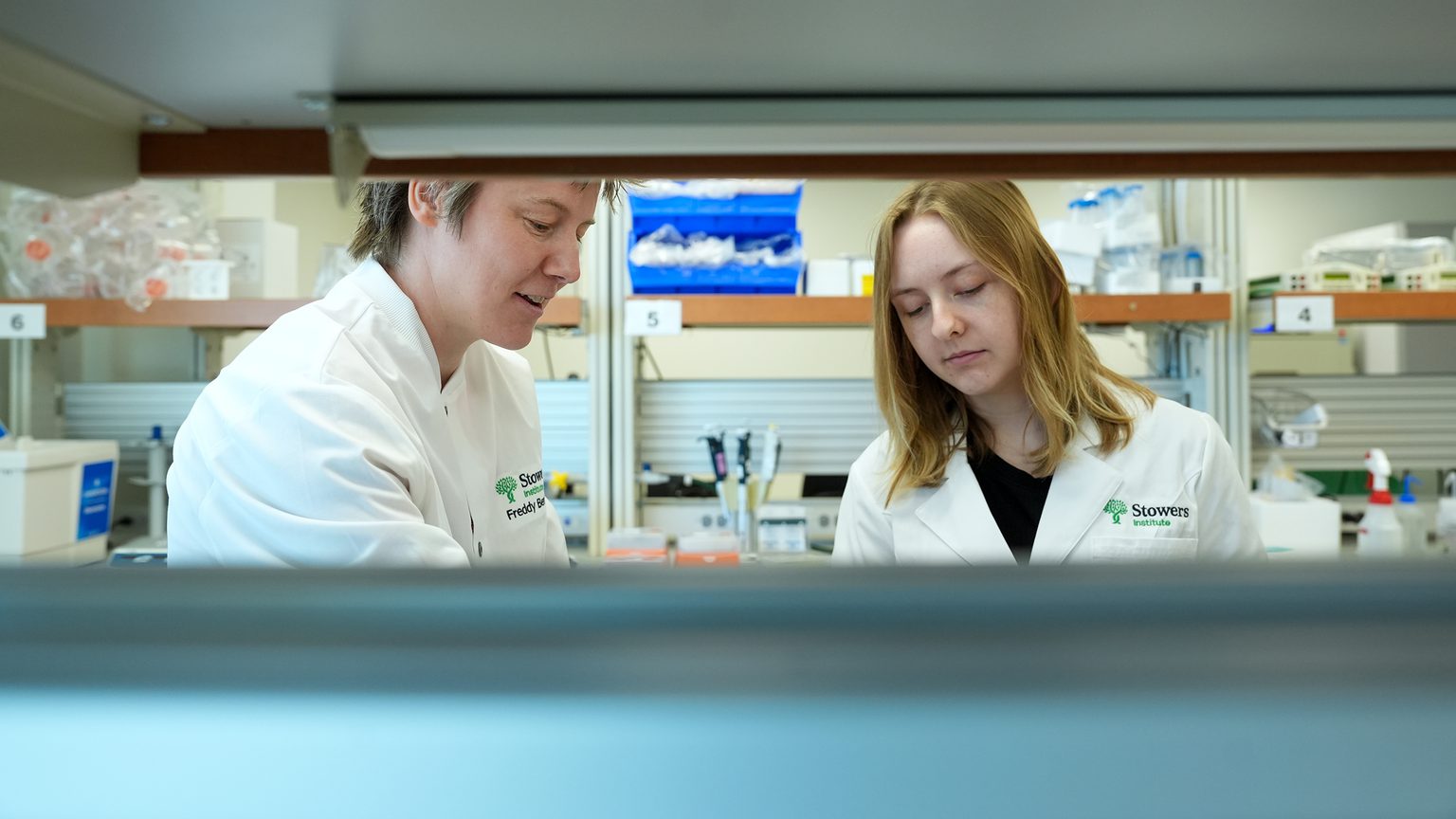
Jim and Virginia Stowers Fellow Friederike Benning, Ph.D., (left) with visiting Rockhurst University student Lily Hayes.
My path wound around the globe—from Australia, back to Switzerland, and eventually to Harvard where I began studying the membranes of mitochondria. Each stop deepened my fascination with the molecular architecture of life. The further I traveled, the more focused I became, and gradually I turned my attention entirely to membranes: the thin, dynamic envelopes that define and organize life inside the cell.
Watching a cell under a microscope never gets old. Biology textbooks can give the impression that cells are empty and static — orderly diagrams with labeled compartments sitting quietly on a page. The truth is different. Cells are crowded, dynamic, alive with motion and purpose. Their architecture rivals the work of great artists. And yet, despite decades of research, we are only beginning to understand how the molecules that build membranes actually come together to do their work in that crowded, ever-shifting environment.
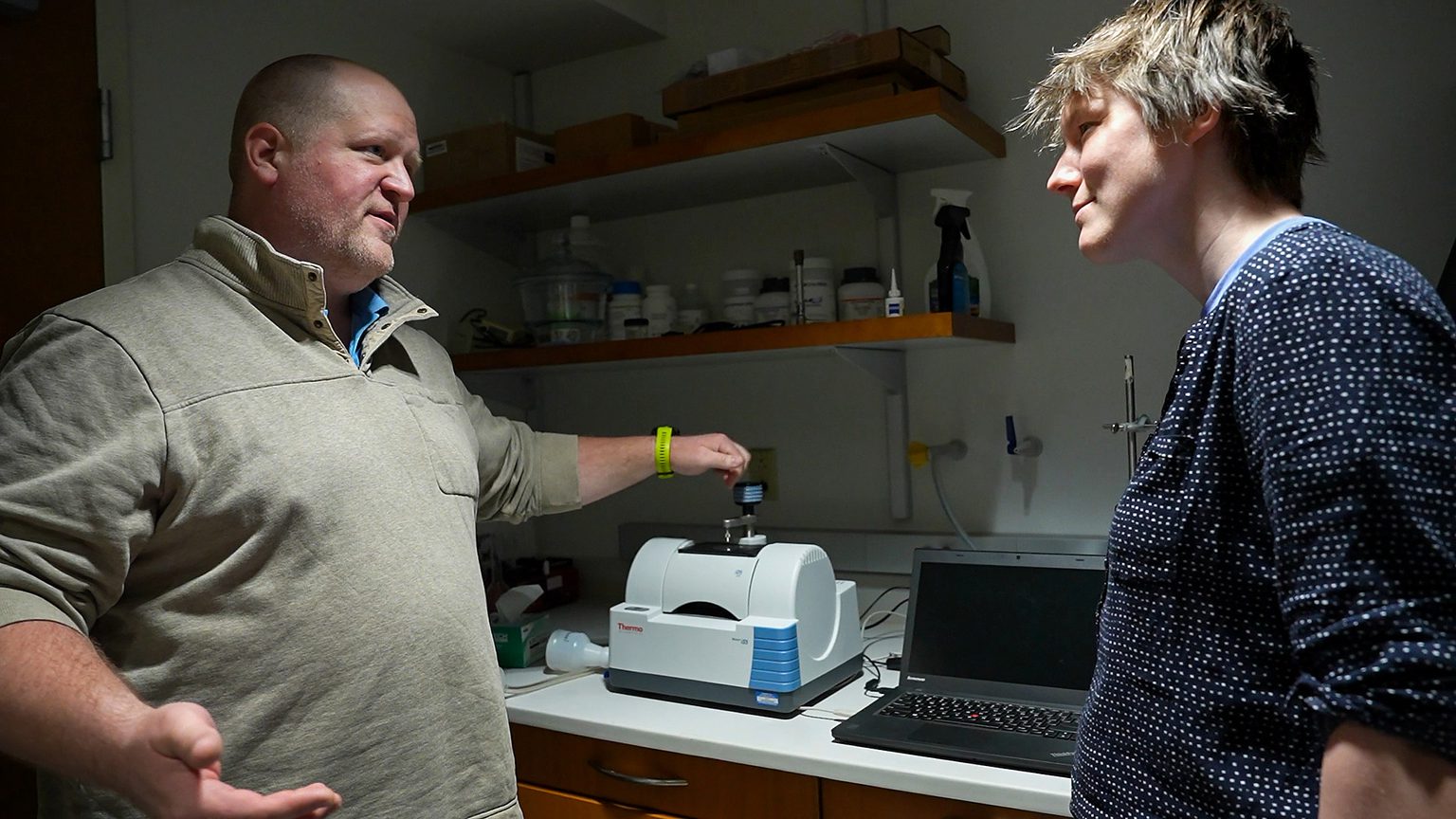
Jim and Virginia Stowers Fellow Friederike Benning, Ph.D., (right) with Senior Research Scientist Jeffrey J. Lange, Ph.D., in the Electron and Light Microscopy Technology Center at the Stowers Institute.
There are so many unknowns. That is exactly what keeps me going. Ever-evolving technologies let us peer deeper into the cell than any previous generation of scientists could. Every new tool opens an onramp to a new highway. Every highway leads somewhere unexpected.
For me, the most rewarding moments are the ones no one has experienced before. The thrill of making a discovery — of seeing something for the first time and slowly uncovering what it means — it just can’t be easily described.
But how and why I got here goes far beyond the exhilaration of discovery alone. I find deep purpose in contributing to science that could genuinely benefit people.
Many beneficial microbes that degrade toxic materials rely on specialized membranes; understanding these membranes could lead to better tools for bioremediation. And artificial cells hold extraordinary promise as vehicles for targeted drug delivery, potentially enabling treatments that don't yet exist.
I also find unexpected joy in watching fellow scientists push past the edges of their own comfort zones and discover what they're capable of. Science does something philosophically interesting to the people who practice it: It reshapes how you relate to uncertainty. What once felt like a threat becomes a reservoir of possibility. The unknown stops being frightening and instead becomes the most interesting place to be.
Like my own journey from Seattle to Kansas City, you may start off for a place you've never been, unsure of what lies ahead. But over time, that uncertainty may become the very thing that moves you forward.
And speaking from experience (more than 2,000 miles of it), if you keep your eyes wide open, you may have more unexpected encounters, revelations, and discoveries than you ever could have planned.