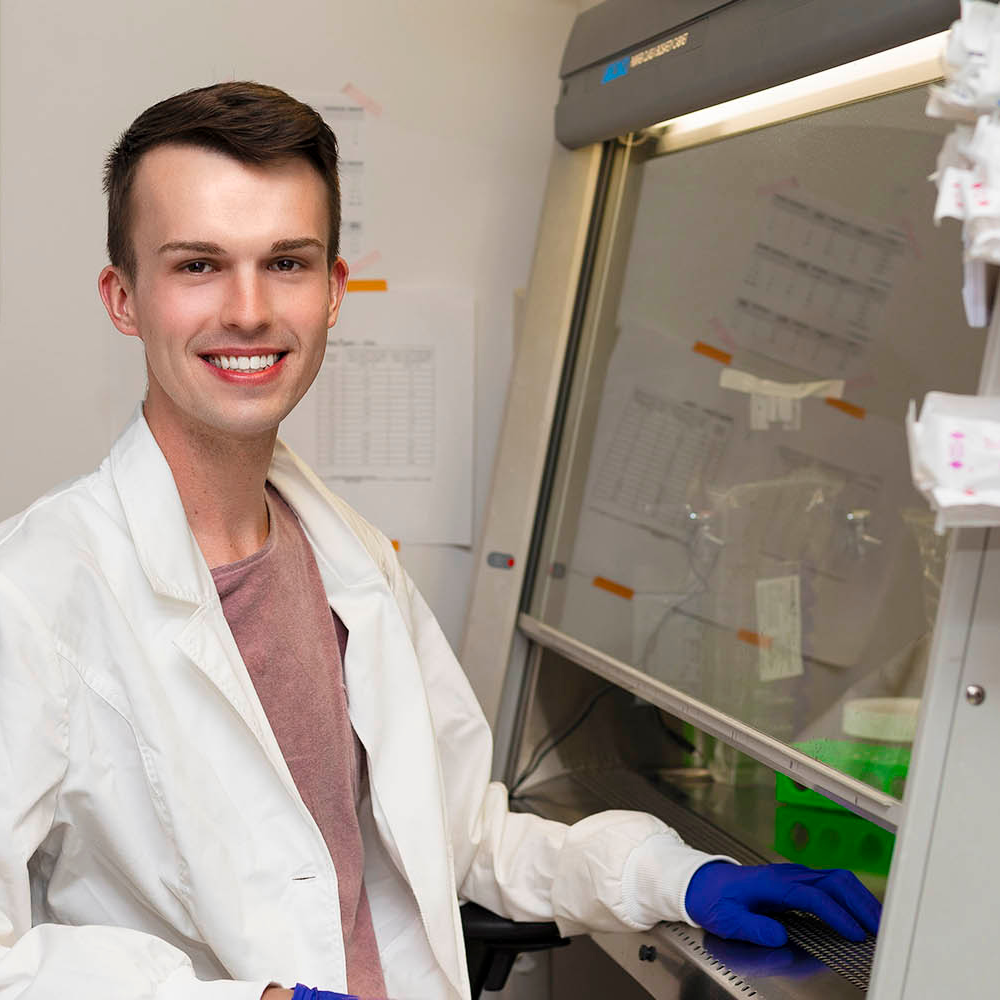
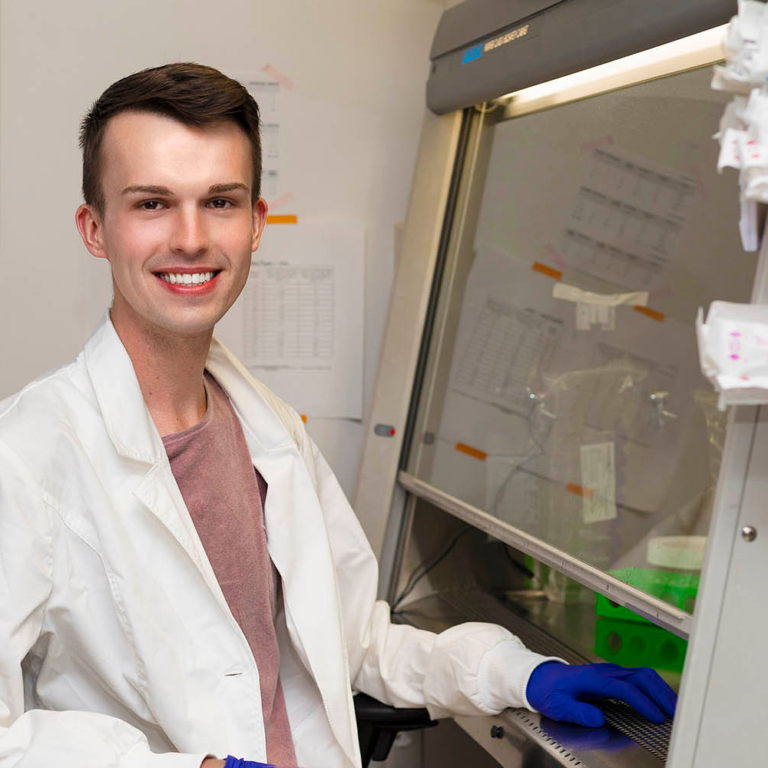
The hope is that by studying DNA sequence information, and how that information is read and interpreted by the cell, researchers will be able to further their collective understanding of the mechanisms that regulate gene expression.
This is important because many human diseases are caused by defects in this kind of regulation.
The Zeitlinger Lab uses several different research organisms to gain insight that could potentially be applied to the human genome in development and disease.
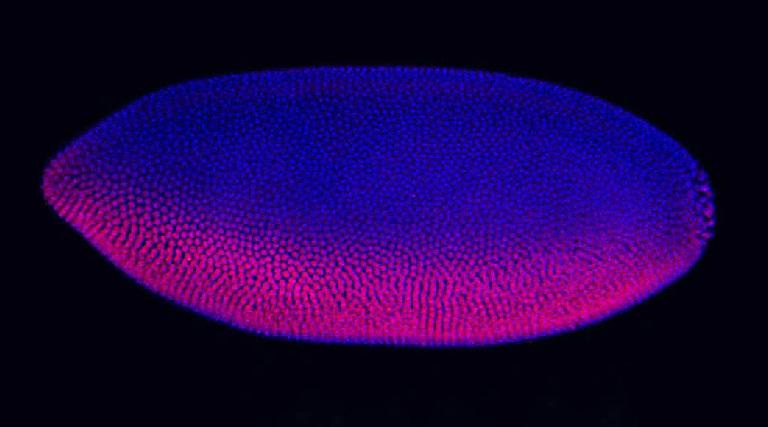
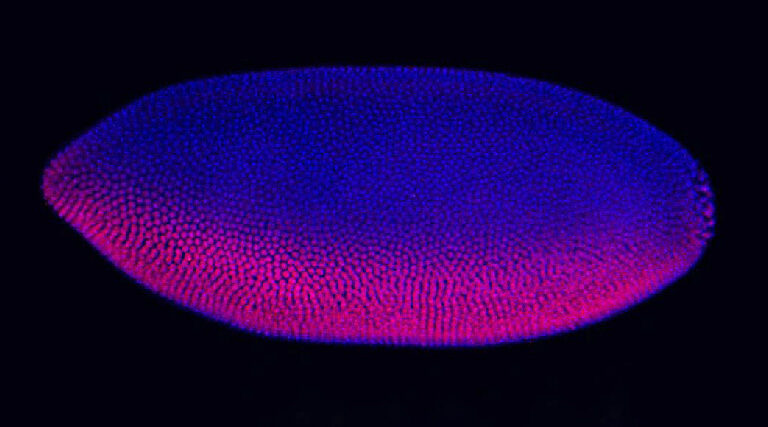
“We study mouse embryonic stem cells, mouse trophoblast stem cells, yeast, and my personal favorite, the fruit fly Drosophila melanogaster,” Brennan explained. “By using multiple systems in our research, we’re able to explore the conserved mechanisms that the cell uses to regulate gene expression.”
Tatiana Gaitan, another predoctoral researcher in the Zeitlinger Lab showed how she studies the evolution of DNA sequences important to gene regulation.
“In the lab we use powerful computational approaches, including machine learning models, to better understand the information embedded in a DNA sequence. This allows us to uncover interesting genome-wide patterns,” Brennan added.
Brennan introduced another member of the lab, predoctoral researcher Khyati Dalal, who studies how the environment plays a role in regulating gene expression in mouse stem cells.
In the video above, Dalal showed one of her current experiments and explained, “Here I am looking at gene expression in early mouse embryos by labeling different RNAs. You can see different colors, and when we merge it, you see a beautiful image of all the merged gene expression by labeling.”
Brennan showed the computational office – a unique feature of the Zeitlinger lab -- where postdoctoral research associate, Charles McAnany, Ph.D., explained his work.
“Here we’re looking at two proteins we’re studying in the lab. We’re looking at how they precisely interact with the DNA and with each other. What we’ve found is that each one of them on its own can bind DNA, but when you bring them together, they enhance each other’s binding cooperatively to give you very strong binding,” McAnany said.
Watch the video above to go inside the lab. You can learn more about the Zeitlinger Lab and the team’s research here.