Meet a PI & Faculty: Tatjana Sauka-Spengler, Ph.D., on new paths for future scientists
From Bosnia to Paris, then Oxford to Kansas City, a Stowers Investigator shares how her nonlinear journey shapes her approach to research and mentoring
29 April 2026
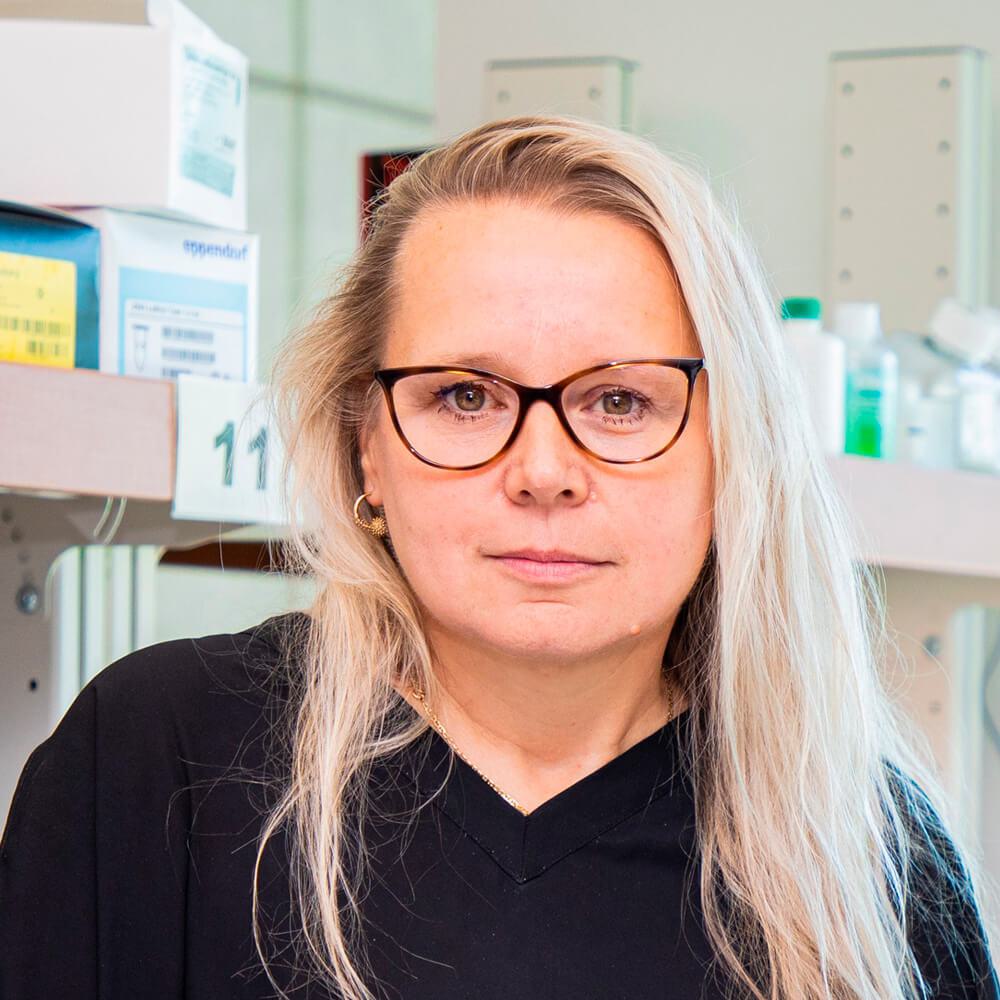
Principal Investigator Tatjana Sauka-Spengler, Ph.D.
Tatjana Sauka-Spengler, Ph.D., showed little interest in evolutionary biology when she first entered university. Her curiosities long drew her to mathematics and physics, and she was determined to earn a Ph.D. "Nothing would have deterred me,” she said.
Then history intervened. Growing up in Bosnia and Herzegovina, she began her undergraduate studies at the University of Sarajevo. Partway through her degree, the Bosnian war began. She fled the country and was forced to put her studies on hold for several years.
These events, albeit early in her studies, would change the trajectory of her career.
Principal Investigator Tatjana Sauka-Spengler, Ph.D.
“This tectonic shift in my life came after the war,” she said. “I had the realization that I wanted to do something meaningful, something to do with life.”
She eventually earned her first graduate degree in Physics from the University of Paris. Although a few years later than planned, the timing opened a door that would have likely been closed before.
Shortly after, Sauka-Spengler was offered an opportunity to undertake a Ph.D., this time focusing on the interface of physics and biology – not just something to do with life, but the study of life itself.
“I took it as a sign that this was meant to be and embraced the opportunity to shift and change,” she said. “I was a latecomer to biology. But I was hooked from the start. It introduced me to this diversity of life I never knew existed.”
After a postdoctoral fellowship and Research Assistant Professorship at Caltech, in late 2011, Sauka-Spengler joined the Weatherall Institute of Molecular Medicine at the University of Oxford as a group leader and research fellow. There she became Associate Professor in Genome Biology, and then Professor of Developmental Genomics and Gene Regulation and Senior Research Fellow at Jesus College Oxford. During her years at Oxford, she began to focus on the gene regulatory circuitry that orchestrates the development of vertebrate neural crest cells and cardiac cell types, establishing her as a leader in the field of single-cell genomics and gene regulatory networks in developmental systems.
She looks back and recognizes that her own path was never linear. These experiences now influence how she mentors her students at the Stowers Graduate School, where she has served as a professor and faculty member since 2022.
“Training future scientists is a big passion of mine,” she said. For Sauka-Spengler, her own journey taught her that a strong scientific foundation must be rooted in strong mentorship.
“Like a tree, a scientist’s ideas are not linear and cannot be propagated linearly,” she said. “I believe our job is to help students branch out wherever ideas take them, then produce a big treetop that truly reaches for the sun.”
Principal Investigator Tatjana Sauka-Spengler, Ph.D.
The Sauka-Spengler Lab at the Stowers Institute investigates genetics, gene regulation, and the regulatory networks underlying development and regeneration across a range of research organisms. “With the technology, resources, and information that we can collect today, we have to be asking big questions in order to discover new principles in biology,” she said. "For me, at Stowers I can ask some of the big questions I want to explore in my research. As a scientist, it is truly rare and special to be supported in the way the Institute supports us."
Her lab is multi-disciplinary and collaborative, and she encourages her graduate students and postdoctoral researchers to pursue their own research goals, no matter which direction they may lead. “That is how we train them to be great mentors so that one day, we can really achieve something we never could have before,” she said.