Stowers Postdoc honored with prestigious Jane Coffin Childs Fellowship
The award will support Kira Marshall, Ph.D., a Stowers postdoctoral researcher, as she investigates coral reproduction and how reproductive systems evolve across species.
24 June 2026
Kira Marshall, Ph.D., a postdoctoral researcher at the Stowers Institute in the lab of Matt Gibson, Ph.D., approaches her scientific research by uniquely pairing rigorous molecular research with a passion for preserving threatened species. That passion has now earned her a fellowship from the Jane Coffin Childs Memorial Fund for Medical Research, one of the nation’s most respected postdoctoral awards. The award supports exceptional early-career scientists pursuing innovative research with the potential to advance our understanding of human health and disease.
“I am honored to receive this prestigious fellowship,” said Marshall. “It allows me to pursue risky, multidisciplinary questions in coral biology, an underfunded but critical area of research. This fellowship also provides me with a community of like-minded scientists and access to a broad network of training and mentorship opportunities that will help further my career.”
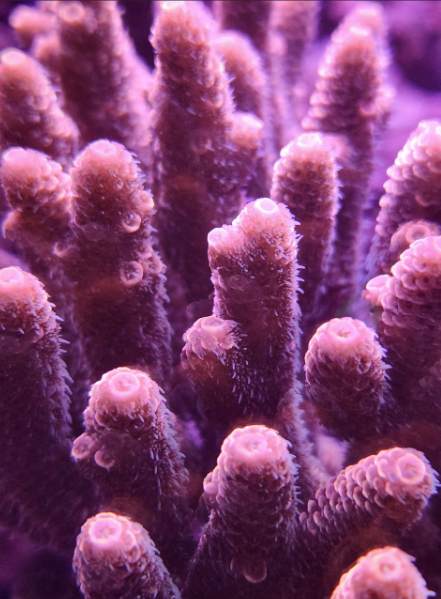
In the Gibson Lab, Marshall studies Acropora millepora, a reef-building coral species found throughout the Indo-Pacific oceans. The corals reproduce through a remarkable process known as broadcast spawning, in which bundles of eggs and sperm are released into the water simultaneously. Although individual corals produce both eggs and sperm, self-fertilization is surprisingly rare. This suggests that corals possess sophisticated biological mechanisms that regulate gamete attraction, recognition, and compatibility, helping ensure successful reproduction between genetically distinct individuals.
“The 2026 JCC Fellows represent something we all need right now: scientists with the training, the drive, and the imagination to ask questions the rest of us haven't thought to ask yet," said Sue Biggins, Ph.D., chair of the JCC Fund’s Board of Scientific Advisors. “This recognition honors their exceptional graduate work and makes a bet on the breakthroughs still to come."
Marshall’s research at the Institute has implications that extend beyond basic biology. Coral reefs are among the most diverse and ecologically important ecosystems on Earth, yet they face increasing threats from climate change, ocean warming, pollution, and habitat loss. Successful reproduction is critical to the long-term survival and recovery of coral populations. By improving our understanding of how corals reproduce, Marshall’s research could help inform future conservation and restoration strategies aimed at protecting these vulnerable ecosystems.
Before joining the Gibson Lab in 2025, her research was rooted in a similar interest — reproduction — but focused on a different branch of the tree of life. She earned her Ph.D. in the laboratory of Bluma Lesch, M.D., Ph.D., at Yale University, where she compared gene expression during sperm development in the marsupial opossum and the laboratory mouse.
By investigating the molecular mechanisms that govern spermatogenesis, the process by which sperm cells develop, she identified genetic programs shared across evolutionarily distant mammals as well as genes that appear unique to placental mammals. Her discoveries provided new insights into germ cell biology and fertility while deepening our understanding of how reproductive systems have evolved across species.
The Gibson Lab opened the door for Marshall to further explore these new species. Now, she has turned her attention to coral —investigating how the organism’s gametes identify compatible partners and avoid self-fertilization. She hopes her research will provide a better understanding of the fundamental biology of fertilization and reveal how reproductive barriers emerge and are maintained in marine organisms.
"I am really interested in the evolution of these mechanisms," said Marshall, "and corals are an interesting system because they are so ecologically critical. They are facing significant decline, so understanding their biology is vital now more than ever."
Learn more about coral research in the Gibson Lab here.