Stowers scientists discover a delivery system that helps fuel regeneration in planarians, solving a 25-year mystery
The new study reveals miniature “packages” help planarian cells share gene-silencing instructions across the body.
06 February 2026
Postdoctoral Researcher Vidyanand Sasidharan, Ph.D., discusses the new findings.
By Rachel Scanza, Ph.D.
The discovery
Communication is the foundation of any healthy relationship. But the planarian flatworm — a freshwater organism capable of regrowing its entire body from a small fragment — puts that sentiment into practice through constant chatter among cells that help drive regeneration.
So how does this animal coordinate such an astounding feat? Part of that answer lies in tiny biological “packages” planarian cells generate that shuttle genetic information throughout their bodies. Stowers Institute scientists report that planarian flatworms release abundant, membrane-bound particles known as extracellular vesicles (EVs) that deliver important RNA cargo to distant cells.
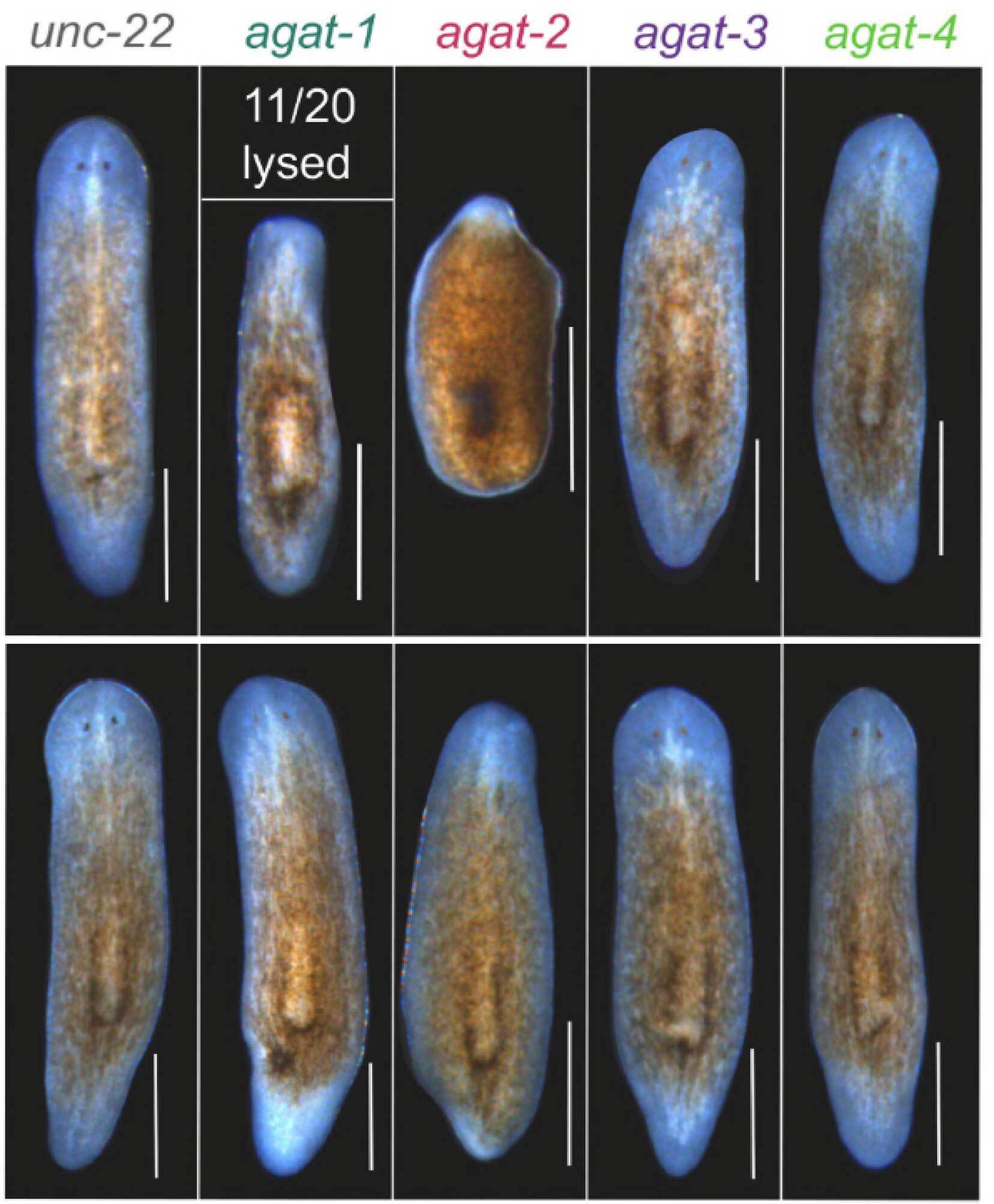
Extracellular vesicles (EVs) facilitate RNA interference throughout the planarian flatworm. Silencing genes required for eye formation (right) and tail formation (left) are packaged into EVs and propagate throughout the worm to produce these phenotypes.
In a study published in Science Advances on February 6, 2026, researchers from the lab of Stowers President and Chief Scientific Officer Alejandro Sánchez Alvarado, Ph.D., discovered that planarians use EVs to carry specific types of RNA molecules — double-stranded RNAs (dsRNAs) that are processed into small interfering RNAs (siRNAs) — to silence genes systemically or across the body. This system, called RNA interference (RNAi), allows cells in one part of the body to send molecular messages that modulate gene activity in distant tissues. The findings reveal planarian EVs as pivotal mediators of long-distance communication during regeneration.
“Regeneration is one of nature’s most astonishing abilities, and it requires coordination across tissues,” said Sánchez Alvarado. “By uncovering an EV-linked route for systemic RNAi in planarians, this work points to general principles of long-range molecular communication in animals.”
The team led by Postdoctoral Research Associate Vidyanand “Anand” Sasidharan, Ph.D., used advanced imaging and molecular profiling techniques to track how these vesicles are produced, what they carry, and how they enable RNAi in living animals. RNAi has long been used to study regeneration in planarians but until this study, how it spread throughout the animal was unknown.
EVs have been implicated in how our immune system responds to infections as well as in the spread of cancer cells and neurodegenerative disease-causing proteins throughout the human body. The new findings could help better inform future strategies for RNA delivery in patients, an area scientists and clinicians are actively investigating and utilizing for diagnostic and therapeutic purposes.
No bloodstream, no problem: Tiny vesicles shuttle signals to coordinate regeneration
Extracellular vesicles were first observed more than 50 years ago. For decades, the study of cell-to-cell communication was dominated by the concept of broadband signaling via hormones and proteins. Today, however, EVs are demonstrating that there are more targeted mechanisms of cellular communication, redefining what we know about how cells “talk.” Scientists have now shown that EVs are released by nearly all cell types in multicellular organisms. Wrapped in a fatty membrane, they act as packages carrying proteins, small RNAs, and other biomolecules from one cell to another.
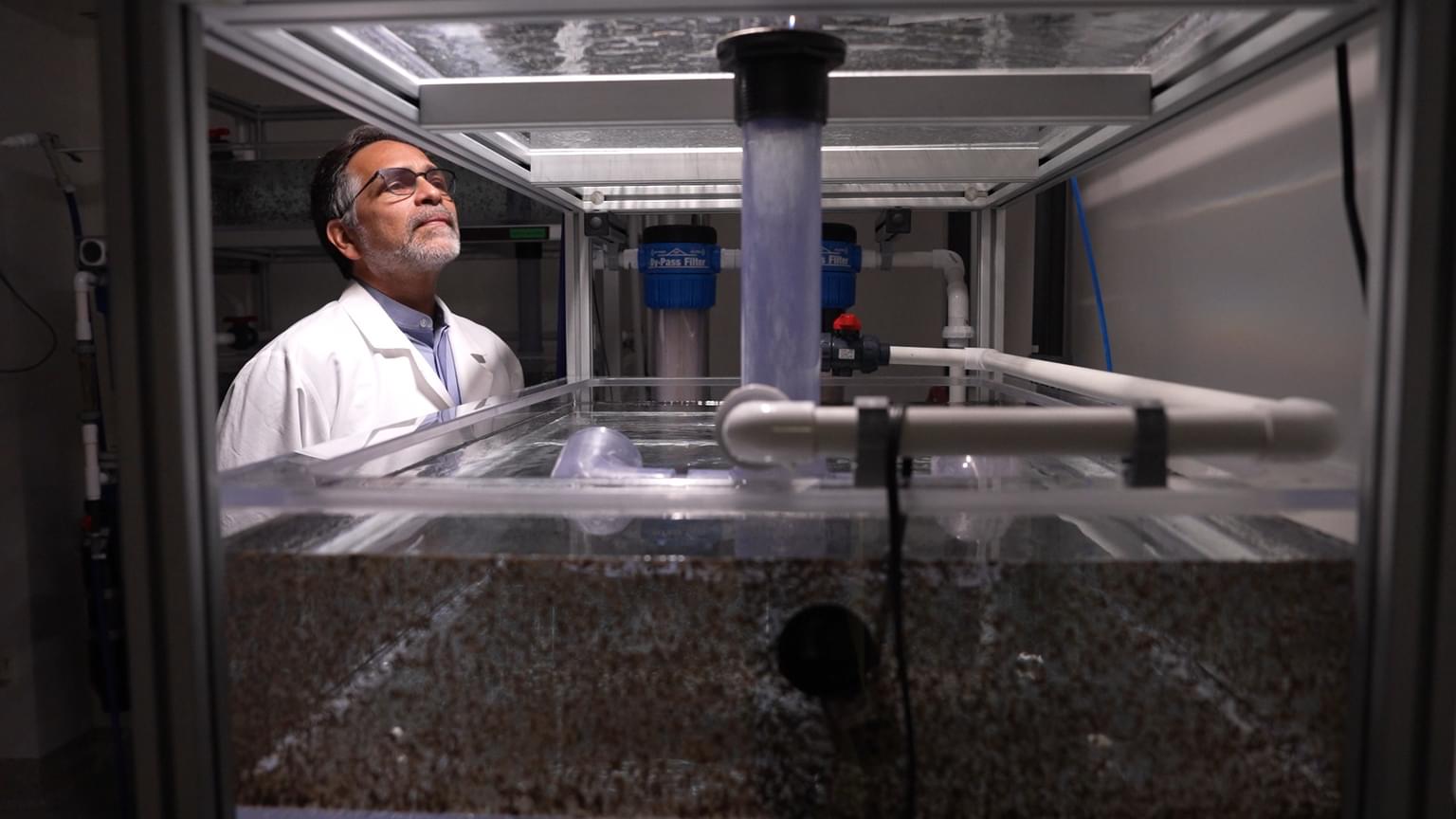
Alejandro Sánchez Alvarado, Ph.D., inside the Planarian Facility at the Stowers Institute.
In the highly regenerative planarian flatworm Schmidtea mediterranea, an animal notably lacking a bloodstream, EVs appear to play a particularly central role and offer a unique opportunity to understand their function within a living animal.
“Planarians don’t have a circulatory system like ours,” said Sasidharan. “So, the question was how do their cells communicate across the body to coordinate regeneration?”
The answer, the researchers found, lies in EVs functioning less like broadcast signals and more like sealed postal packages, protecting their contents until they reach their destination.
Transmission electron microscopy image showing extracellular vesicles within planarian stem cells.
Using a high-resolution imaging technique called transmission electron microscopy, the researchers observed EV-like particles produced by most planarian cells, including stem cell-enriched samples, and identified chemical markers commonly associated with EVs on purified planarian particles. They also found that environmental stressors (cold temperatures and continuous light), significantly increased the release of small EVs, indicating that vesicle output is dynamically regulated.
Unpacking the parcel revealed a cargo of genetic instructions
To understand what planarian EVs carry, the scientists analyzed their molecular contents. They found that EVs contain thousands of proteins and many types of small RNAs, molecules that help control gene activity, just like what has been identified inside the EVs produced by other organisms.
Extracellular Vesicles (orange) inside the cell, along with cytoplasm (green) and nuclei (blue).
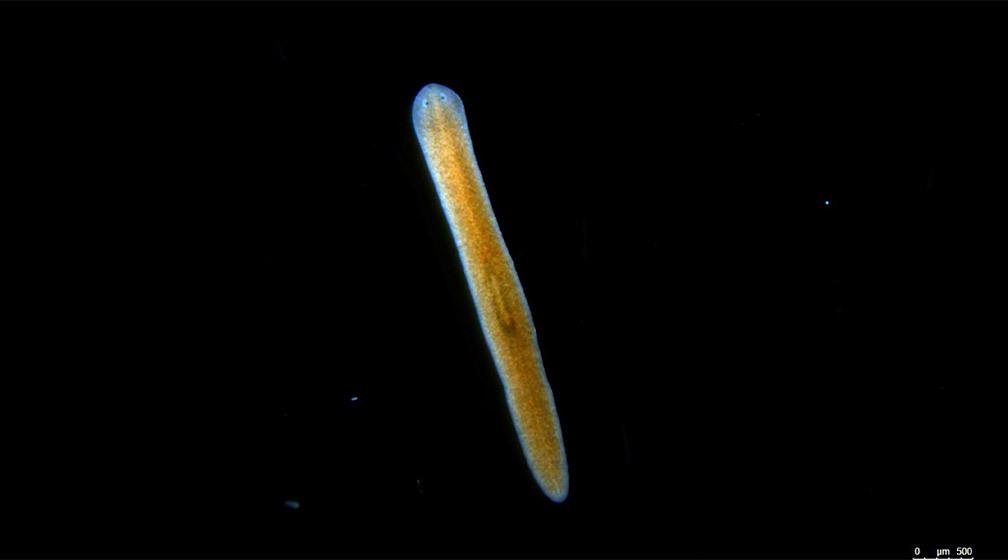
Planarian flatworm
Alejandro Sánchez Alvarado inspecting planarian in tanks inside the Planarian Facility at the Stowers Instiute
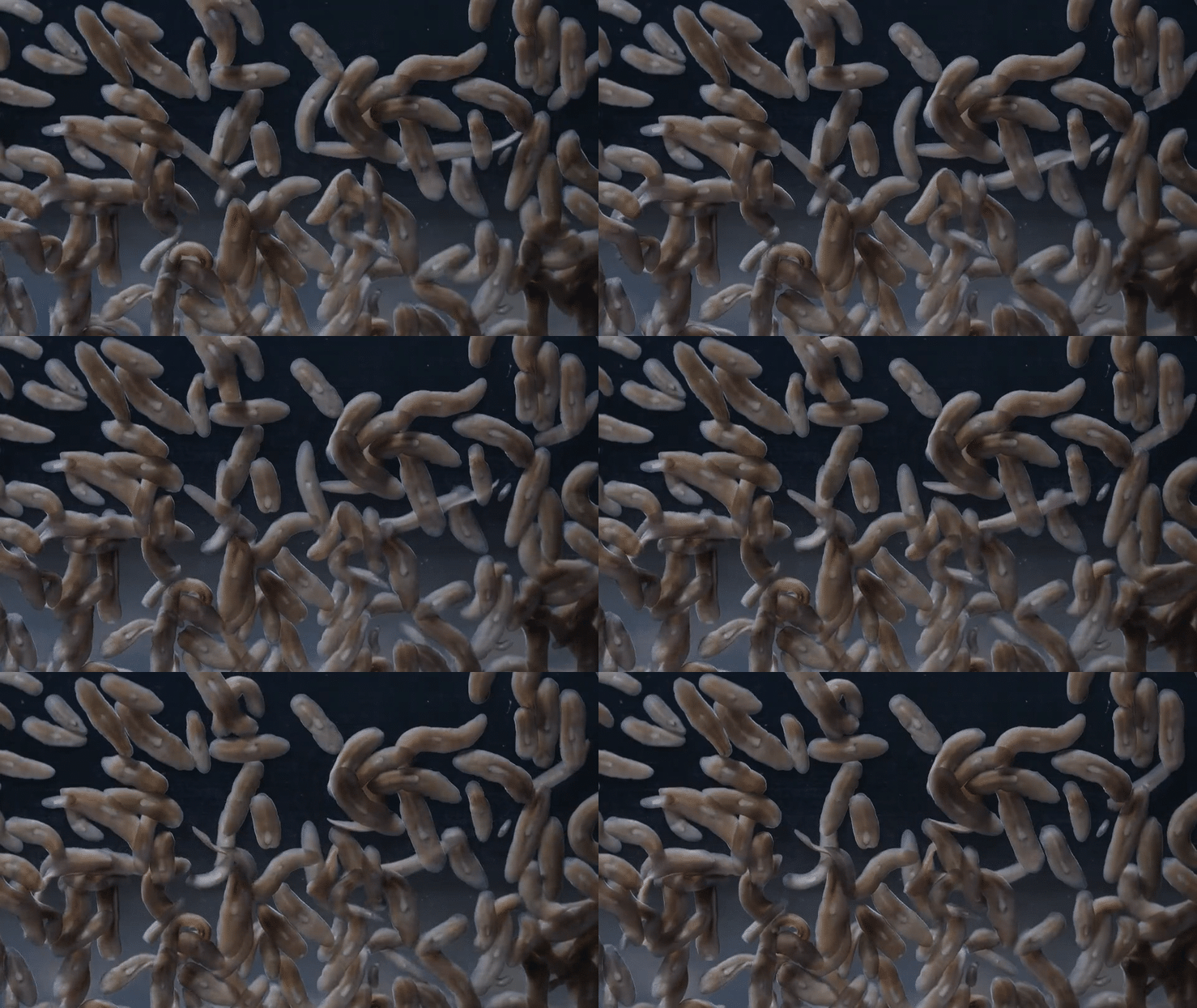
Planarian flatworms in tank
Importantly, EV cargo was not the same in all situations. Vesicles collected during head regeneration carried different RNAs than those collected during tail regeneration. This suggested that EVs deliver tailored messages based on which part of the body is being rebuilt. Among these messages were microRNAs (miRNAs), which are short RNA fragments that silence specific genes.
“Our work confirmed that extracellular vesicles produced by planarians are not just cellular debris,” said Sasidharan, “but are part of an active long-distance communication system that carries powerful ‘on/off’ instructions for genes.”
Solving a long-standing mystery surrounding gene silencing
For more than 25 years, scientists have used RNA interference (RNAi) to study planarians. The method is remarkably straightforward. Add a dash of double-stranded RNA to a delicious meal of beef liver paste, and planarian cells will chop it up into tiny RNAs that target and destroy mRNAs to “turn off” a gene.
RNAi-induced eyeless planarian phenotype.
The method works throughout the entire animal. But how silencing signals spread through the body has been unclear. The new study revealed that when planarians ingest double-stranded RNA (dsRNA), their cells process it into small interfering RNAs (siRNAs) and load these gene-silencing molecules into EVs. The vesicles then travel throughout the animal, delivering their cargo to distant cells.
Crucially, the team showed that EVs isolated from animals undergoing RNAi could be transplanted into untreated planarians and reproduce gene-specific phenotypes. “The results were striking,” said Sánchez Alvarado. “The recipient worms developed the same gene-specific defects, such as losing their ability to regenerate their eyes, or regenerating a head where a tail should be.”
This showed that EVs are not just carrying RNA. They are also transporting functional instructions that actively change gene behavior in other cells and even other animals.
RNAi-induced double-headed planarian phenotype.
The protein that links RNAi to EV cargo
How do cells decide which RNAs to load into EVs? The team found that a specific protein, AGO-3, is required for systemic gene silencing and disrupting AGO-3 reduced the abundance of the gene-silencing RNAs (dsRNA-derived siRNAs) associated with EVs. Using proteomic analysis — a method that characterizes the full set of proteins in a sample — the team did not detect AGO-3 in EVs even though the worms could still produce it.
This is consistent with a model in which AGO-3 enables siRNA loading and stabilizes its association with EVs “upstream” prior to export. The study showed that while the protein isn’t inside the vesicles, it is required to help package and deploy them.
"AGO-3 actively picks the right fragment to package inside the vesicles, and then it shuttles them out to other cells,” Sasidharan said. “This is much like a customs officer deciding which parcels will get shipped.”
Postdoctoral Researcher Anand Sasidharan, Ph.D., presenting research at a STEM community outreach event.
Bridging the gap between communication and regeneration
Scientists have many ideas — but no clear agreement — about how stem cells send signals over long distances. Understanding this process is especially important for regeneration, since stem cells in human tissues need to be in direct contact with nearby cells to function properly.
Other recent discoveries from the Sánchez Alvarado Lab have similarly addressed systemic stem cell responses at scale. One study found that non-adjacent cellular signals mediate stem cell function in planarians, while another found that an injury to the tail fin of the regenerative killifish elicited a global system-wide response. The current study demonstrates that EVs enable cell-to-cell communication at a distance, essentially bridging that gap.
Why it matters
Extracellular vesicles are already being studied as biomarkers and delivery tools in cancer, neurodegenerative disease, and regenerative medicine. Because planarians are experimentally tractable and regenerate robustly, they provide a powerful in vivo context to dissect how EV biogenesis and RNA cargo selection contribute to organism-wide coordination.
“Planarians offer a blueprint,” said Sasidharan. “This study highlights a new, elegant way highly regenerative systems can naturally move genetic information around to control regeneration and possibly, in the future, inspire better ways to deliver RNA-based therapies or even promote tissue repair in humans.”
More broadly, clarifying natural strategies for packaging and transporting regulatory RNAs can inform how scientists think about RNA delivery; however, therapeutic translation is a longer-term prospect.
See planaria in action
Acknowledgements: This work was made possible by the fruitful collaboration with Stowers Technology Centers including Cells, Tissues, and Organoids, Aquatics, Microscopy, Systems Mass Spectroscopy, and Next-Generation Sequencing.
Citation: Sasidharan et al., Extracellular vesicles mediate stem cell signaling and systemic RNAi in planarians (2026). Science Advances.12,eady1461
Additional authors include Laura Ancellotti, Viraj Doddihal, Ph.D., Carolyn Brewster, Frederick Mann, Ph.D., Mary Cathleen McKinney, Ph.D., Joseph Varberg, Ph.D., Eric Ross, Fengyan Deng, Ph.D., and Kexi Yi, Ph.D.
This work was funded by the Howard Hughes Medical Institute and with institutional support from the Stowers Institute for Medical Research.