In The News


29 September 2026
Rapidly Evolving Aphid Proteins Share a Common Structural Blueprint
From Technology Networks: The Stern Lab reveals a shared structural blueprint among thousands of rapidly evolving aphid proteins.
Read Article
In The News
29 September 2026
From Technology Networks: The Stern Lab reveals a shared structural blueprint among thousands of rapidly evolving aphid proteins.
Read Article
In The News


24 September 2026
From Phys.org: The Stern Lab reveals how evolution helped AI predict the structures of thousands of rapidly evolving aphid proteins.
Read Article
Press Release
22 September 2026
In an evolutionary arms race with plants, aphids deploy thousands of rapidly evolving proteins. A team led by Stowers Institute and HHMI Investigator David Stern, Ph.D., discovered a shared architecture beneath them and revealed how evolution can help AI predict similar protein structures across biology.
Read Article
News


15 September 2026
New single-cell atlas of the acorn worm shows that most tissues undergo a genome-wide transcriptional overhaul as larva becomes adult, providing new insights into how some organisms remake their bodies in ways humans can’t.
Read Article
News


15 September 2026
Augusto Ortega Granillo, Ph.D., reflects on his journey from the Stowers Graduate School to his postdoctoral research at the Max Planck Institute
Read Article
In The News


11 September 2026
From Medical Xpress: Stowers scientists reveal how neurons build their identities during a critical window in their first hours of life.
Read Article
News


10 September 2026
A new study from the Özel Lab offers new understanding and nuance to a long-standing view of development. To understand why, it helps to picture a classic idea in biology: a cell’s path as a marble rolling downhill.
Read Article
Press Release


10 September 2026
The atlas of nearly a quarter million fly brain cells is the first to read both the genes and the DNA switches that control them across an entire developing brain region, providing new insights for "designing" neurons to treat neurological disease.
Read Article
In The News


09 September 2026
From Nature: Stowers scientists’ work with Google DeepMind is highlighted in a look at AlphaGenome Atlas and its potential to reveal the regulatory language of DNA.
Read Article


Browse upcoming talks, seminars, conferences and symposiums, and stay up to date on the latest conferences, speakers, and activities happening at the Institute.

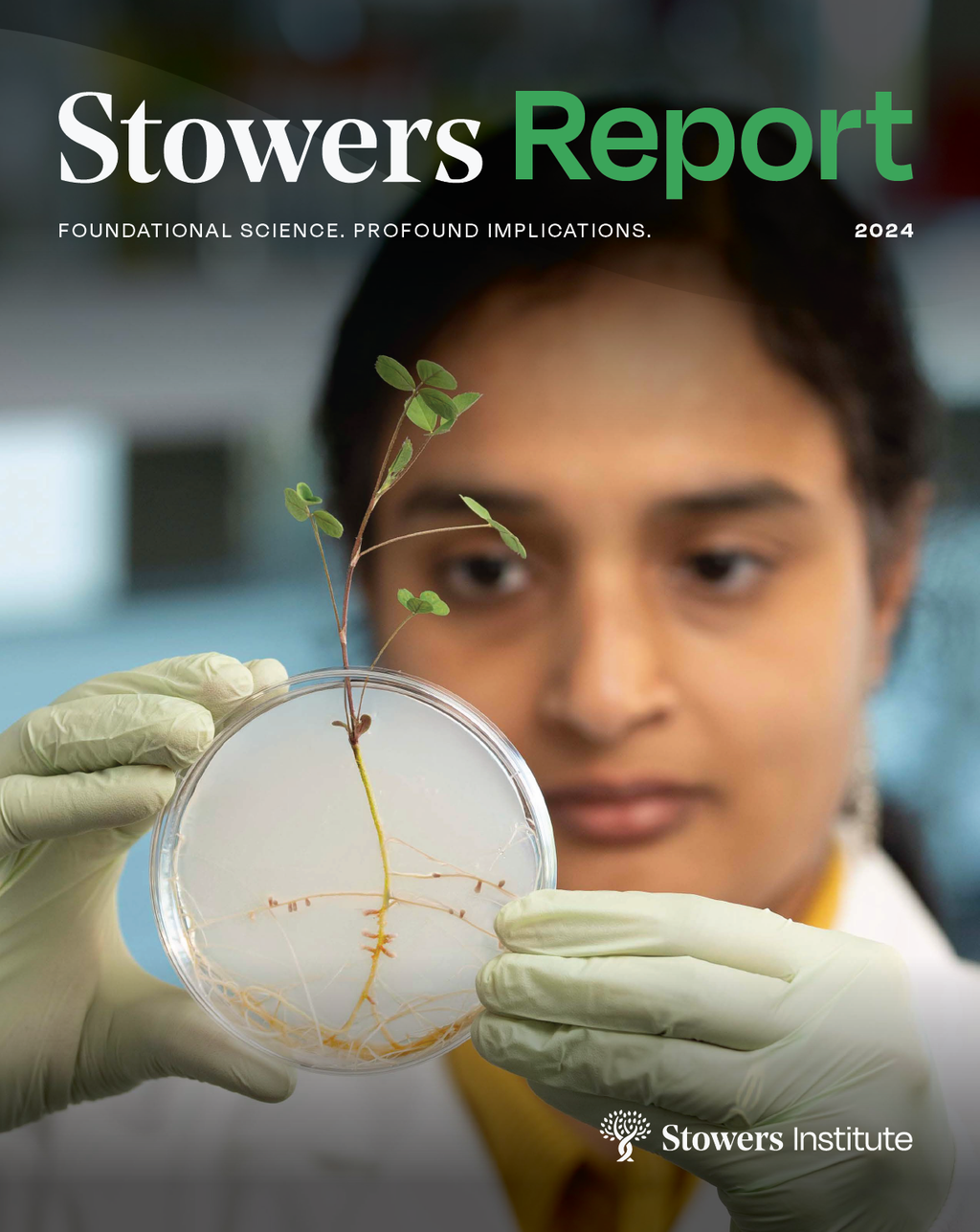
The 2024 Stowers Report celebrates some of the incredible contributions our scientists, students, and staff have achieved this past year, including collaborations, science, and innovations that contribute to our better understanding of the secrets underlying fundamental biological processes.