News


03 March 2026
Hearing is more than meets the ear
How do our ears allow us to hear? How does music become part of our memory? Here are three ways Stowers science is revealing the mysteries and mechanisms of hearing.
Read Article
News
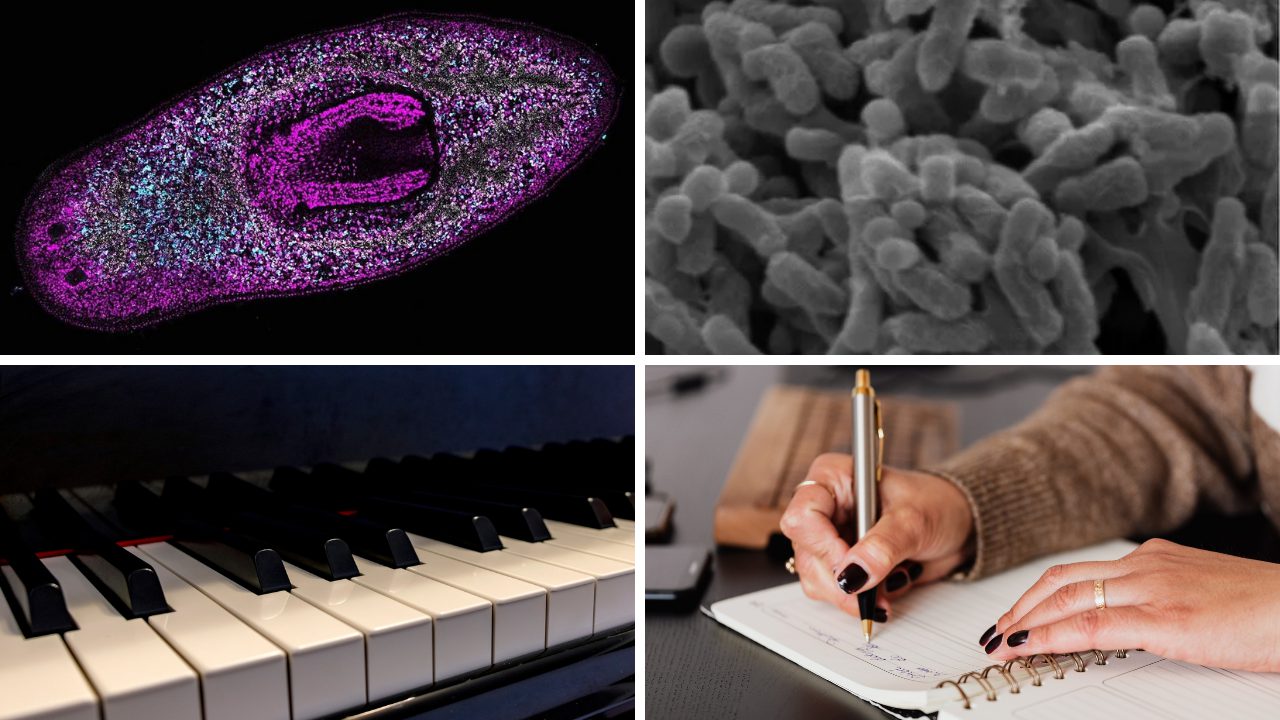
What does it mean to remember? From planarians and fruit flies to jellyfish, zebrafish, and even AI, explore a few of the unique ways memory appears across life and technology. Each of which can be found inside the Stowers Institute.

Planarians are flatworms with extraordinary regenerative powers. Even when cut in half, each piece can regrow the missing parts of its body, rebuilding a complete planarian in less than two weeks. A literal re-membering.

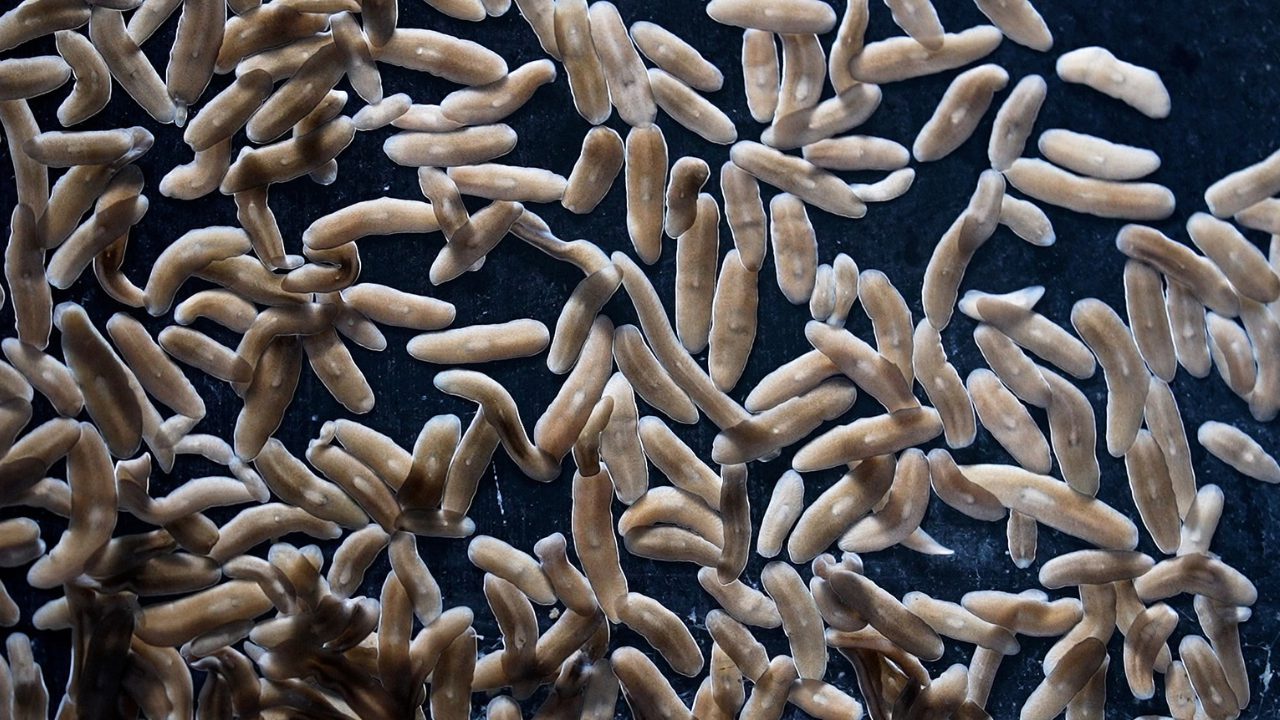
Planarian flatworms (Sánchez Alvarado Lab)
The brain of a fruit fly contains only 10,000 neurons (compared to 8 billion in the human brain), and yet these research organisms can learn, remember, and perform complex navigation using short-term memory. They can also develop long-term memory that lasts days for certain activities, such as when to give up pursuing a particular mate. (Do we remember the same way?)

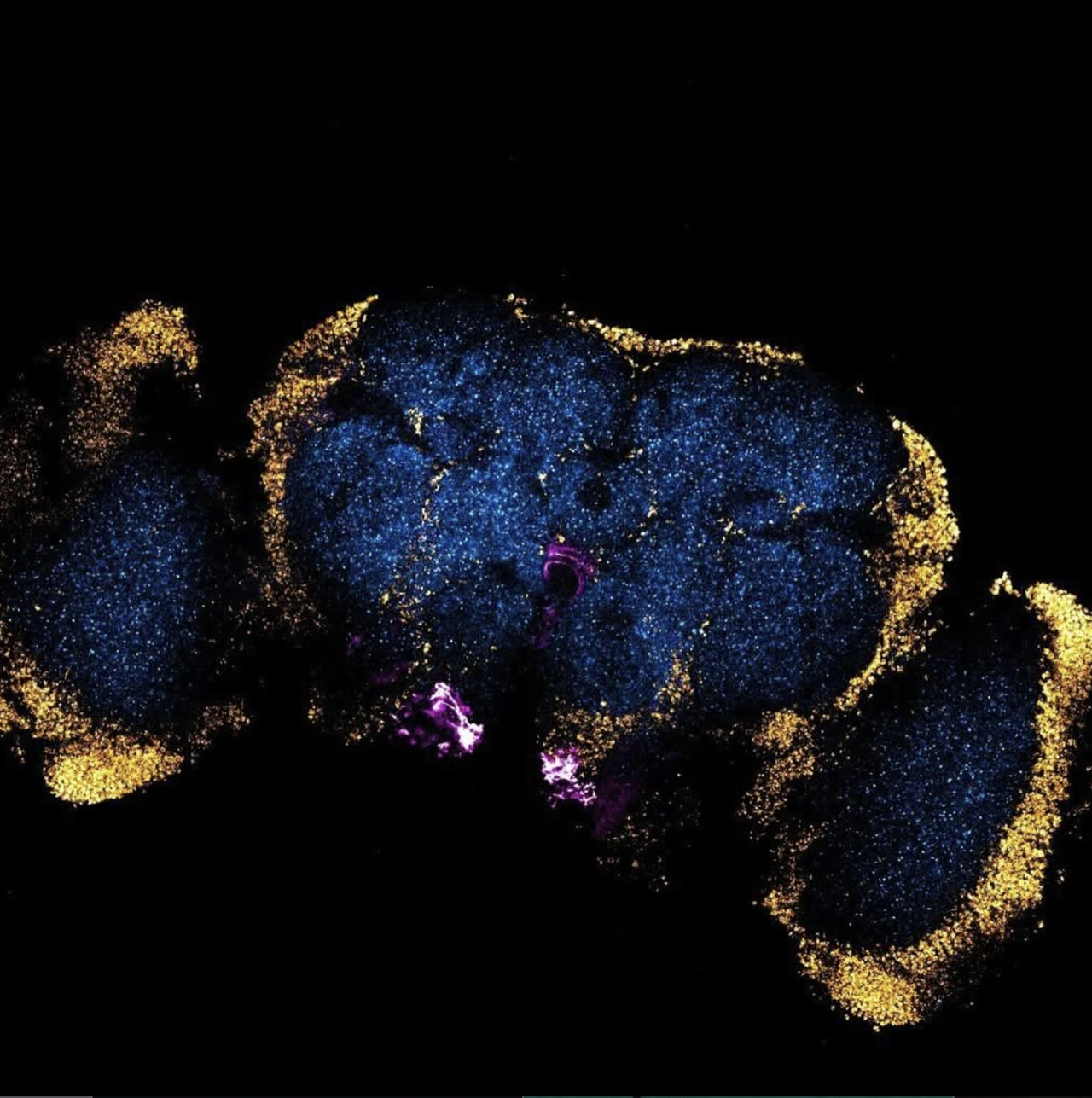
An adult fruit fly brain as seen on a confocal microscope (Si Lab)
A piano can remember. At least a Steinway Spirio can. This player piano’s software is programmed not only to play the notes of a song, but to remember and replay each note with the weight and tone of the pianist who first recorded it. When it plays Debussy’s Reverie, you are watching the ghost fingers of Lang Lang on the keys. (What do we mean when we say we remember?)
And did you know, a Steinway can be found in the Stowers Institute's Library? Donated by Virginia Stowers, Institute members enjoy both playing and listening while taking breaks from the lab.


Steinway Spirio piano in the Stowers Institute's library
LLM's can recollect all data available on the internet and form it into whatever you ask of it. (Is this memory? Is it the same as remembering?)

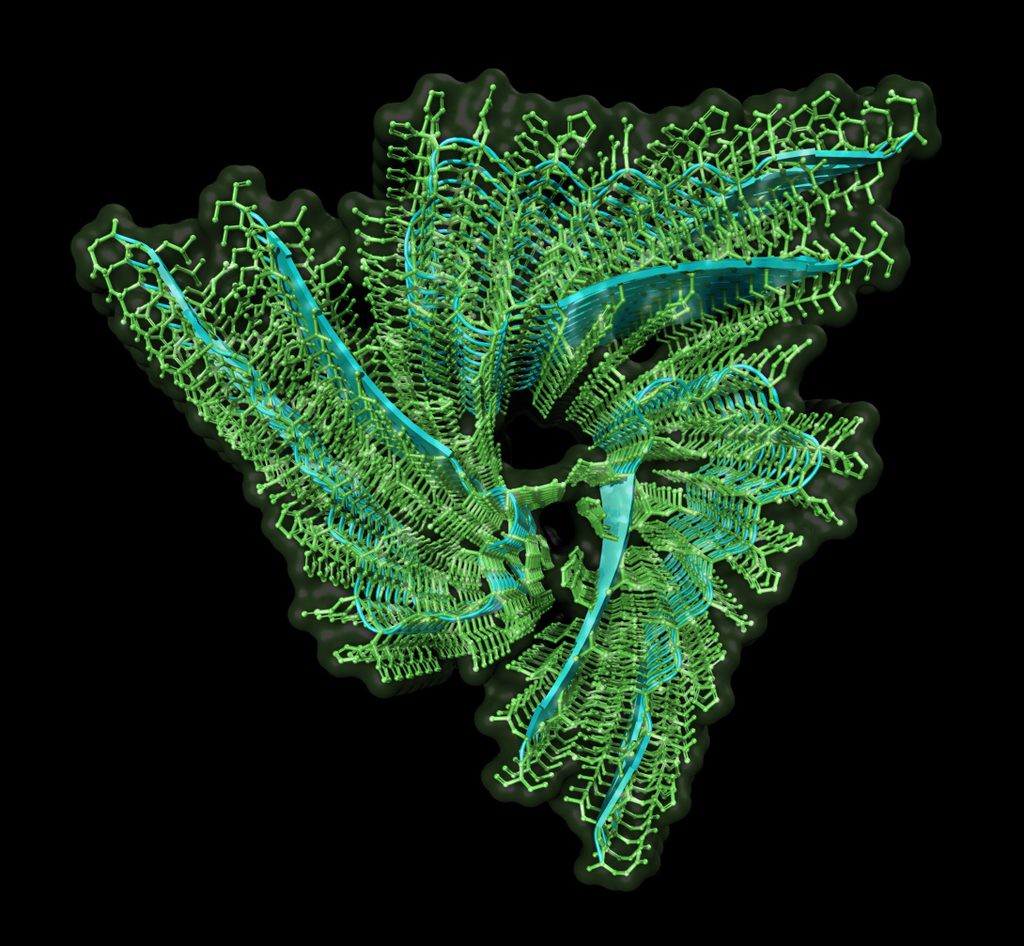
Amyloid
The immortal jellyfish can relive its stages of its growth, from infancy to adulthood. When it is stressed, it can biologically reverse its life cycle and rewind back to an infant polyp. It can repeat this process, forward and backward, ad infinitum, theoretically living forever.

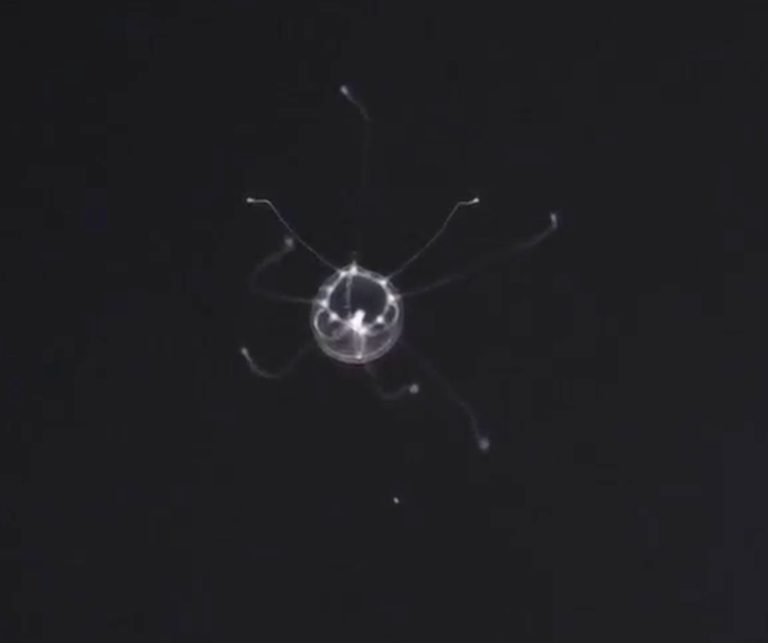
Turritopsis dohrnii, also known as the immortal jellyfish
Your calendar recalls events. Your journal, details in language. Your camera, images captured. A file index systematically organizes information. "It just popped up in my Memories" used to mean something different.


A zebrafish can have its own heart destroyed, and then, from the wreckage, it can remember how its heart grew in the first place by reactivating its developmental genes, proving it's possible to heal a broken heart.

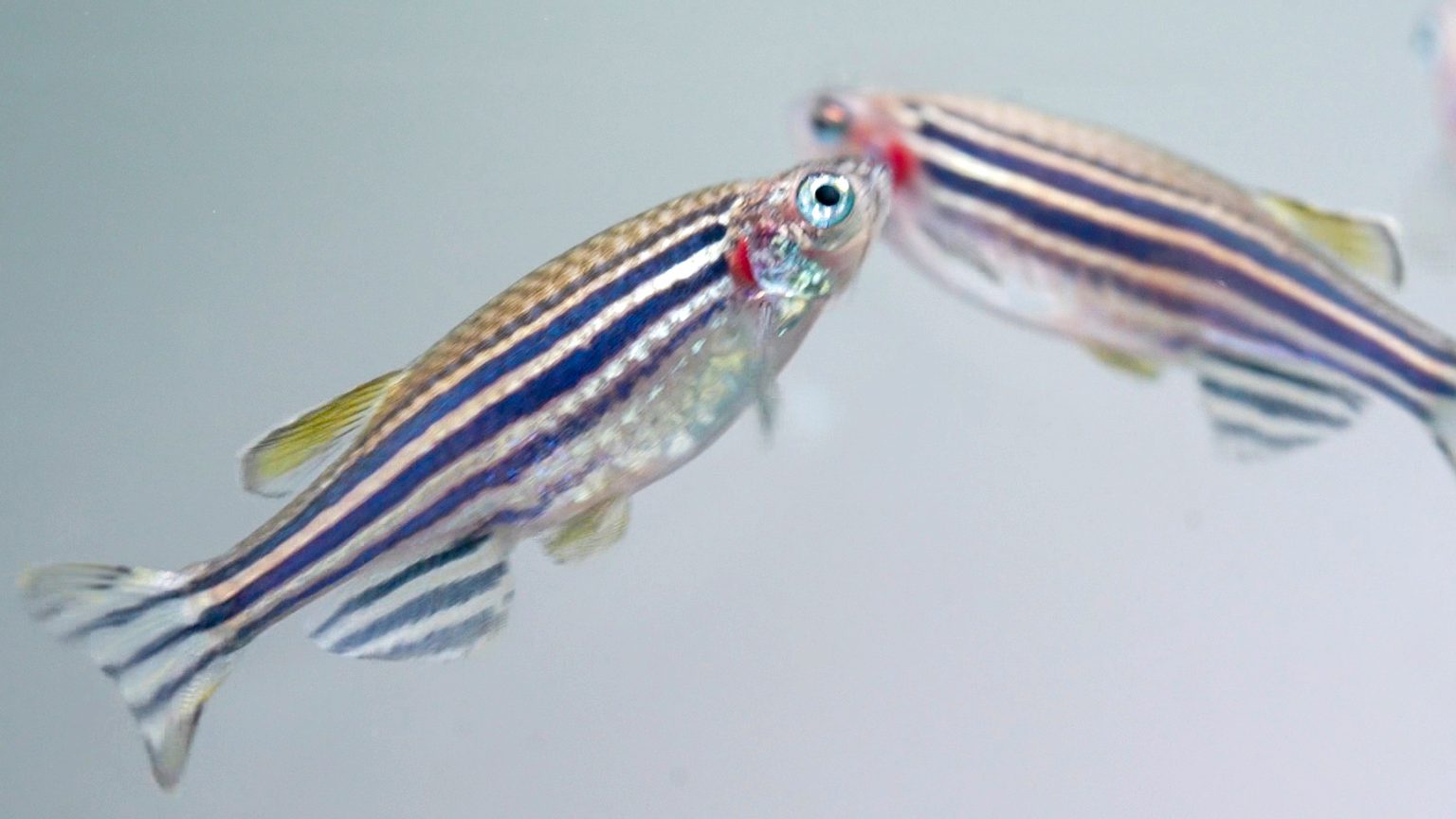
A pair of zebrafish
News
03 March 2026
How do our ears allow us to hear? How does music become part of our memory? Here are three ways Stowers science is revealing the mysteries and mechanisms of hearing.
Read Article
News
26 February 2026
Discovery often starts with the unexpected, and Shane Miller, the Stowers Institute's Director of Research Organisms, believes turning to nature is how we can turn big questions into breakthroughs.
Read Article
#Stowers25: Celebrating 25 Years
08 October 2025
Why the future of biology depends on widening our lens, embracing joy in discovery, and daring to ask the biggest questions.
Read Article
News
03 June 2025
With the hope of discovering new ways to save these iconic animals from extinction, scientists at the Stowers Institute have successfully induced sexual reproduction in a population of Great Barrier Reef coral housed hundreds of miles from the nearest ocean.
Read Article