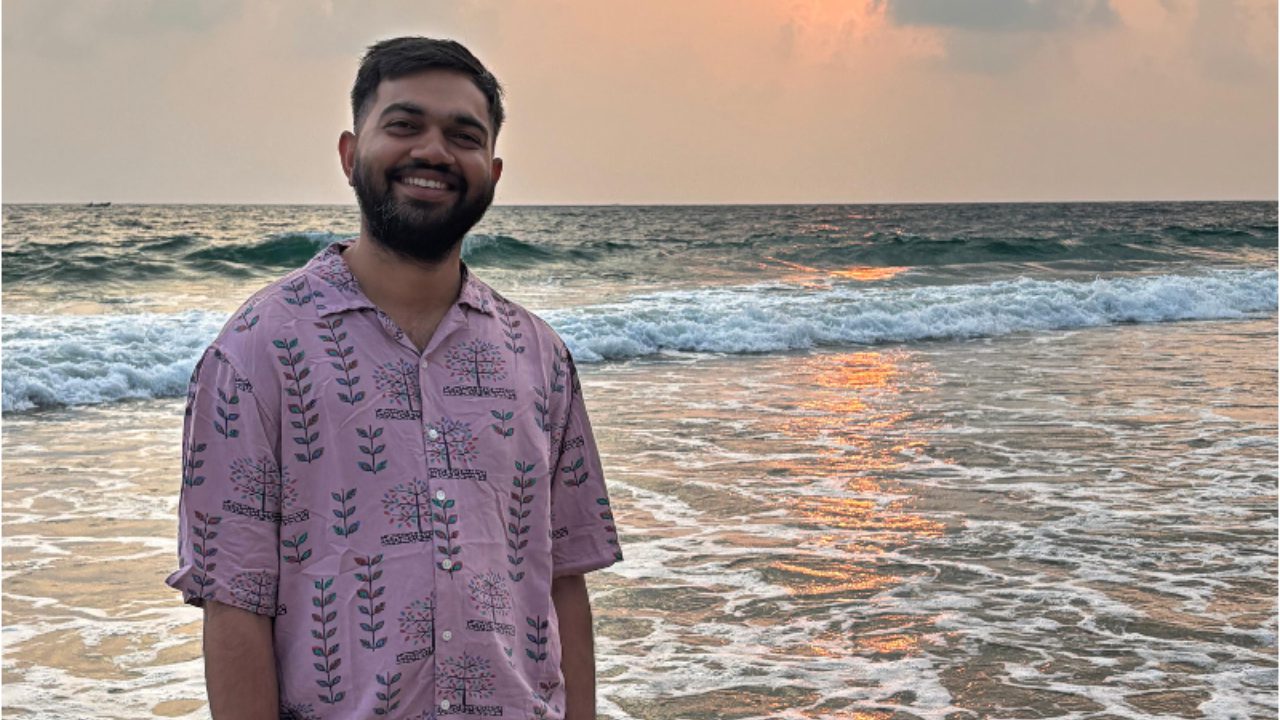
Postdoc Profile: Raman Kaushik joined the Piotrowski Lab to explore why zebrafish regenerate hair cells so well, and why mammals struggle.
10 March 2026
What is your current research focus?
I am currently investigating the development and regeneration of hair cells in vertebrates.
Hair cells are specialized sensory cells that convert movement into electrical signals. We have hair cells too, found in our inner ear. They help us hear and maintain balance.
But when human hair cells are damaged or die, they don’t grow back. If we can learn how some animals, such as zebrafish, regenerate these cells — the knowledge could one day help us too.
Growing up, what career did you want to pursue?
I didn’t have a single, fixed career in mind growing up. I spent a lot of my time playing cricket in India, and I loved the discipline, teamwork, and focus it demanded. Looking back, I’m sometimes surprised that I didn’t pursue something connected to the sport — but those same traits eventually drew me toward science!
When and how did you become interested in a career in science?
An Indian TV show, “Shaktimaan,” sparked my initial interest in science. In the show, a villain, Dr. Jackal, would conduct different scientific experiments to tackle the protagonist, Shaktimaan.
Years later during grad school, I was first exposed to lab experiments. I enjoyed the process of having fun, challenging ideas, and testing them on different biological systems. I was amazed by the fact that although nearly all organisms start as a single cell, each species develops differently. Even today, when I see a developing embryo, I get overwhelmed with the same thought!
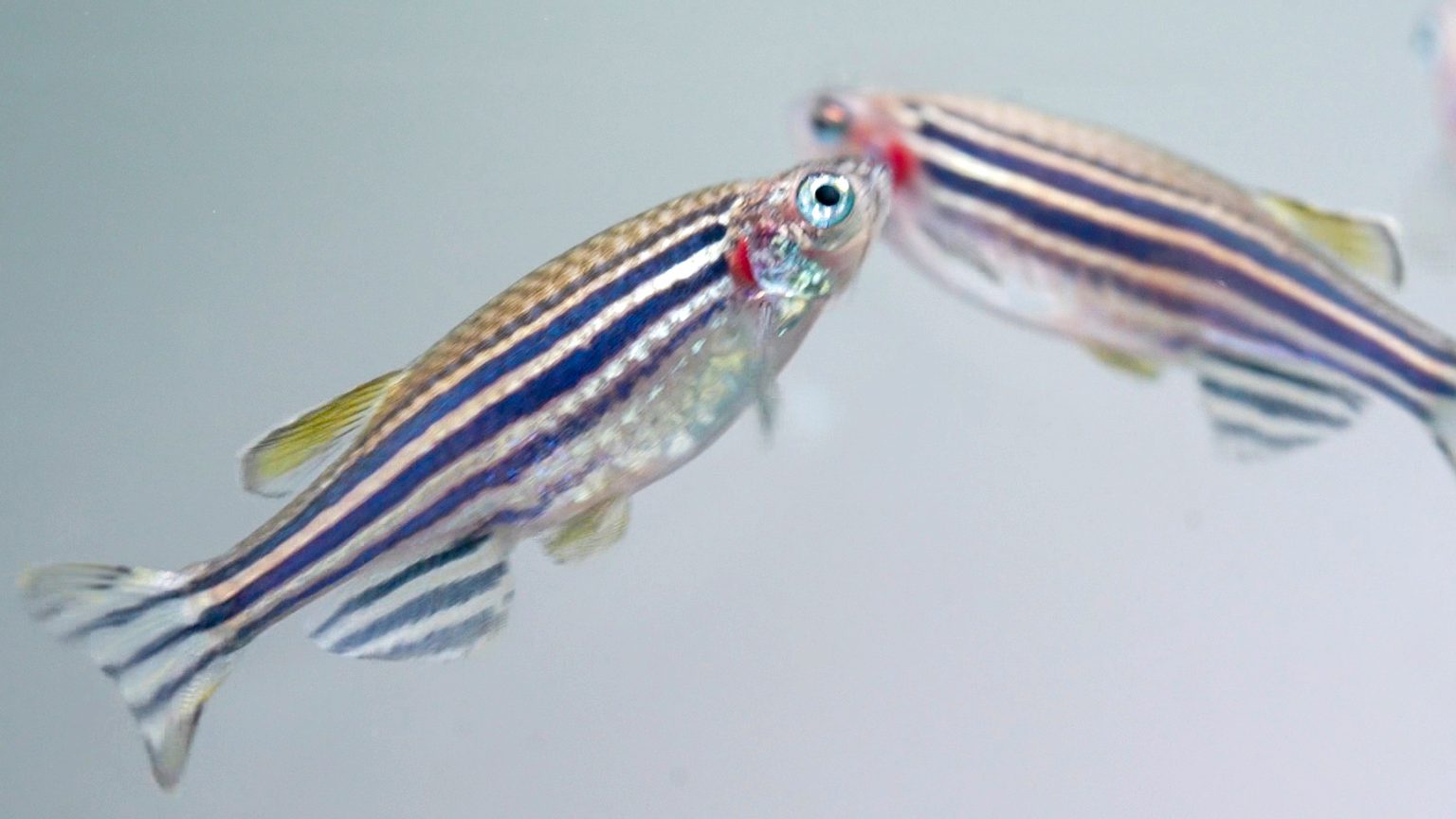
Zebrafish
What made you decide to join the Piotrowski Lab at the Stowers Institute?
My Ph.D. research focused on hair cell development in mice, which have a very limited ability to regenerate. I wanted to understand the differences between mouse and zebrafish hair cells — and investigate what allows for such remarkable regenerative capability in zebrafish. The Piotrowski Lab’s expertise in the zebrafish lateral line system was a perfect fit for my interests. Beyond the science, the resources, such as the Technology Centers, and the benefits and opportunities that the Institute provides couldn’t be ignored.
What is your favorite non-research related memory at the Stowers Institute so far?
I love the Warm Cookie Wednesdays each month in the café. It takes me back to my childhood!
So far, taking KC Streetcar trips to explore all the city and nearby neighborhoods have to offer.
Where do you see yourself in 10 years?
Although, I find it hard to envision where I’ll be that far ahead, I hope I will still be doing impactful science and having fun doing so!
What advice do you have for other people curious about a career in science?
You don’t need to be a “genius” or “prodigy” to succeed in science — but you do need curiosity, rigor, and persistence. Experiments fail all the time. What matters is how thoughtfully you learn from failure and that you keep improving. The best scientists I’ve met are simply resilient.