BIG IDEAS event welcomes renowned scientist who catalyzed the decoding of the human genome
Craig Venter, Ph.D., founder of the J. Craig Venter Institute, joined Alejandro Sánchez Alvarado, Ph.D., for an evening of reflection and conversation surrounding his scientific journey.
08 December 2025
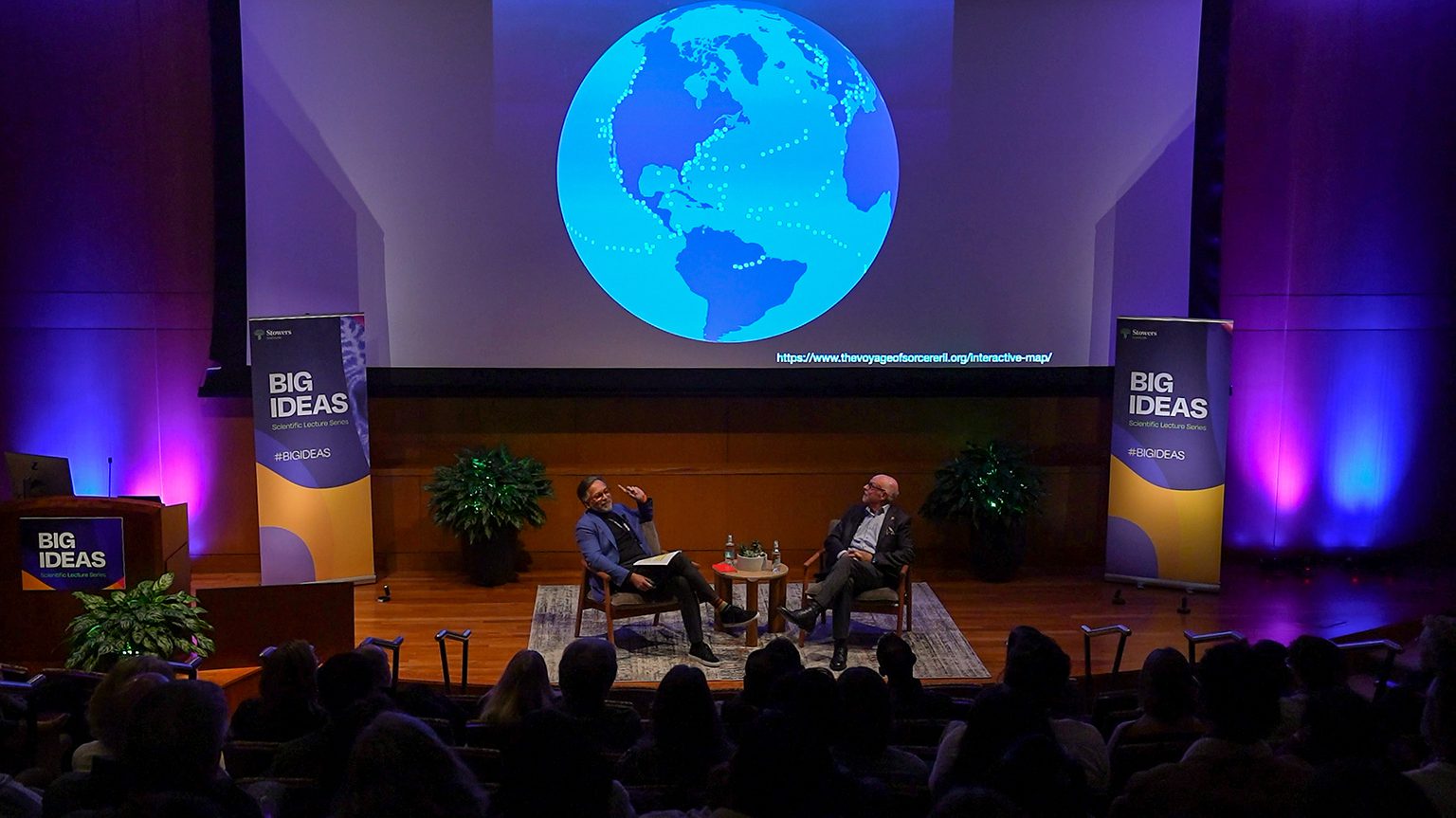
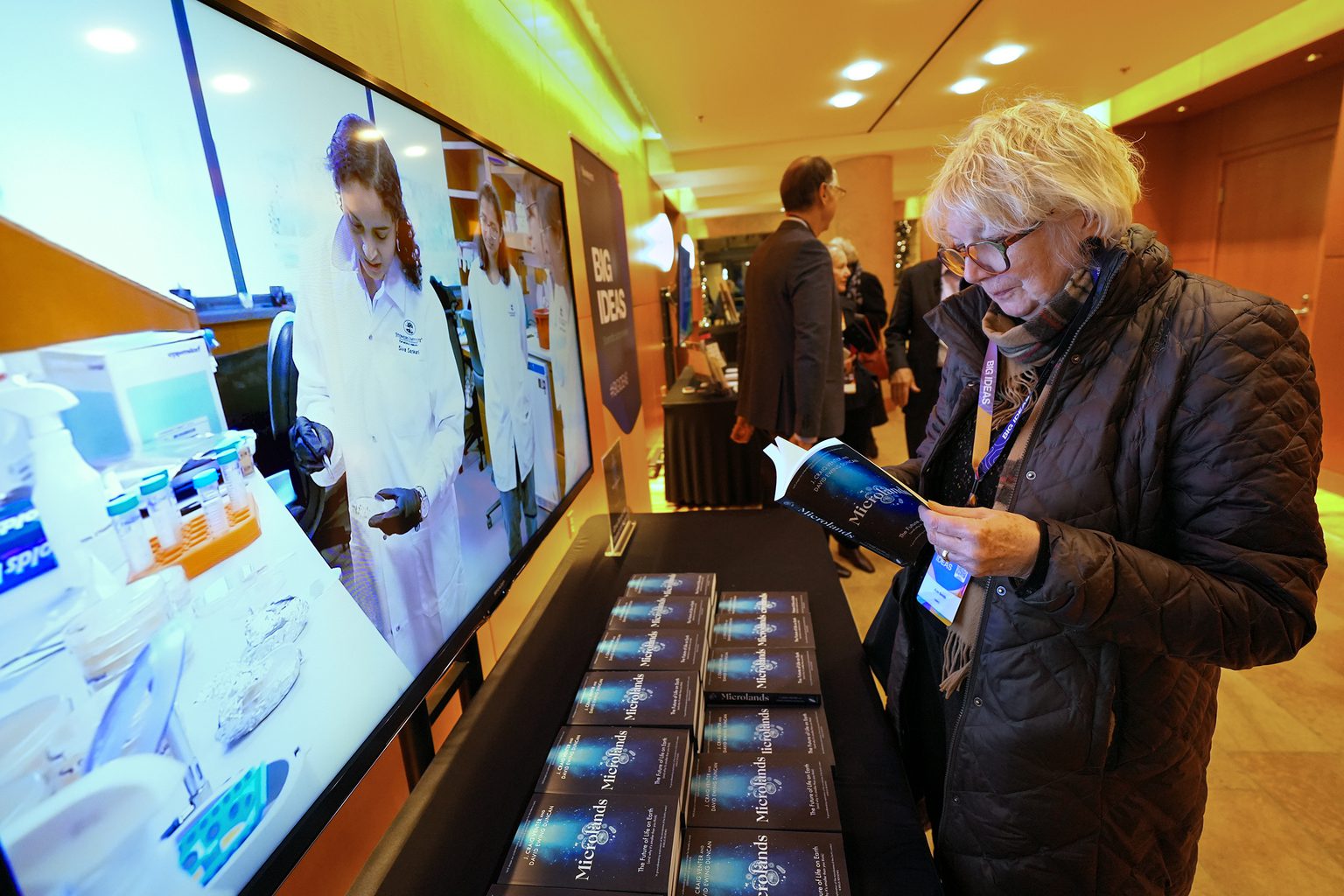
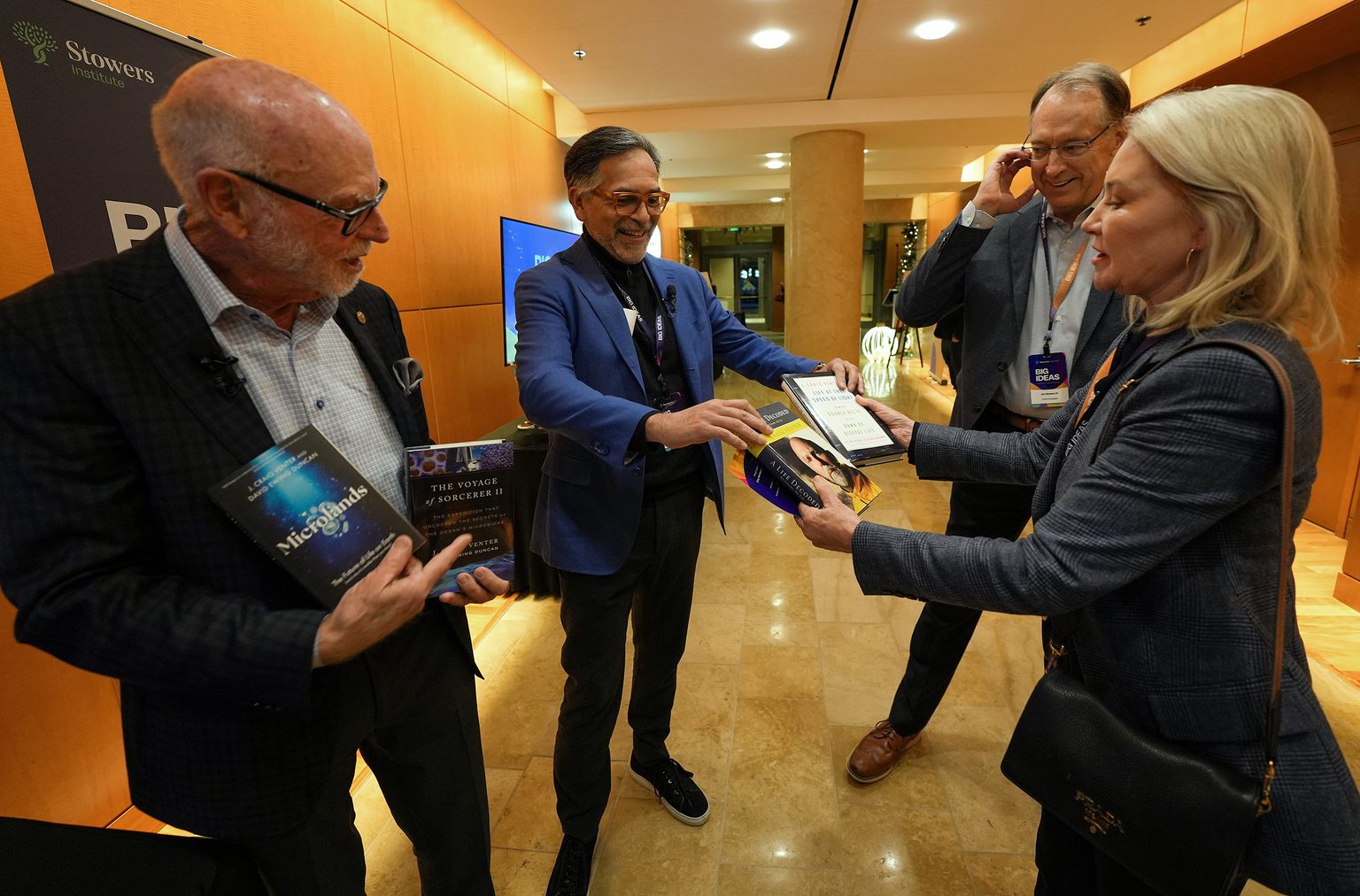
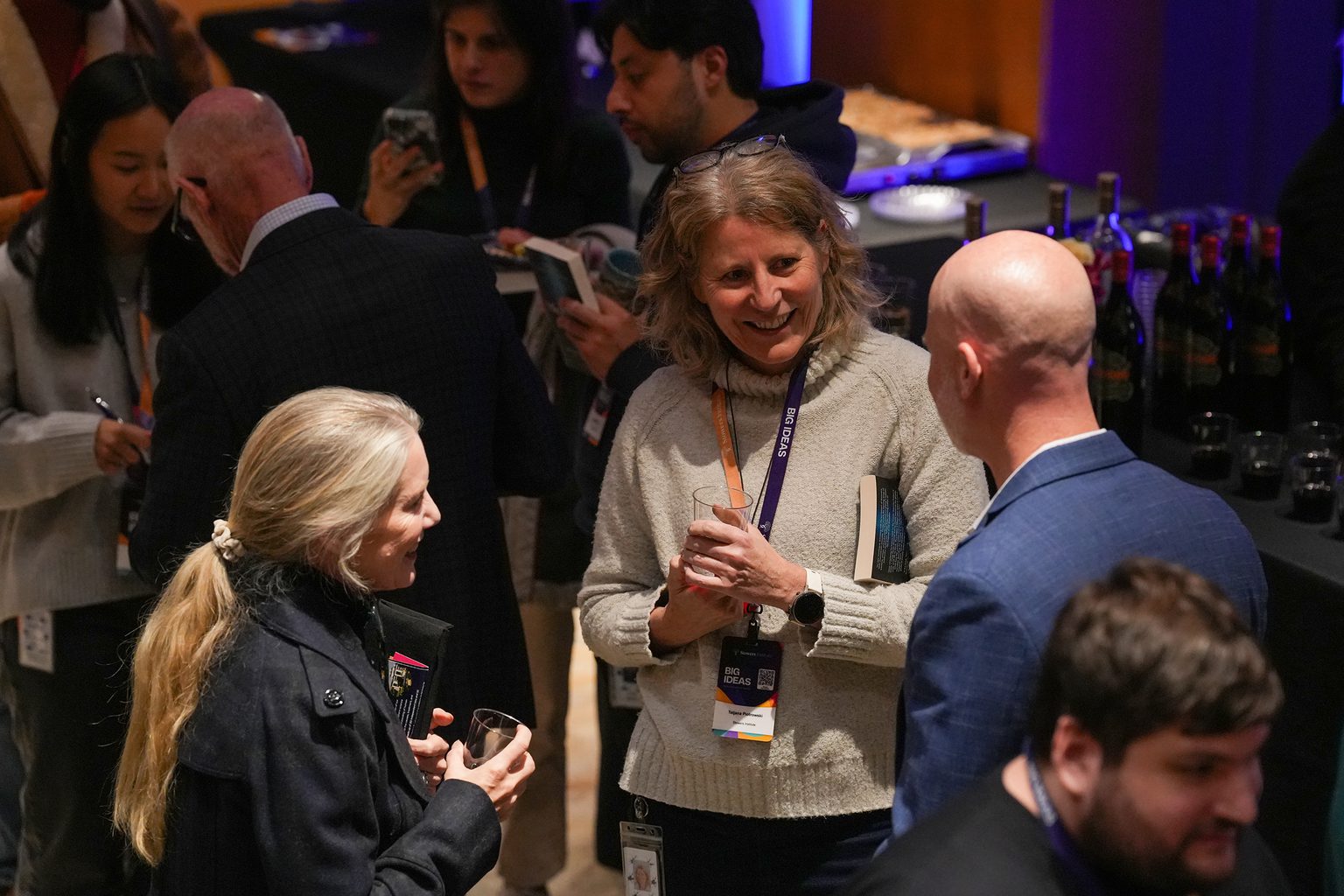
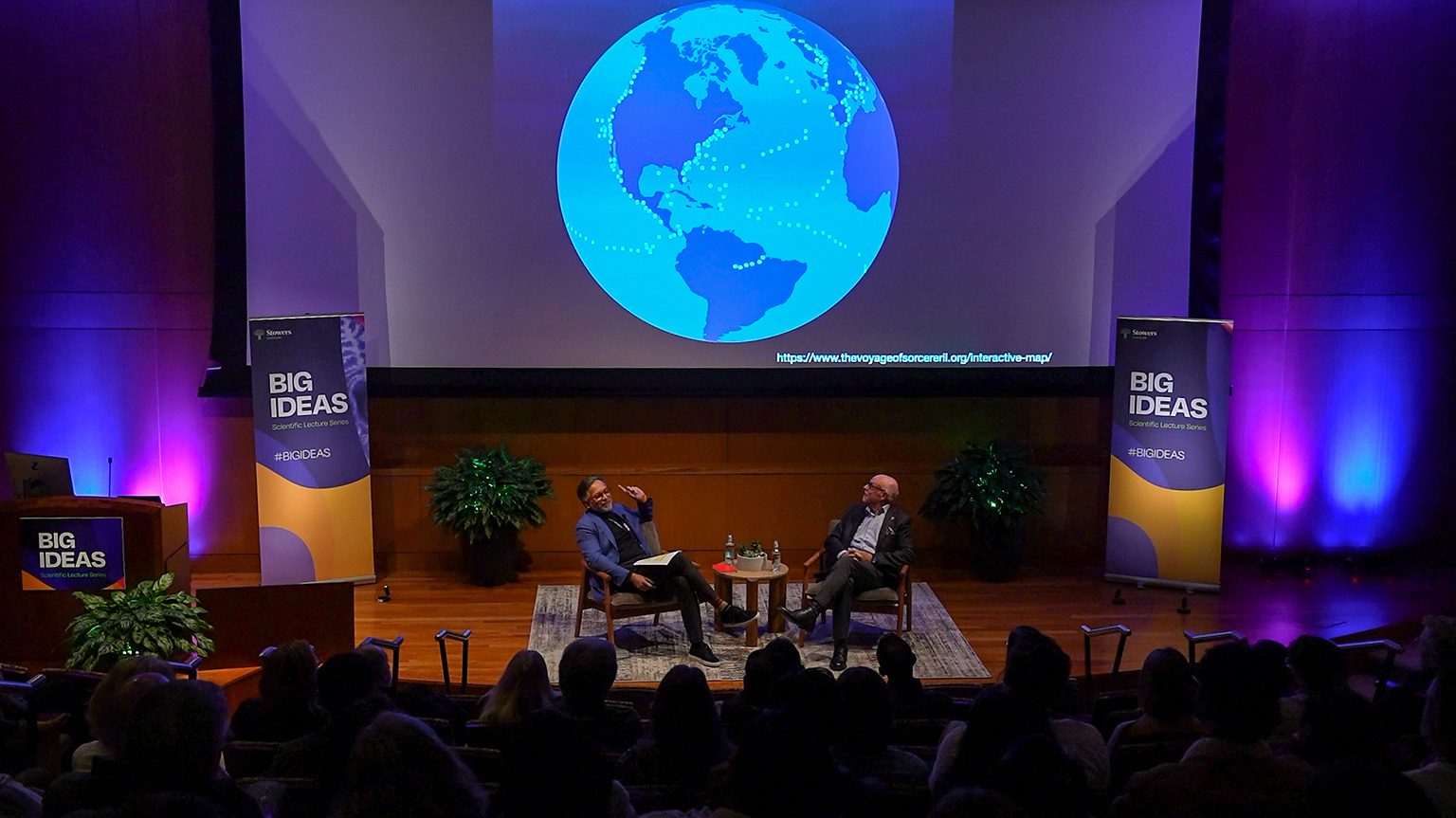
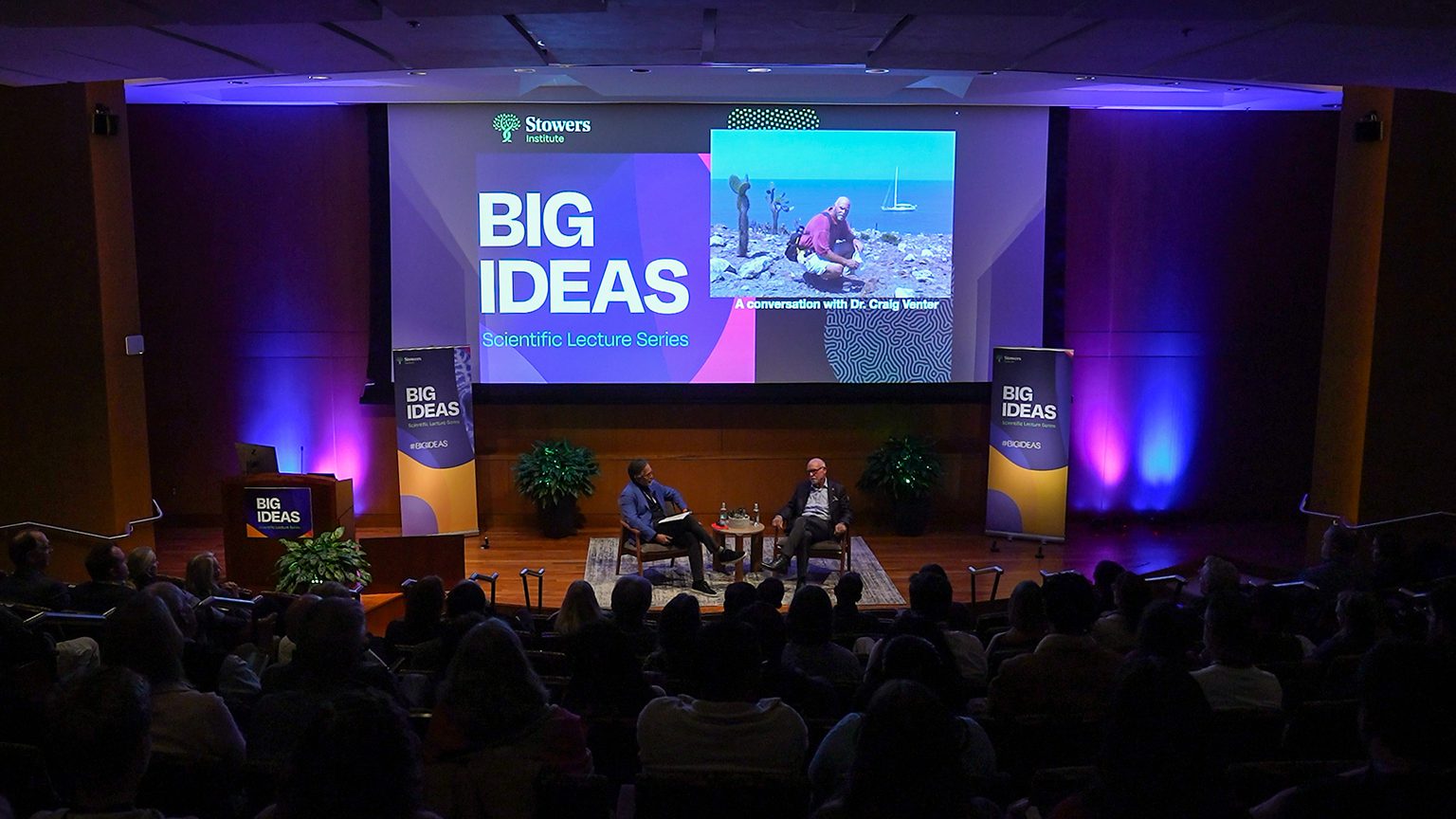
Craig Venter, Ph.D., and Alejandro Sánchez Alvarado, Ph.D., President and Chief Scientific Officer of the Stowers Institute, on stage at the BIG IDEAS event December 2, 2025. Their conversation centered around Venter's career as a scientist and author of several books, including Microlands, which attendees each received a copy of. A reception followed the event. Watch the highlights in the video above.
By Andrew Johnson
When Craig Venter, Ph.D., took the stage at the Stowers Institute’sBig Ideas event, he began his comments in an unexpected way for one of the most influential figures in modern biology: He talked about what he cannot see.
“I have aphantasia,” he told Stowers President and Chief Scientific Officer Alejandro Sánchez Alvarado, Ph.D., on stage in front of the packed auditorium. “When I close my eyes, there are no pictures at all. I think only conceptually. My inability to think visually made rote memorization nearly impossible when I was young.”
What Venter has always been able to see clearly, however, is the value of chasing big ideas. "You’ve been able to achieve here what we’ve tried to achieve," he said, speaking of the success and unique model of the Stowers Institute. “But you’ve been able to go further. It's great when that happens."
Craig Venter, Ph.D., and Alejandro Sánchez Alvarado, Ph.D.
As an accomplished author and founder of the J. Craig Venter Institute, he knows the path to great success isn’t linear. This revelation kicked off the evening as he traced his life’s journey—from a struggling California teenager who preferred surfing to school, to one of the world's most celebrated scientists for his breakthrough creation of shotgun sequencing: a powerful DNA sequencing strategy that enabled him to become the first scientist to decode the entire human genome. His journey has involved the ability to adapt to the unexpected. “As a teenager I pursued surfing and wanted to make a life of it,” he said. “But then I was drafted to serve in Vietnam."
Venter was assigned to the Navy Medical Corps. He had no medical training but quickly discovered he had an aptitude for hands-on clinical work. “Everything I learned, I learned in the field,” he said. When he came back, he realized he liked working in medicine so much that he decided to go to college to study biology, which was another unexpected turn.
The defining shift of his scientific career came when automated DNA-sequencing machines were introduced. While many labs acquired them, scientists struggled to use them. “It turned out I was the only one who could get it to work,” Venter said with a smile. “And that’s how I began sequencing DNA. Everyone thought it was a stupid idea until it worked.”
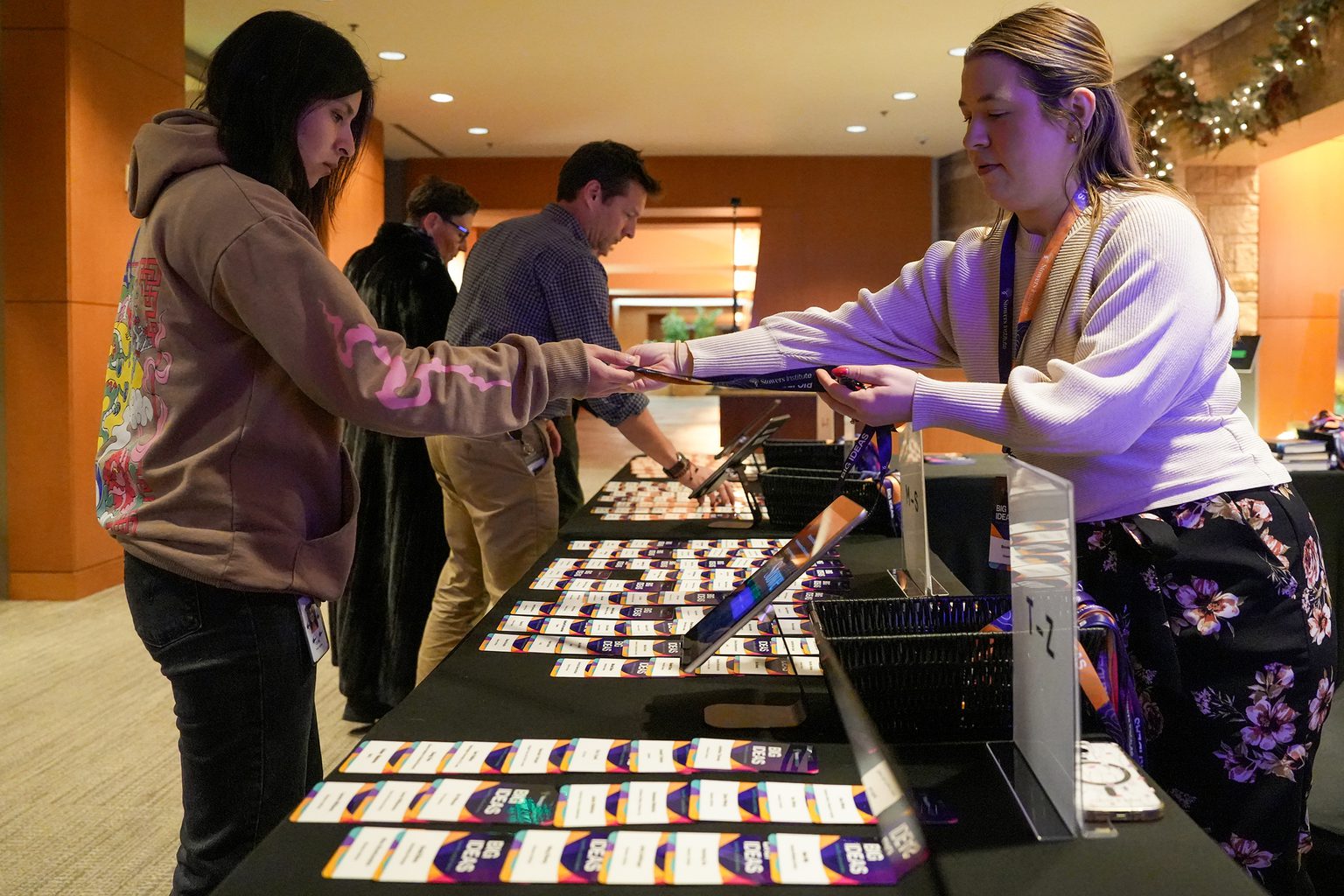
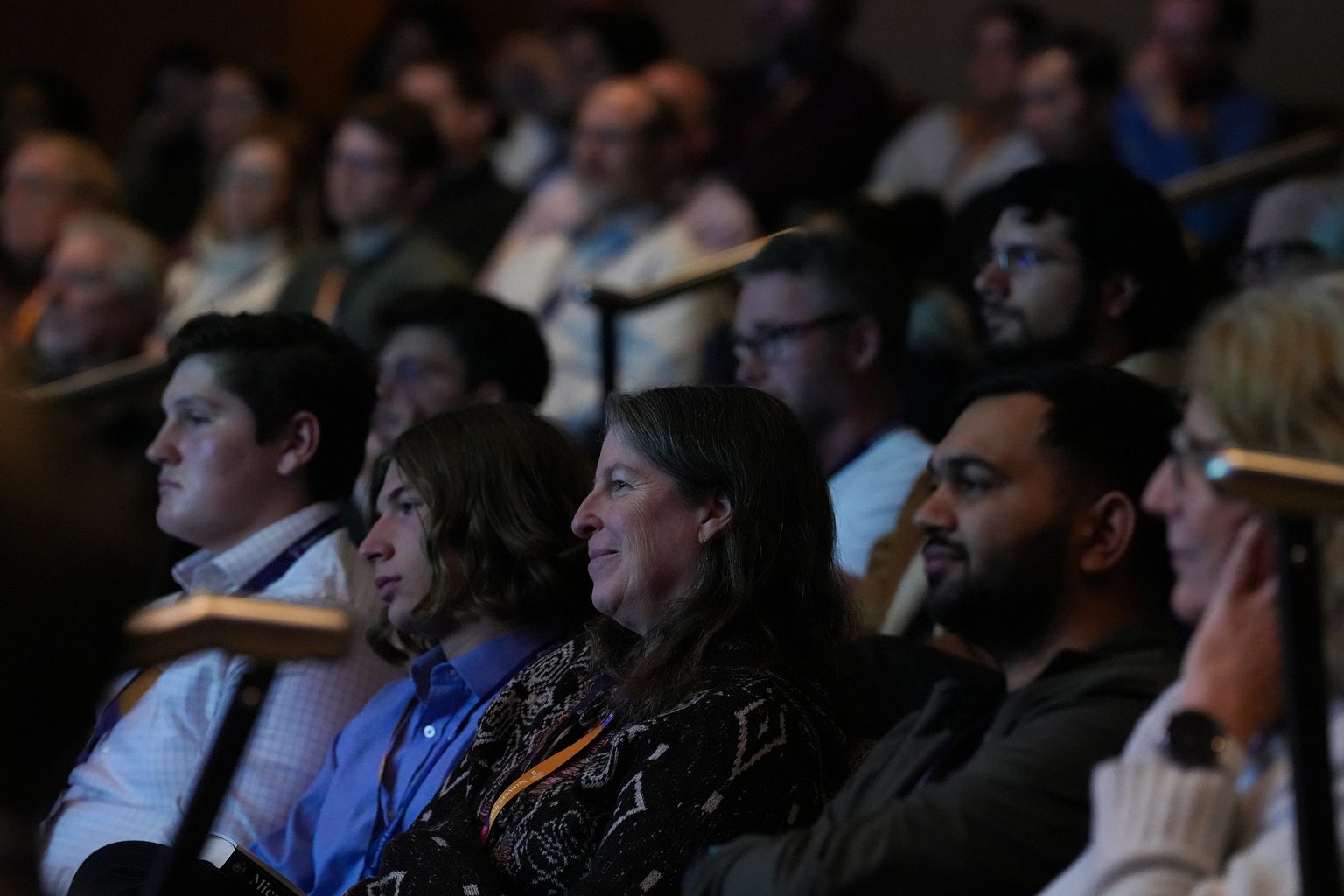
Audience members at BIG IDEAS on December 2, 2025
His success triggered backlash. He was criticized by many who thought he was intellectually cheating, that he wasn’t working hard enough, and that the efficiency of the machine was unfair. Venter shrugged and said, “When you believe in yourself and your work, and someone is complaining about your success—no, I don’t take that personally.”
Skeptics also doubted that the rapid sequencing he achieved with one machine could scale up. Venter countered with simple math: Two machines would double the output. “We ended up getting 350 machines,” he said. The National Institutes of Health (NIH) refused to fund his research, so Venter walked away from the NIH, secured $300 million in private support, and founded Celera Genomics. This decision launched a high-stakes race between the public and private sectors to sequence the human genome. “I believe the competition helped expedite the discovery,” he said.
And indeed, it did. In 2000, Venter and his team at Celera Genomics announced the full mapping of the human genome—three years ahead of the federally funded Human Genome Project’s anticipated timeline. When in early 2001, the Human Genome Project’s findings were published in Nature, Celera published their findings the following day in Science.
Craig Venter, Ph.D., and Alejandro Sánchez Alvarado, Ph.D.
At this point, Sánchez Alvarado paused the conversation and shifted gears. “After that success,” said Sánchez Alvarado, “you could have pursued nearly any scientific frontier. Instead, you left to sail around the world. It’s not an obvious leap to make as a scientist. How did you make that leap?”
“Well,” smiled Venter, “I got fired.”
The audience laughed, but Venter made it clear: Getting fired opened a different door. In the months following his departure from Celera, he spent a lot of time reflecting on his life and his next steps. He remembered how he once dreamed of sailing around the world and decided that’s what he wanted to do next. He began planning a trip to sail 32,000 nautical miles, a journey that would eventually become the subject of Venter’s latest book, Microlands.
While preparing for the trip another idea surfaced: “What if I sample the entire ocean?”
The first sample Venter and his team collected came from 200 liters of water that they filtered several times, then froze and shipped back for sequencing. “What we found amazed us,” Venter said. From that single sample they found 1,500 new species.
Venter put his voyage in historical context for the audience. In the 1870s, the HMS Challenger voyage was the first of its kind to sail the entire ocean for the sake of biological discovery. Scientists of the day believed that there could not be life forms in the ocean below a certain depth. So, the Challenger crew reached deeper into the waters and discovered more living organisms than anyone previously knew existed.
Even then, though, what scientists could discover two centuries ago was limited by what they could see. They did not yet have the technology to “see” at the microbial level to the extent we can today. Venter’s expedition revisited many of the places visited by the Challenger, the Beagle, and other early oceanographic expeditions—equipped this time with today’s advanced technology. He felt the impact of this particularly in the Galápagos where Charles Darwin first visited in 1835. “We were seeing microbes that Darwin couldn’t have imagined were there,” Venter said. “Yet he had made it possible for us to know that we could seek and find them.”
Sánchez Alvarado pointed out that many in the audience might be overwhelmed by the sheer numbers, and what it might imply for scientists still seeking answers. Venter understood that overwhelm, explaining that there are more molecules in the ocean than there are stars in the universe. “There is a lot of work to be done,” he said. “But the technology is here.”
Sánchez Alvarado replied, “I’m glad we share that optimism, because it really is closer than we think.”
“I agree,” Venter said. “It’s so much closer. And it means I’m probably not going to retire for the next 20 years.”
BIG IDEAS is the Stowers Institute’s premier scientific lecture series, exploring how science informs and inspires our communities. Learn more about the event series and register for upcoming lectures here.