Neurodegenerative diseases like Parkinson’s often begin small and then rapidly spread like wildfire. The Halfmann Lab is uncovering the places where disease begins.
11 April 2026
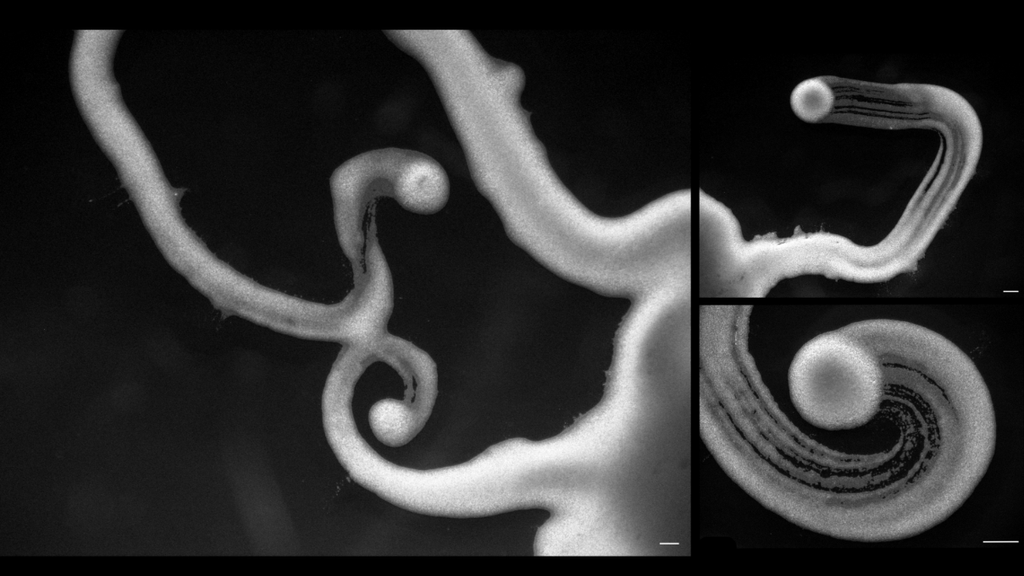
A mutant strain of budding yeast forms "comets" that move autonomously across the surface, highlighting a striking display of multicellular behavior in this unicellular organism.
In the Halfmann Lab at the Stowers Institute, a computer is being taught to watch proteins misbehave.
Associate Investigator Randal Halfmann, Ph.D., hopes that if the computer can do the watching, it will one day help him see what he’s long been looking for. His team is working to understand the earliest molecular events that set neurodegenerative disease in motion. These changes are so small, and happen so early, that increasingly powerful computational tools may be the key to finding them.
The Halfmann Lab focuses on protein aggregation—the way certain proteins cross a threshold and begin to cluster and clump. That process forms structures called amyloids that appear in the brains of people with Parkinson's, Huntington's, ALS, and other diseases of the brain.
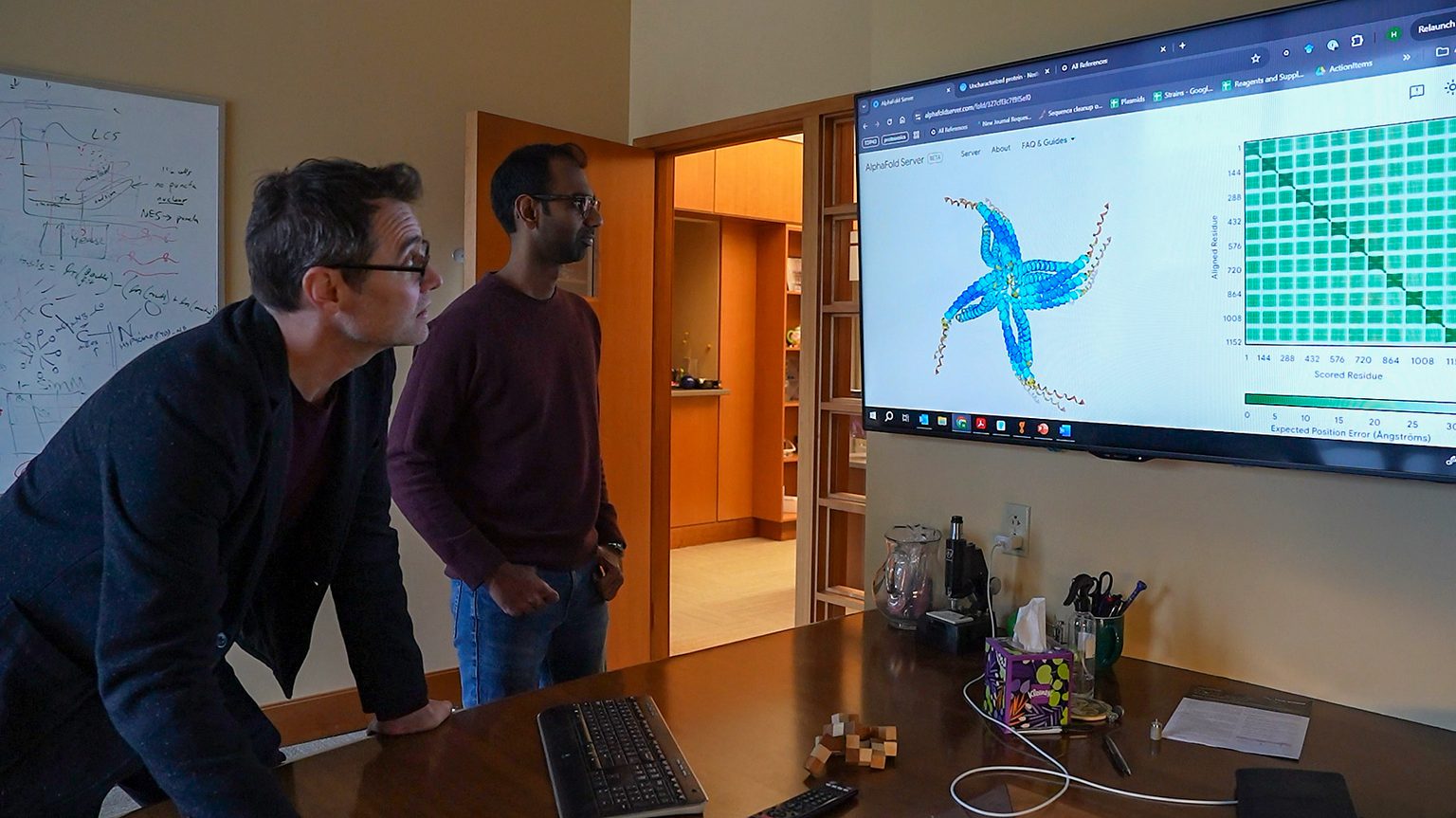
Stowers Institute Associate Investigator Randal Halfmann, Ph.D., and staff scientist Shriram Venkatesan.
“Many neurodegenerative diseases are progressive in nature,” Halfmann said. “It’s kind of like if you were to strike a match in a dry forest. Once the fire gets going, it’s really hard to put out.”
His lab wants to know what happens before that fire spreads. “What is the spark that lights the fire?” he said.
The process is microscopic yet staggeringly consequential, and for a long time the first step—the precise moment a protein assembly nucleates—was largely invisible to science. You could see the aftermath. You could not see the beginning.
“What if we could take a sample from a patient and determine what proteins are already aggregating in them and be able to pinpoint exactly when in the future that person is going to get something like Alzheimer’s or Parkinson’s?” said Halfmann.
Amyloid structure
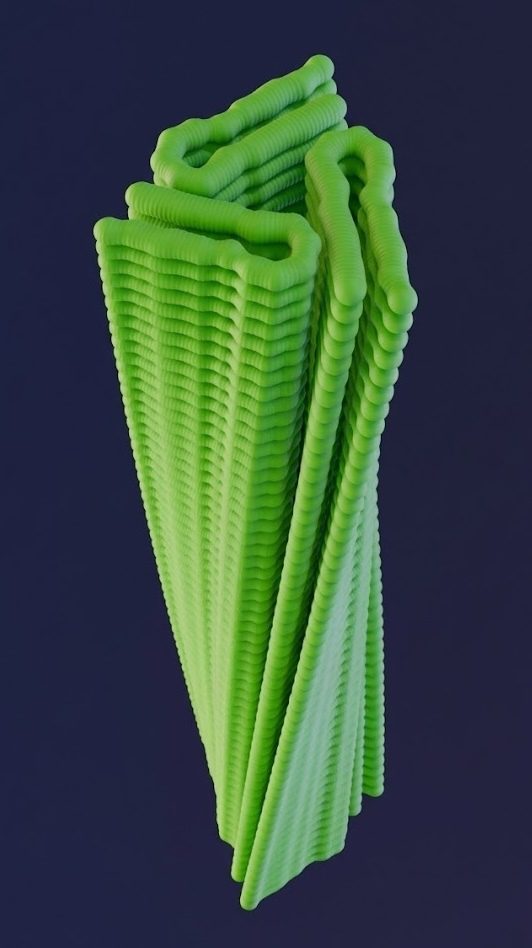
A recent discovery from his lab revealed the initiating structure of the amyloid implicated in Huntington’s disease. The discovery proposes a new, radical method for potentially treating dozens of amyloid-associated diseases by preventing that first critical step from ever occurring.
“This is the first time anyone has experimentally determined the structure of an amyloid nucleus even though most major neurodegenerative diseases are associated with amyloids,” said Halfmann. “One of the big mysteries is why these diseases coincide with amyloid, yet the amyloids themselves are not the main culprits.”
What Halfmann suggests is that the mechanism powering this destruction may be common across multiple diseases, that there is a shared grammar to the way cells misbehave. If that grammar can be read, then it may be possible to harness these tools to detect early signs and develop interventions.
It turns out that artificial intelligence is proving to be very good at spotting those beginnings. When it comes to the shared grammar of cells, AI can help parse the syntax of protein behavior before the sentence becomes a death sentence.
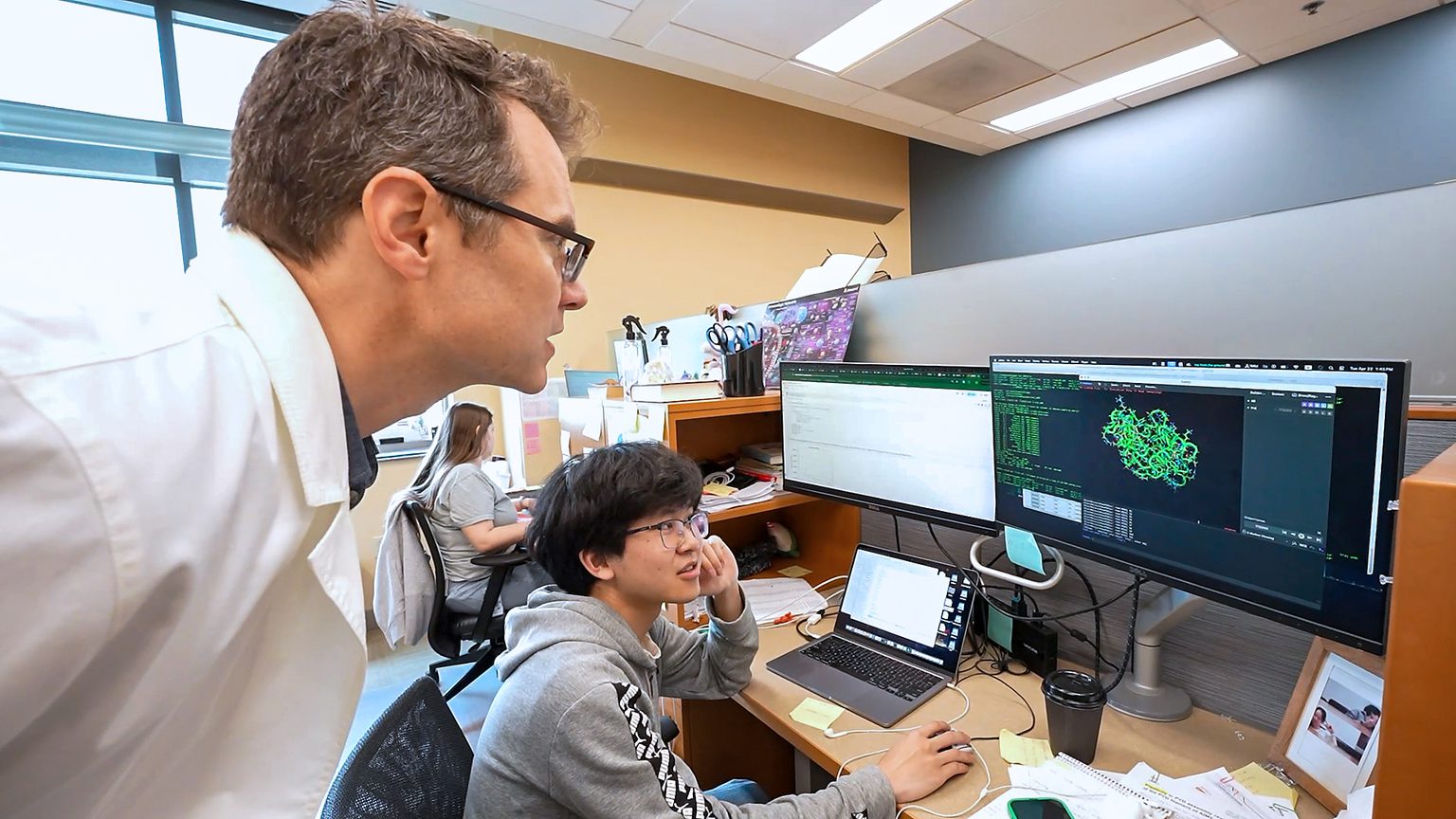
Stowers Institute Associate Investigator Randal Halfmann, Ph.D., and research technician Yiming Ling.
Computational tools, trained on the enormous datasets of molecular behavior that labs like Halfmann's generate, are now helping researchers watch for patterns. Because every protein molecule has its own unique pattern of physical or chemical properties, Halfmann's lab seeks to identify the pattern that predicts those first gathering moments before proteins make their fatal, crystalline commitment.
AI is a powerful tool for scientists. It offers a chance to accelerate discovery and medical breakthroughs. The ways it is being used in the lab are already transforming what is possible. AI doesn't get tired. It doesn't miss the subtle pattern at two in the morning. It cross-references thousands of variables simultaneously and asks: What, in all this noise, is the signal?
Halfmann and the researchers at the Institute are trying to understand the human body at its most fundamental level. For each of them, understanding the how and why comes first. And that understanding, given time, becomes the path toward treatment, prevention, and perhaps one day, a cure.