Joined 2024
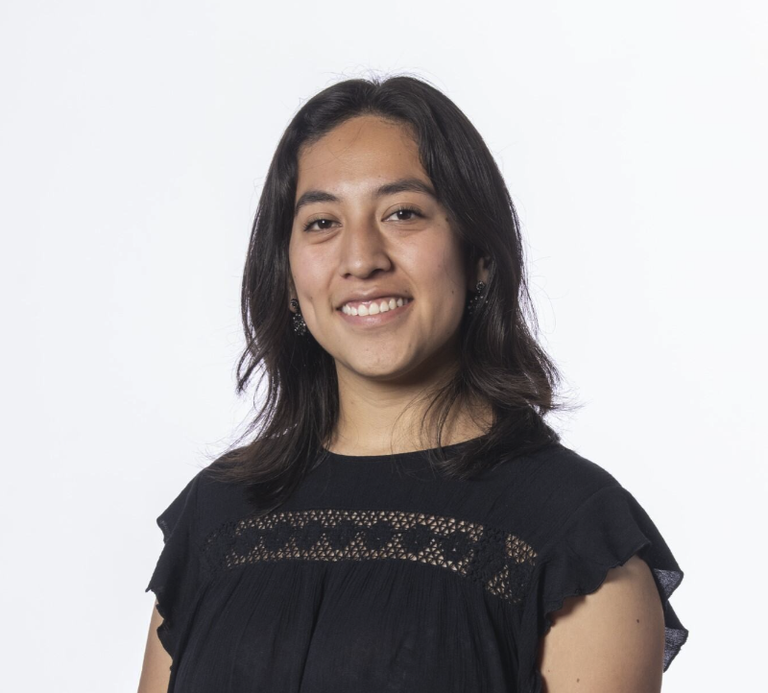
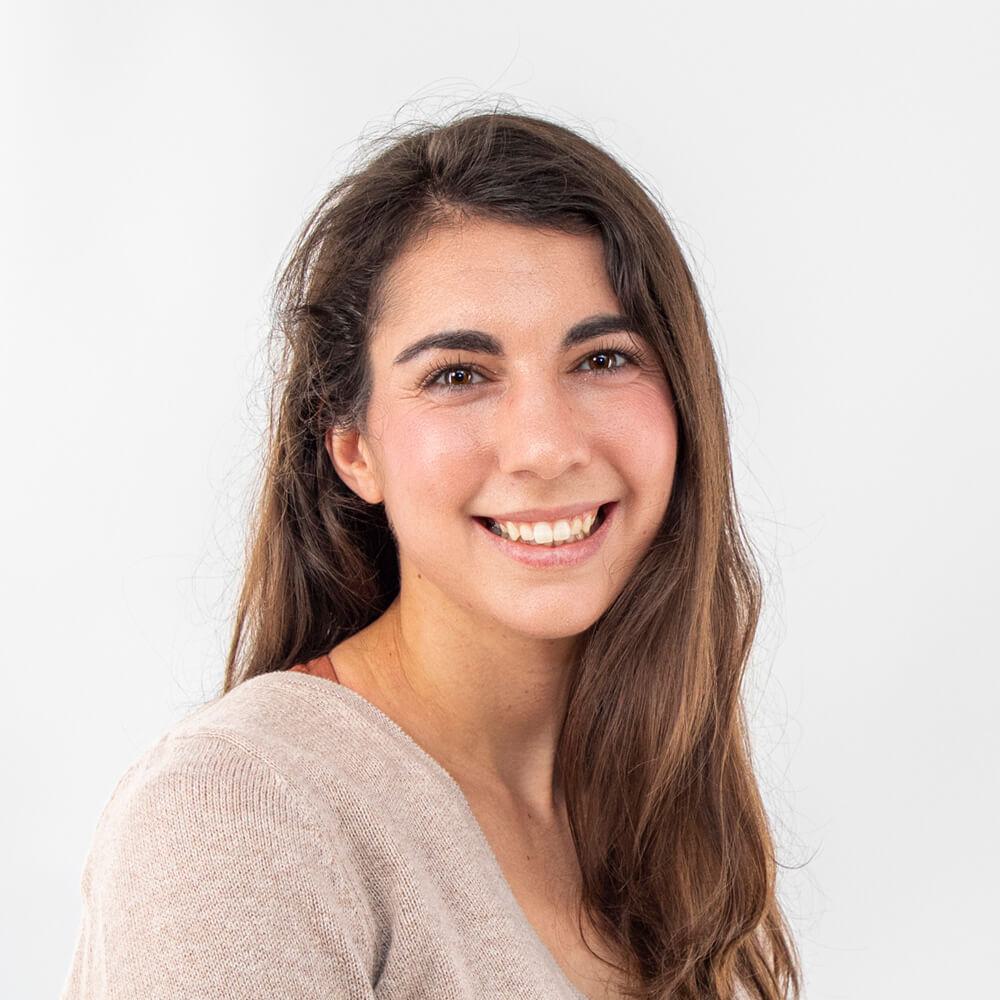
Alejandra Alonso Quintana
Sankari Lab
National Autonomous University of Mexico – School of Medicine
The Graduate School of the Stowers Institute for Medical Research
Ph.D. Students arrive as talented developing scientists and our exceptional research community provides an ideal environment for scientific growth.


Alumni of the Graduate School are achieving great success in the field of biology around the world as they pursue careers in academia, research, and industry. Alumni stay in touch with the Graduate School in several ways including a periodic alumni satisfaction survey. The Grad School tracks alumni outcomes, including postdoctoral career placements, publications post-graduation, self-reported career paths, and feedback on preparation. This information is used to indicate the health and success of the program.


Current Project: Neural crest (NC) cells are a vertebrate-specific multipotent cell population whose evolutionary origins remain incompletely understood. Although non-vertebrate chordates possess cell populations with partial neural crest–like properties, the cis-regulatory mechanisms underlying the emergence of neural crest identity remain unclear. In this project, we combine deep learning–based chromatin accessibility models within silico evolution to investigate how neural crest enhancers may evolve across chordates. Using convolutional neural network (CNN) models trained on chicken cranial NC ATAC-seq data, we evolved synthetic enhancers from random DNA sequences. In vivo assays in chick embryos demonstrated that active neural crest enhancers can emerge after 15 rounds of evolution. Large-scale evolution of random genomic sequences showed that in silico evolution is strongly influenced by the starting sequence. We are currently using this property to identify evolvable regions in the genomes of zebrafish and non-vertebrate chordates and investigate the motif features in the evolvable regions.


Ph.D. Student
B.S., Basic Biomedical Research, National Autonomous University of Mexico
Joined: 2021

Predoctoral Researcher
The Graduate School of the Stowers Institute for Medical Research
B.S., Biochemistry, University of Kansas
Joined: 2023

Ph.D. Student
B.S., Biology, Autonomous University of Queretaro and National Polytechnic University of Mexico
M.S., Integrative Biology, Autonomous University of Queretaro and National Polytechnic University of Mexico
Joined: 2020


Ph.D. Student
Gerton Lab
B.S., Engineering, National University of St. Martin, Argentina
Joined: 2022

We study how P-E interactions contribute to cell-type-specific gene regulation during zebrafish gastrulation. Using high-temporal-resolution scMultiome and computational methods like SCENIC+ and RegVelo, we infer TF–enhancer–effector gene regulatory modules and their role in cell fate decisions. We use Micro-Capture-C to dissect how enhancers/repressors/other elements interact with the promoter in those modules. Ongoing efforts include functional perturbation of TFs/CREs and using additional modalities to explain the mechanism.

My main interest in research is to understand how proteins with a common ancestry diverge in structure or function. I am utilizing an orphan protein in mammals as a model to understand this process. Outside of the lab, I enjoy learning various historical topics and cuddling with my cats.


Ph.D. Student
B.S., Biological Sciences, University of Modena and Reggio Emilia, Italy
M.S., Applied and Experimental Biology, University of Modena and Reggio Emilia, Italy
Joined: 2022

My broad focus in the lab is how evolution produces functional proteins from scratch. I study this in viruses, whose high mutation rates and compact genomes make them excellent models for watching new genes emerge—cases where a stretch of noncoding sequence starts getting translated into a working protein. When I'm not in the lab, you can find me doing something outside—usually running or playing tennis!

Ph.D. Student
B.S., Biotechnology, Pablo de Olavide University, Spain
Joined: 2023
Current work: establishing gene engineering tools in soil bacteria and studying host peptides in legumes-bacteria symbiosis
Hobbies: I enjoy both doing sports and spending time at home listening to music, playing videogames or watching shows and movies

Ph.D. Student
B.S., Life Science and Technology, LanZhou University
M.S., Translational Medicine, Beijing Normal University
Joined: 2020

Ph.D. Student
B.S., Biology, Nara Women’s University, Japan
M.S., Biology, Kyoto University, Japan
Joined: 2023
Neural crest (NC) cells are multipotent progenitors that give rise to a remarkable diversity of cell types, including neurons, mesenchymal derivatives, and pigment cells. This developmental versatility makes them an ideal model for understanding how tissue-specific gene regulatory networks (GRNs) control cell fate decisions. While key regulators and GRNs governing mesenchymal NC development have been extensively characterized, those underlying neuronal NC specification remain poorly understood. My research aims to identify the key regulators of cranial neuronal NC specification and reconstruct the GRNs underlying this process in zebrafish embryos by integrating single-cell RNA sequencing, chromatin accessibility profiling, and spatial transcriptomics. This work will provide new insights into how cranial neuronal NC identity is established during vertebrate development.

Predoctoral Researcher
The Graduate School of the Stowers Institute for Medical Research
B.S., Biomedical Science, Shanghai Jiao Tong University
Joined: 2020
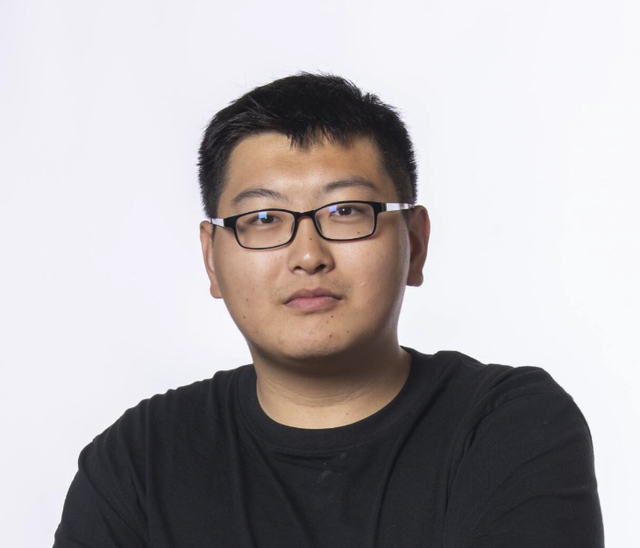
Haining joined the Zeitlinger lab from Qinghai, China (the wild west of China) in September 2021. He received his bachelor’s degree from Shanghai Jiao Tong University and developed a passion to further his knowledge in science. Currently, he is working on understanding enhancer activity and accessibility with Deep Learning approaches. When Haining is not in the lab, you can find him having fun playing soccer, riding his bike on the trails or just having fun in the with sports in the great outdoors.

Predoctoral Researcher
The Graduate School of the Stowers Institute for Medical Research
B.S., Physics, Makerere University, Uganda
Joined: 2023
Makerere University


Ph.D. Student
Gerton Lab
B.S., Biochemistry and Philosophy, University of Missouri
Joined: 2022

Ph.D. Student
Sauka-Spengler Lab, Sanchez Alvarado Lab
B.S./M.S., Biological Sciences, Indian Institute of Science Education and Research, Thiruvananthapuram, India
Joined: 2023
Nothobranchius furzeri (African annual killifish), found in ephemeral ponds in eastern and south-eastern Africa live through harsh conditions during which the ponds that they live in dry up. These harsh conditions have led them to evolve a very peculiar embryonic cycle in which they are capable of undergoing diapause at 3 different stages of embryonic development [1]. One of these diapause (diapause 2) corresponds with neural crest (NC) development when the neural crest cells (NCCs) are migrating throughout the embryo to give rise to different tissues in the developing embryo. Furthermore, NC development is much slower in the annual killifish compared to other teleost model organism commonly used to study NC processes, like zebrafish. Understanding how these migrating NCCs retain the memory of migration even after months in diapause 2 and end up reaching their destination is very intriguing. Furthermore, no one has ever looked at NC development in the killifish and therefore understanding how these processes are regulated is crucial. My long-term goal is to dissect the gene regulatory network of neural crest cells during induction, migration and differentiation in killifish understanding how they maintain the NC development program intact during diapause 2.
Ultimately, we hope to clarify why specific melanocyte populations are particularly vulnerable in defined disease states and guide future strategies for targeted therapeutic intervention and regenerative medicine.

Ph.D. Student
Si Lab
B.S., Bioengineering, Henan Agricultural University
M.S., Cell Biology, Sun Yat-Sen University.
Joined: 2020


Predoctoral Researcher
B.S., Biochemistry and Molecular Biology, Pennsylvania State University
Joined: 2023
Pennsylvania State University

Predoctoral Researcher
Kostova / Sánchez Alvarado Lab
Joined: 2024


Ph.D. Student
Sankari Lab
B.S., Biological Sciences, Pontifical Catholic University of Ecuador, Ecuador
M.S., Laboratory Technology, Technical Particular University of Loja, Ecuador
Joined: 2023
In my undergrad and master’s degree I studied cell regeneration and toxicology in Ecuador, where I am from. Currently I am passionate about understanding fundamental biology and how it can be used for clinical and industrial applications. I have a particular interest in exploring how the symbiotic relationship between alfalfa and bacteria may parallel the interactions between pathogenic bacteria and their human hosts. In my free time I enjoy training different dance styles and learning new languages. View CV

Predoctoral Researcher
B.S., Biology, B.A., Chemistry, University of Missouri - Kansas City
Joined: 2023
University of Missouri – Kansas City


Predoctoral Researcher
B.S., Biochemistry, University of California – Santa Barbara
Joined: 2023
University of California – Santa Barbara

Predoctoral Researcher
B.S., Biological Sciences, Indian Institution of Science Education and Research, India
Joined: 2022

Tsinghua University


Ph.D. Student
B.S., Cell and Molecular Biology, Winona State University
Joined: 2020

Predoctoral Researcher
M.S., Biotechnology, University of Science, Ho Chi Minh City
Joined: 2021

Predoctoral Researcher
BS (Ag) Applied Bioscience, Zhejiang University (2016)
Joined: 2017
RESEARCH SUMMARY: Nematostella vectensis is among the earliest branching animals possessing a nervous system. This unique phylogenetic position, together with features such as a large repertoire of chemical neurotransmission-related genes, impressive regenerative abilities, endodermal neurogenesis, and regional neural centralizations, makes Nematostella an informative model to study early evolution of the nervous system. By investigating the architecture and function of the nervous system in Nematostella, I seek to better understand the molecular mechanisms that were utilized to build the earliest nervous systems and support their functions following the emergence of neurons over 700 million years ago.

I am interested in where distinct protein folds come from, and how the first folded structures evolved. To explore this, I'm scanning proteins across the animal kingdom, looking for cryptic relationships between folds. By systematically surveying this space, I hope to determine what evolutionary mechanisms shaped the modern protein universe. When I'm not looking at protein structures, I like to solve Sudokus.