Explore 15 highlights from 2025 at the Stowers Institute: New scientists, impactful discoveries, and a milestone moment.
17 December 2025
In 2025, the Stowers Institute advanced its mission to understand life at its most foundational level, fueling new insights that shape how we think about development, disease, regeneration, evolution, and more. Our scientists pushed bold questions forward, welcomed new collaborators, and trained the next generation of researchers.
Marking a milestone moment, we celebrated a quarter-century of discovery as an Institute and brought our premier public lecture series, BIG IDEAS, back to the stage. Here are 15 moments that capture the progress, people, and breakthroughs that defined the year.
1. Celebrating 25 years
When the Stowers Institute opened its doors in 2000, it was with a distinct and visionary funding model, anchored by American Century Investments, and a bold mission to understand how life works for the betterment of humanity. As part of our celebration of discovery, innovation, and hope, the Institute hosted a full-day symposium, inviting more than 300 community partners, alumni, and donors to gather in honor of the vision of Jim and Virginia Stowers. The event showcased the past 25 years of discovery at the Institute and looked toward the next 25 years of transformative, curiosity-driven science. Learn more about the milestone moment, plus watch talks and videos from the event here.
2. Four new scientists join the Institute
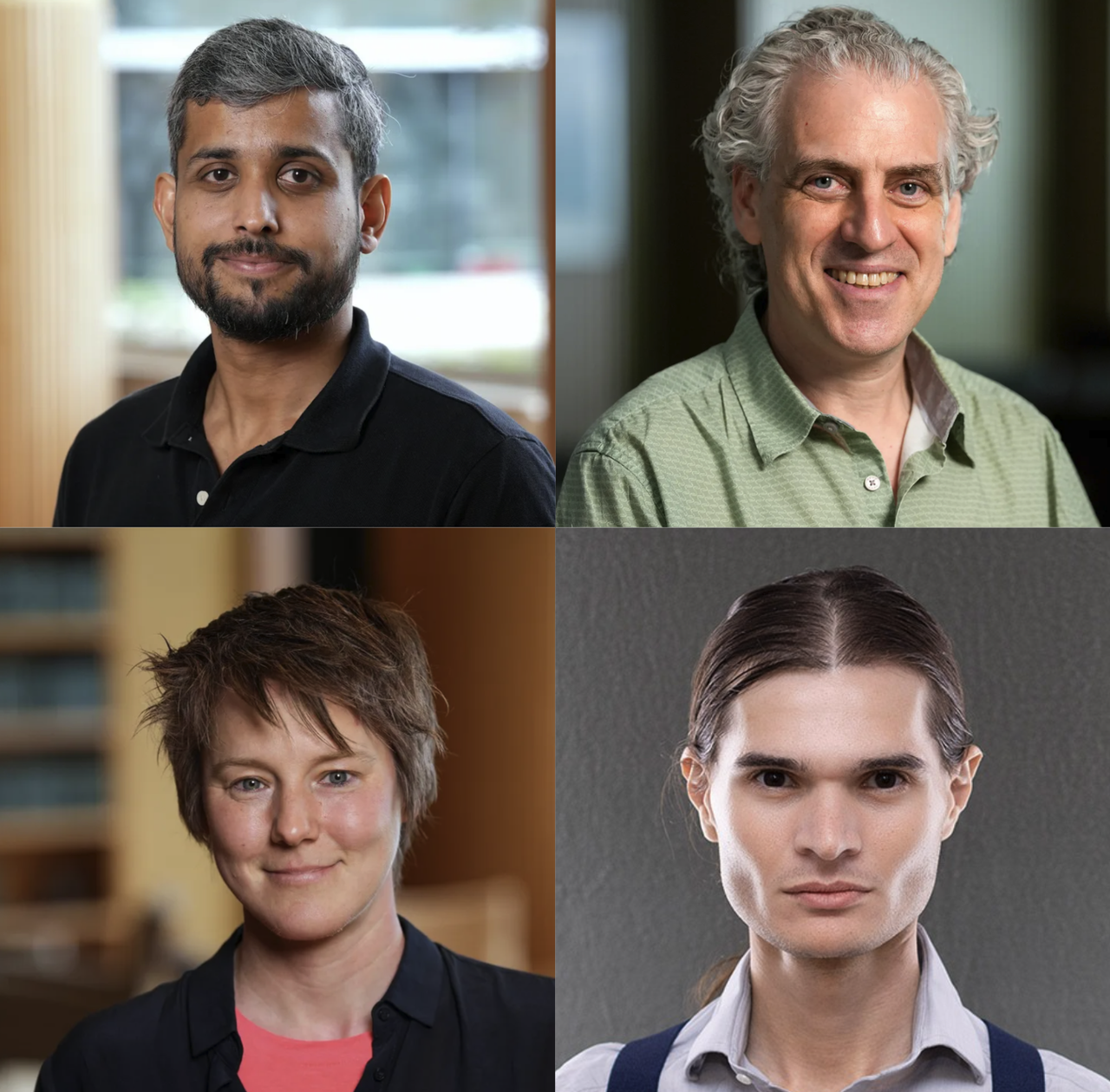
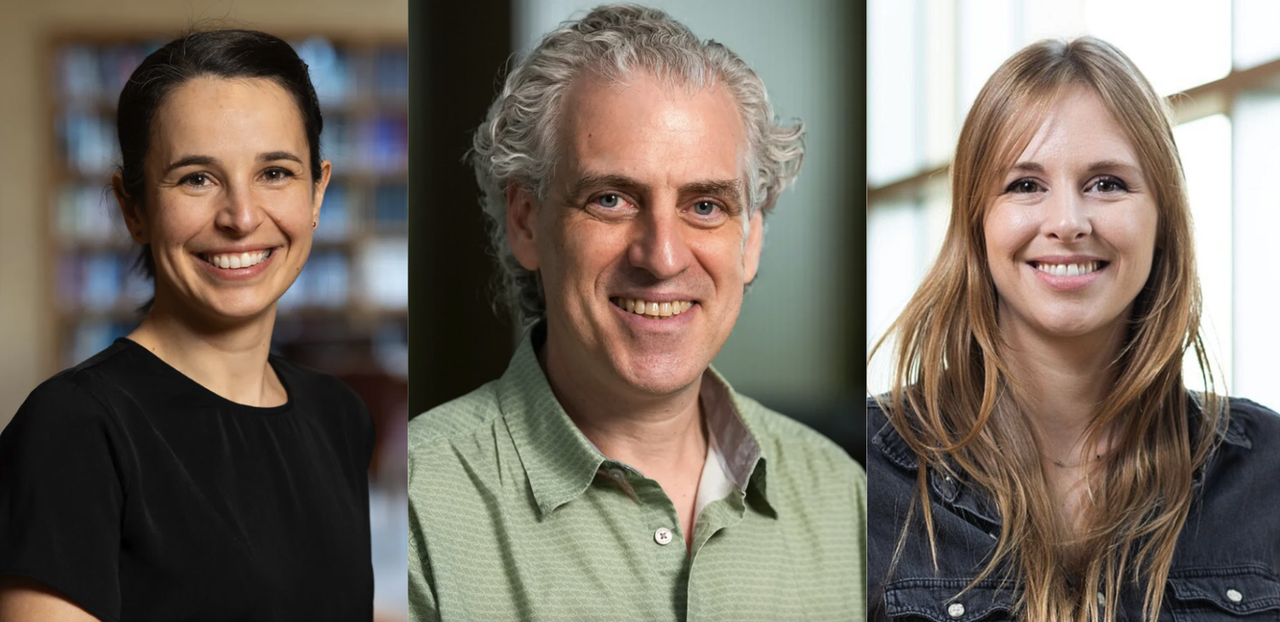
This year, the Stowers Institute announced the recruitment of four new outstanding scientists: Assistant Principal Investigator Arvind Pillai, Ph.D.; Principal Investigator David Stern, Ph.D.; and Jim and Virginia Stowers Fellow Friederike Benning, Ph.D.; Together, they bring fresh perspectives and expertise ranging from uncovering principles of protein evolution, function, and design to developing novel computational approaches that drive foundational biological discovery.
3. BIG IDEAS
BIG IDEAS, a lecture series designed for the science-curious public, relaunched this year with two events, exploring innovative and thought-provoking science and its intersection with the community. The spring lecture featured guest speakers Paco Calvo, Ph.D., a philosopher of biology studying plant intelligence at the University of Murcia in Spain, and Kate Biberdorf, Ph.D., better known as “Kate the Chemist,” Notre Dame’s Professor for the Public Understanding of Science. In December, BIG IDEAS featured a conversation between renowned biologist Craig Venter, Ph.D., and Stowers President and Chief Scientific Officer Alejandro Sánchez Alvarado, Ph.D.
4. Stowers Investigator elected to the National Academy of Sciences
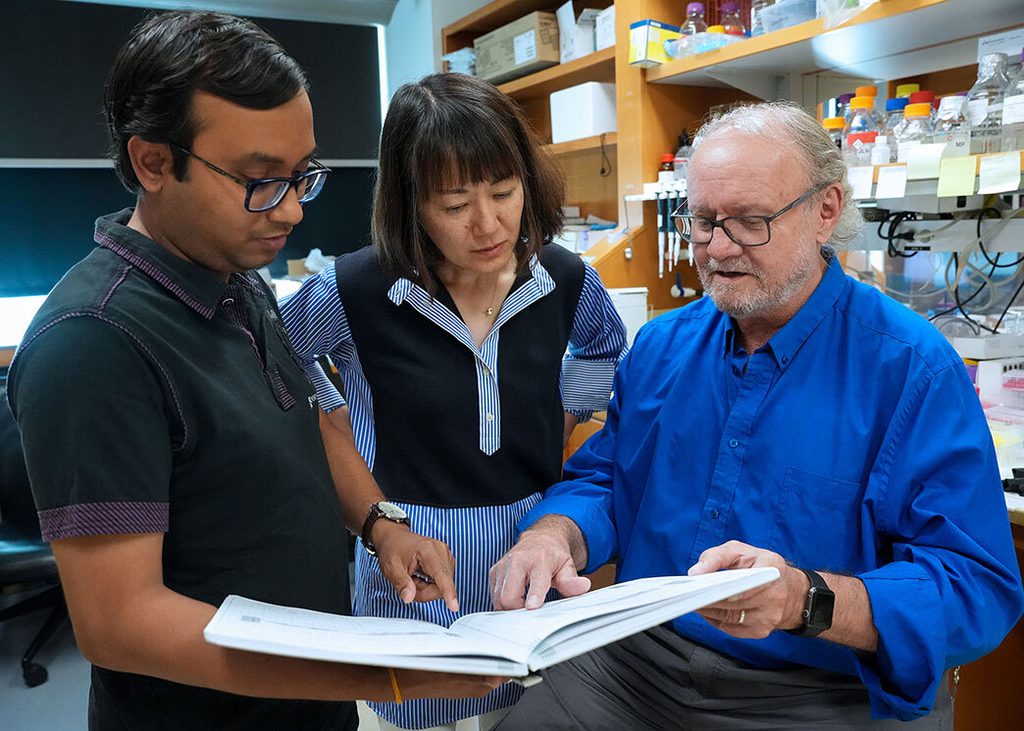
Stowers Investigator Jerry Workman, Ph.D., discussing research in the lab.
Jerry Workman, Ph.D., a pioneer in the field of gene regulation, received one of the highest honors awarded to scientists worldwide — election to the National Academy of Sciences. Workman’s research has significantly advanced our understanding of the structure and function of chromatin, the highly condensed packages of DNA and proteins. His discoveries have broad implications, including insights into diseases such as cancer.
5. HHMI appointments
Three Stowers scientists received prestigious recognition and funding from the Howard Hughes Medical Institute (HHMI). Investigator David Stern, Ph.D., who is moving his lab to the Institute in February, was renewed as an HHMI Investigator; Assistant Investigator Kamena Kostova, Ph.D., was named a 2025 HHMI Freeman Hrabowski Scholar; and Postdoctoral Research Associate Riley Galton, Ph.D., joined the 2025 class of HHMI’s Hanna Gray Fellows Program.
6. The “dark matter” of the genome
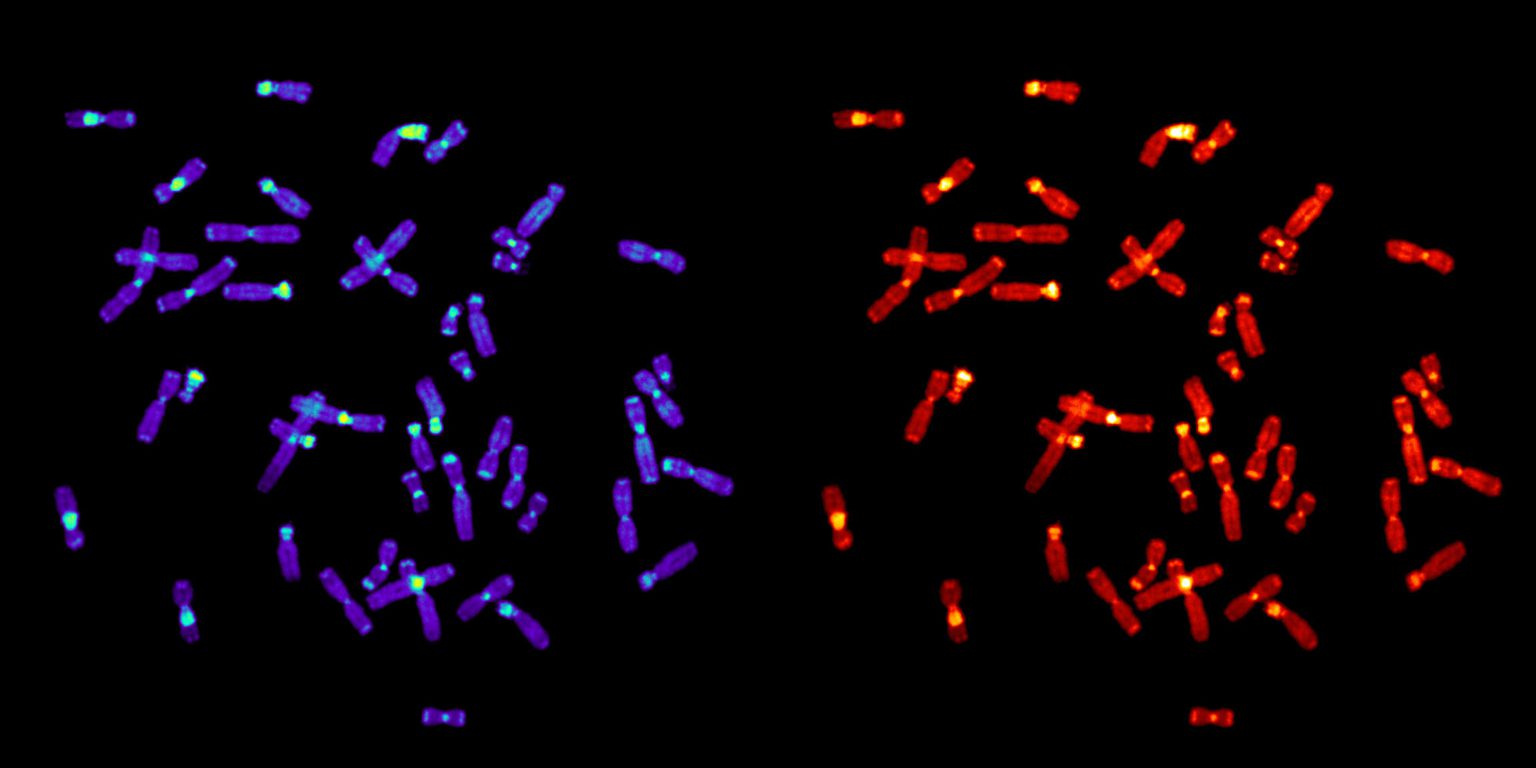
Robertsonian chromosomes — two different chromosomes fused together at their centers — were first observed more than a century ago and have remained the subject of study for 50 years. But how they arise has remained a mystery. A landmark study from the lab of Investigator Jennifer Gerton, Ph.D., solved the puzzle, with major implications for understanding infertility and Down syndrome.
7. An eye for an eye
Apple snails, typically considered an invasive species, have proven to be remarkably useful as a new research organism, thanks to the work of a team of scientists from the lab of Alejandro Sánchez Alvarado, Ph.D. The snail’s eye, structurally similar to the human eye, regrows after injury or amputation within four weeks. The organism may hold the key for understanding eye regeneration and restoring vision in humans due to damage and disease.
When the sensory cells lining our inner ears are damaged, our bodies are unable to replace or regrow these cells, often resulting in hearing loss. Yet some animals such as fish and frogs do regenerate sensory cells and do so effortlessly. Research from the lab of Investigator Tatjana Piotrowski, Ph.D., discovered genes key to zebrafish sensory hair cell regrowth, which may inform future research into treatments for hearing loss in humans.
11. The power of planarian stem cells
Stem cells — those cells that can turn into a heart cell, lung cell, or other differentiated cell — are typically tightly controlled by their surrounding cells in what is termed a “niche.” Research from the lab of Alejandro Sánchez Alvarado, Ph.D., uncovered that planarian stem cells act differently and more independently. This independence likely leads to their powerful regenerative capabilities. Understanding and harnessing this capacity may help advance regenerative medicine in humans.
12. Fighting fungi
Fungal infections cause millions of deaths each year, yet current treatments are limited and frequently ineffective. Understanding how a fungus grows can provide a key for finding new treatments. Research from the lab of Associate Investigator SaraH Zanders, Ph.D., and Assistant Professor Blake Billmyre, Ph.D., from the University of Georgia discovered how the lethal pathogenic fungus Cryptococcus neoformans thrives and identified more than 300 possible therapeutic targets for treatment.
Within the entire genetic blueprint of nearly all species are “selfish” genes that are passed from generation to generation with no benefit to the organism. A collaboration between the labs of Associate Investigators SaraH Zanders, Ph.D., and Randal Halfmann, Ph.D., uncovered common principles for how a selfish gene family harms cells in yeast, providing new insights toward better understanding infertility, neurodegeneration, and evolution.
15. New cell death pathway found in cholera-causing bacteria
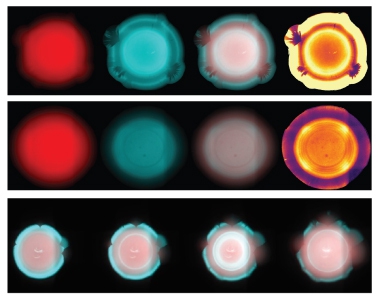
Cell death in Vibrio cholerae strains. Bottom panel shows a time lapse of cell death where dead cells are in cyan.
Cholera, a bacterial infection of the small intestine, has claimed countless lives for centuries. Research from the lab of Assistant Investigator Ameya Mashruwala, Ph.D., discovered a new pathway the bacteria use to kill sibling cells. The finding suggests that bacteria intentionally self-destruct — a process called regulated cell death — for environmental adaptation and survival. This discovery could potentially reveal common weaknesses within harmful bacteria that can be therapeutically targeted.